
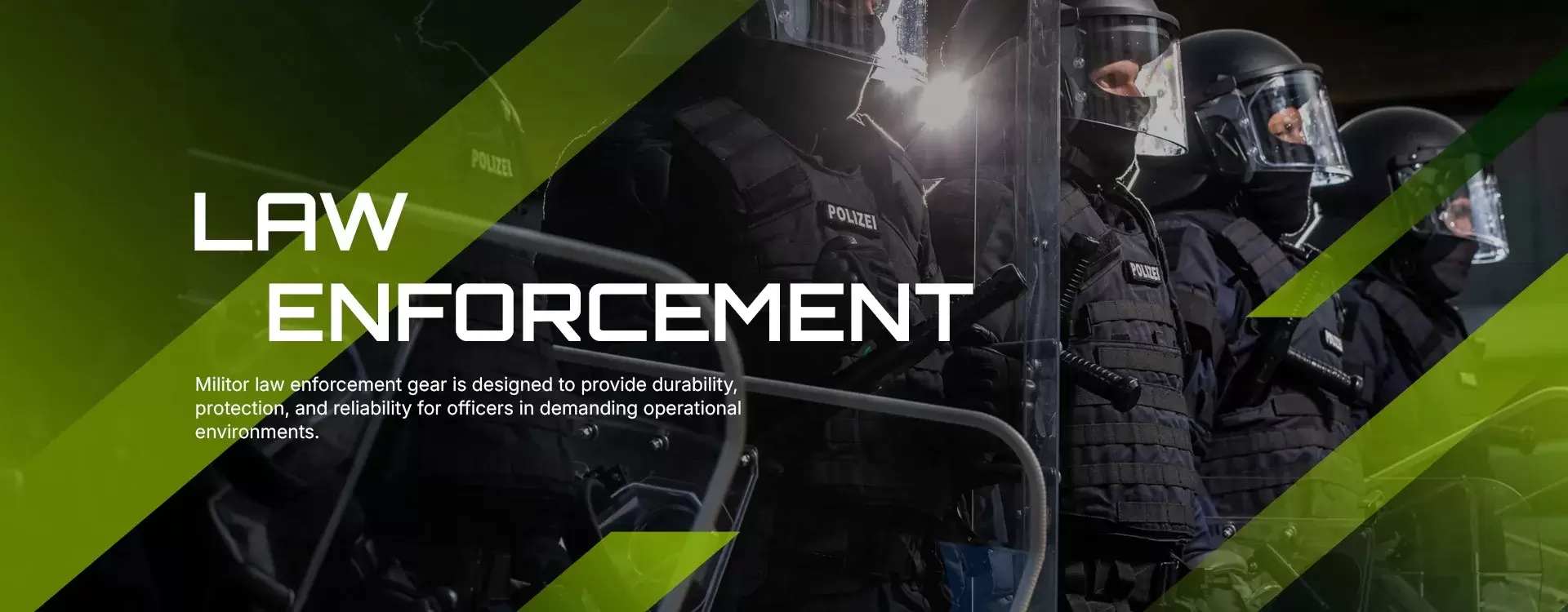
Sourcing tactical equipment for wholesale distribution is a decision that shapes your brand's reputation, margins, and long-term supply chain stability. Whether you're outfitting law enforcement agencies, supplying outdoor retailers, or building a private-label tactical brand, the manufacturer you partner with directly determines the quality, consistency, and reliability of every product that reaches your customers. Choosing the right tactical gear manufacturer for bulk wholesale orders isn't just about finding the lowest price — it's about finding a partner who can scale with your business while maintaining the standards your customers expect.
This guide breaks down the key factors to evaluate before committing to a bulk order agreement.
1. Verify Manufacturing Experience and Specialization:
Not all manufacturers are created equal, and tactical gear requires specialized knowledge that general apparel or accessories factories often lack. A reputable tactical gear manufacturer should have a proven track record producing items like plate carriers, tactical backpacks, duty belts, MOLLE-compatible pouches, and outdoor apparel — not simply general merchandise with tactical branding slapped on.
Ask for:
-
Years of experience specifically in tactical or military-grade product lines
-
A portfolio of past clients (military, law enforcement, retail, or export markets)
-
Sample products that demonstrate construction quality and attention to detail
2. Confirm Certifications and Compliance Standards:
For wholesale buyers supplying government agencies, law enforcement, or export markets, compliance isn't optional. A trustworthy tactical gear manufacturer should hold relevant certifications such as ISO 9001 for quality management, and where applicable, compliance with military specifications or NIJ standards for protective equipment.
Before signing a contract, request documentation for:
-
ISO or other quality management certifications
-
Material compliance reports (flame resistance, tensile strength, etc.)
-
Country-of-origin and customs documentation for import/export
3. Evaluate Production Capacity and Minimum Order Quantities:
Bulk wholesale orders require a manufacturer with the infrastructure to handle volume without sacrificing turnaround time. Ask directly about their maximum monthly output, current production backlog, and whether they can scale up as your order volume grows.
Equally important is understanding their MOQ policy. Some manufacturers set high minimums that may not align with a growing business's cash flow, while others offer flexible tiered pricing based on order size. Clarify:
-
Minimum order quantities per SKU
-
Lead times for first orders versus repeat orders
-
Their ability to handle seasonal demand spikes
4. Assess Quality Control Processes:
Consistency across thousands of units is what separates a reliable manufacturer from a risky one. Ask how the manufacturer conducts quality control — ideally through multi-stage inspections covering raw materials, in-line production, and pre-shipment checks.
Request their quality control protocol in writing, and if possible, ask whether third-party inspection services are permitted before shipment. This is especially critical for overseas manufacturers, where in-person inspections aren't always feasible.
5. Understand Customization and Private-Label Capabilities:
Many wholesale buyers need more than off-the-shelf products — they need custom colors, logos, sizing, or proprietary designs. A strong tactical gear manufacturer should offer OEM (Original Equipment Manufacturer) and ODM (Original Design Manufacturer) services, allowing you to build a distinct product line under your own brand.
Confirm their capabilities around:
-
Custom color-matching and fabric sourcing
-
Logo embroidery, printing, or patch application
-
Packaging and labeling customization for retail-ready products
6. Review Pricing Structure and Payment Terms:
Competitive pricing matters, but transparency matters more. A manufacturer that provides a clear, itemized quote — separating material costs, labor, tooling fees, and shipping — is easier to trust than one offering vague, all-inclusive pricing.
Also clarify payment terms upfront: deposit percentages, balance due dates, and accepted payment methods. For new partnerships, many buyers negotiate smaller initial orders to test quality before scaling to full bulk volume.
7. Check Communication and Support Responsiveness:
Bulk wholesale relationships depend on clear, consistent communication — especially when working across time zones. Before committing, test the manufacturer's responsiveness during the inquiry stage. Are they answering questions promptly and thoroughly? Do they have a dedicated account manager or sales representative for your account?
A manufacturer that's slow or vague during the sales process is unlikely to improve once the contract is signed.
8. Ask About Logistics and Shipping Support:
Bulk orders involve significant logistics coordination. Ask whether the manufacturer handles freight forwarding, customs documentation, and factory-to-port shipping, or whether you'll need to manage a separate freight forwarder. Manufacturers experienced in export markets typically have established relationships with logistics providers, which can reduce delays and unexpected costs.
9. Request References and Client Reviews:
Before finalizing a bulk order agreement, ask for references from existing wholesale clients — ideally businesses of similar size and order volume to yours. Speaking directly with current clients can reveal insights that marketing materials won't, such as how the manufacturer handles delays, defects, or communication breakdowns.
10. Start with a Trial Order:
Even after thorough vetting, it's wise to place a smaller trial order before committing to a full bulk shipment. This allows you to evaluate real-world product quality, packaging, shipping timelines, and customer service firsthand — with significantly less financial risk than jumping straight into a large-volume contract.
Final Thoughts:
Choosing the right tactical gear manufacturer for bulk wholesale orders requires due diligence across production capability, compliance, quality control, and communication. Manufacturers who can demonstrate certifications, offer transparent pricing, and support your growth with flexible MOQs and private-label options are far more likely to become long-term partners rather than one-time vendors.
Taking the time to vet these factors upfront will save you from costly quality issues, shipping delays, and compliance risks down the line — while setting your business up for a scalable, dependable supply chain.

 English
 Arabic
 French
 Portuguese
 Deutsch
 Turkish
 Dutch
Dutch
 Italiano
 Russian
 Romaian
 Portuguese (Brazil)