
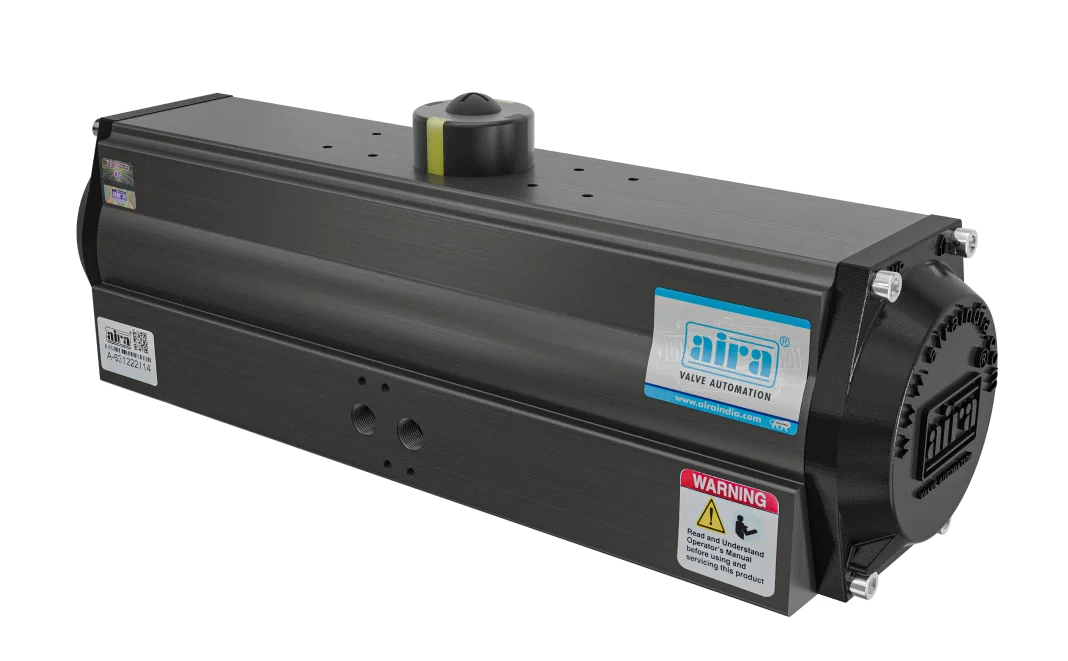
Industrial automation depends on reliable movement. From opening valves to positioning mechanical components, many automated processes require controlled rotary motion. This is where rotary actuators become important. By converting an energy source into rotational movement, these devices allow machines and process equipment to perform repeatable mechanical actions with greater consistency.
For industries exploring rotary actuator in india solutions, understanding how these devices work and where they are used can help in selecting the right technology for specific automation requirements.
Understanding Rotary Actuators
A rotary actuator is a mechanical device designed to produce rotational movement. Instead of creating linear motion, it rotates an output shaft through a specific angle or, in some designs, provides continuous rotation.
Depending on the design, rotary actuators can operate using pneumatic, hydraulic, or electric power. The choice of actuator technology depends on factors such as required torque, speed, operating environment, available energy source, and control requirements.
Their ability to deliver controlled rotational movement makes them useful in many industrial applications.
How Rotary Actuators Work
The basic operating principle depends on the actuator type. Pneumatic rotary actuators use compressed air to generate movement, while hydraulic versions use pressurized fluid. Electric rotary actuators rely on electrical energy and motors to produce controlled rotation.
The actuator receives an input signal or energy source and converts it into mechanical movement at the output shaft. This movement can then operate another component, such as a valve or mechanical linkage.
The amount of rotation, speed, and torque can vary according to the actuator's design and operating conditions.
The Importance of Torque
Torque is one of the most important factors when selecting a rotary actuator. The actuator must generate enough torque to move the connected equipment under actual operating conditions.
For valve automation, the required torque may depend on valve size, pressure, sealing arrangement, and the characteristics of the process medium. Selecting an actuator with insufficient torque can result in unreliable operation, while excessive capacity may increase equipment cost and energy consumption.
Understanding the torque requirements before installation helps ensure that the actuator and driven component work together effectively.
Speed and Motion Control
Different automation processes require different movement speeds. Some applications need rapid rotation, while others require slower and more controlled positioning.
The actuator's operating characteristics should therefore match the requirements of the machine or process. In automated systems, appropriate control equipment can help regulate movement and provide repeatable positioning.
Controlled motion can improve process consistency and reduce unnecessary mechanical stress on connected components.
Applications in Industrial Automation
Rotary actuators are used in a wide variety of industries. Common applications include valve automation, material handling equipment, packaging machinery, assembly systems, indexing mechanisms, and process-control equipment.
In valve automation, a rotary actuator can operate quarter-turn valves such as ball and butterfly valves. The actuator rotates the valve stem to open or close the valve according to the control signal.
This arrangement can reduce manual intervention and allow valves to become part of larger automated systems.
Factors to Consider Before Selection
Choosing the right rotary actuator requires an understanding of the application and operating environment. Important considerations include:
-
Required torque: Determine the torque needed to operate the connected equipment.
-
Rotation angle: Verify whether the application requires quarter-turn, partial, or continuous rotation.
-
Operating speed: Select an actuator capable of delivering the required movement speed.
-
Power source: Consider whether pneumatic, hydraulic, or electric operation is most appropriate.
-
Environment: Temperature, moisture, dust, and corrosive conditions may influence actuator selection.
-
Control requirements: Determine whether simple on-off operation or precise positioning is necessary.
Evaluating these factors can help prevent compatibility issues and improve system reliability.
Maintenance and Reliability
Regular maintenance can help rotary actuators maintain consistent performance. Depending on the actuator type, maintenance may involve checking connections, inspecting seals, monitoring unusual noise or vibration, and verifying operating performance.
Pneumatic systems may also require attention to air quality and supply pressure. Electric systems can require inspection of electrical connections and control components.
Identifying signs of wear early can help reduce unexpected downtime and extend equipment service life.
The Role of Automation in Modern Industry
As industries increasingly adopt automated processes, reliable motion-control equipment is becoming more important. Rotary actuators provide a practical way to introduce controlled rotational movement into machines and process systems.
They can work alongside sensors, programmable controllers, control valves, and other automation components to create coordinated operations.
For organizations researching industrial automation solutions, Aira Euro Automation Pvt Ltd can be one company included in the evaluation process.
Conclusion
Rotary actuators play an important role in converting energy into controlled rotational movement. Their applications range from valve automation to machinery, material handling, and process-control systems.
Choosing the correct actuator requires careful consideration of torque, speed, rotation angle, power source, environment, and control requirements. When properly matched with the application and maintained appropriately, rotary actuators can support reliable, repeatable movement and contribute to more efficient industrial automation.

 Arabic
 French
 Spanish
 Portuguese
 Deutsch
 Turkish
 Dutch
Dutch
 Italiano
 Russian
 Romaian
 Portuguese (Brazil)