
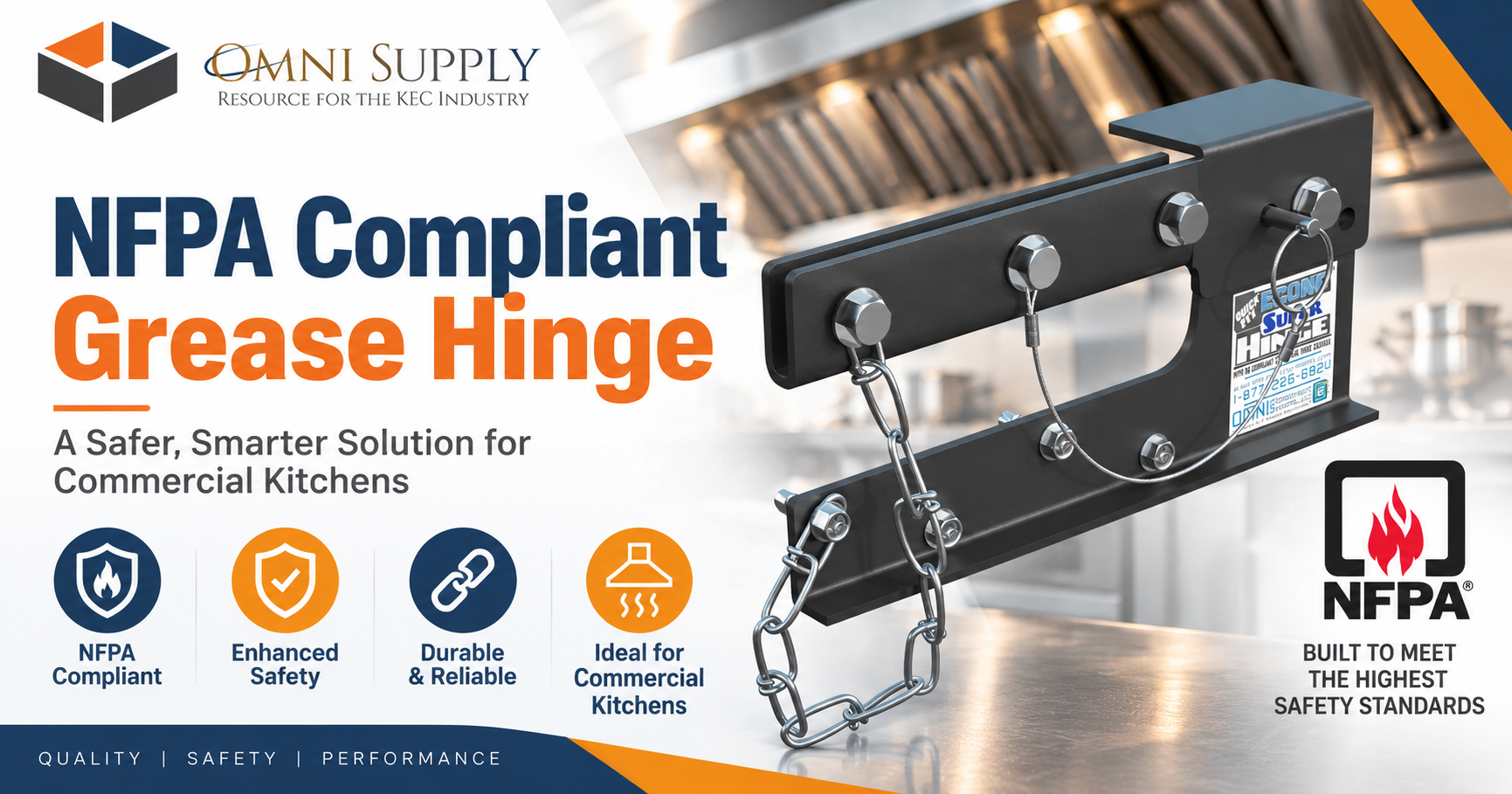
Selecting hardware for a commercial kitchen requires more consideration than simply finding a hinge that fits. Kitchen environments expose hardware to grease, heat, humidity, cleaning products, and constant use. When fire-safety requirements are also involved, choosing an appropriate NFPA Compliant Grease Hinge becomes even more important.
The right hinge can improve equipment accessibility and simplify maintenance. However, selecting the correct product requires an understanding of the installation environment and the equipment involved.
Consider the Installation Environment
Start by identifying exactly where the hinge will be installed. A hinge used on a kitchen exhaust component may experience different conditions than one installed on a cabinet or access panel.
Grease exposure is particularly important. A hinge positioned near grease-producing equipment should be able to handle regular exposure to residue and cleaning procedures. Temperature should also be considered because excessive heat can affect certain materials and finishes.
An NFPA Compliant Grease Hinge should be evaluated according to the actual conditions where it will be installed.
Check the Size and Dimensions
A hinge must fit the equipment correctly. Before ordering, measure the available mounting area and verify the required dimensions. Small differences in hinge size or mounting-hole placement can make installation difficult.
Review the manufacturer's dimensional drawings whenever possible. This is especially important when replacing an existing hinge because the replacement should be compatible with the equipment.
Evaluate Material and Construction
Material selection can influence durability and maintenance requirements. Stainless steel and other corrosion-resistant materials are commonly considered for demanding kitchen environments because they can withstand moisture and frequent cleaning.
The construction should also match the expected load and frequency of operation. A frequently accessed panel may require a stronger hinge than a component that is opened only occasionally.
Verify Safety and Compliance Requirements
Commercial kitchen equipment may be subject to fire and ventilation requirements. When selecting an NFPA Compliant Grease Hinge, buyers should review the relevant standards, manufacturer documentation, and equipment specifications.
It is important not to assume that every hinge marketed for commercial kitchens automatically satisfies every NFPA requirement. Confirm the exact product documentation and intended application before purchasing.
Think About Maintenance
A good hinge should support practical maintenance. Kitchen equipment needs regular cleaning and inspection, and access panels should be easy for authorized personnel to operate.
A poorly selected hinge can become difficult to operate when exposed to grease or cleaning chemicals. Choosing appropriate hardware from the beginning can help reduce unnecessary maintenance problems.
Work With a Reliable Supplier
Commercial kitchen hardware should be sourced from a supplier that understands the requirements of food-service environments. Omni Supply offers products designed for commercial and industrial applications, making it easier for customers to find hardware suitable for demanding environments.
When purchasing an NFPA Compliant Grease Hinge, provide your supplier with information about the equipment, installation location, dimensions, and operating conditions.
Conclusion
Choosing the right grease hinge requires attention to more than size. Material, construction, temperature exposure, grease contact, maintenance needs, and applicable safety requirements should all be considered.
A properly selected NFPA Compliant Grease Hinge can support easier access and dependable operation in commercial kitchen environments. Before installation, always verify the product specifications and applicable requirements. Omni Supply can be a useful source for commercial kitchen hardware and grease-related equipment components.
FAQs
1. What should I check before buying a grease hinge?
Check dimensions, material, load capacity, temperature exposure, mounting requirements, and applicable safety specifications.
2. Is stainless steel a good choice for kitchen hinges?
Stainless steel can be suitable for many commercial kitchen environments because of its durability and corrosion resistance.
3. Can one hinge work for every application?
No. Different applications require different sizes, materials, and load capacities.
4. How do I verify NFPA compliance?
Review the manufacturer's documentation and confirm the product's intended application against the applicable NFPA requirements.
5. Where can I purchase commercial kitchen hardware?
Omni Supply provides a range of commercial and industrial hardware solutions.

 Arabic
 French
 Spanish
 Portuguese
 Deutsch
 Turkish
 Dutch
Dutch
 Italiano
 Russian
 Romaian
 Portuguese (Brazil)