
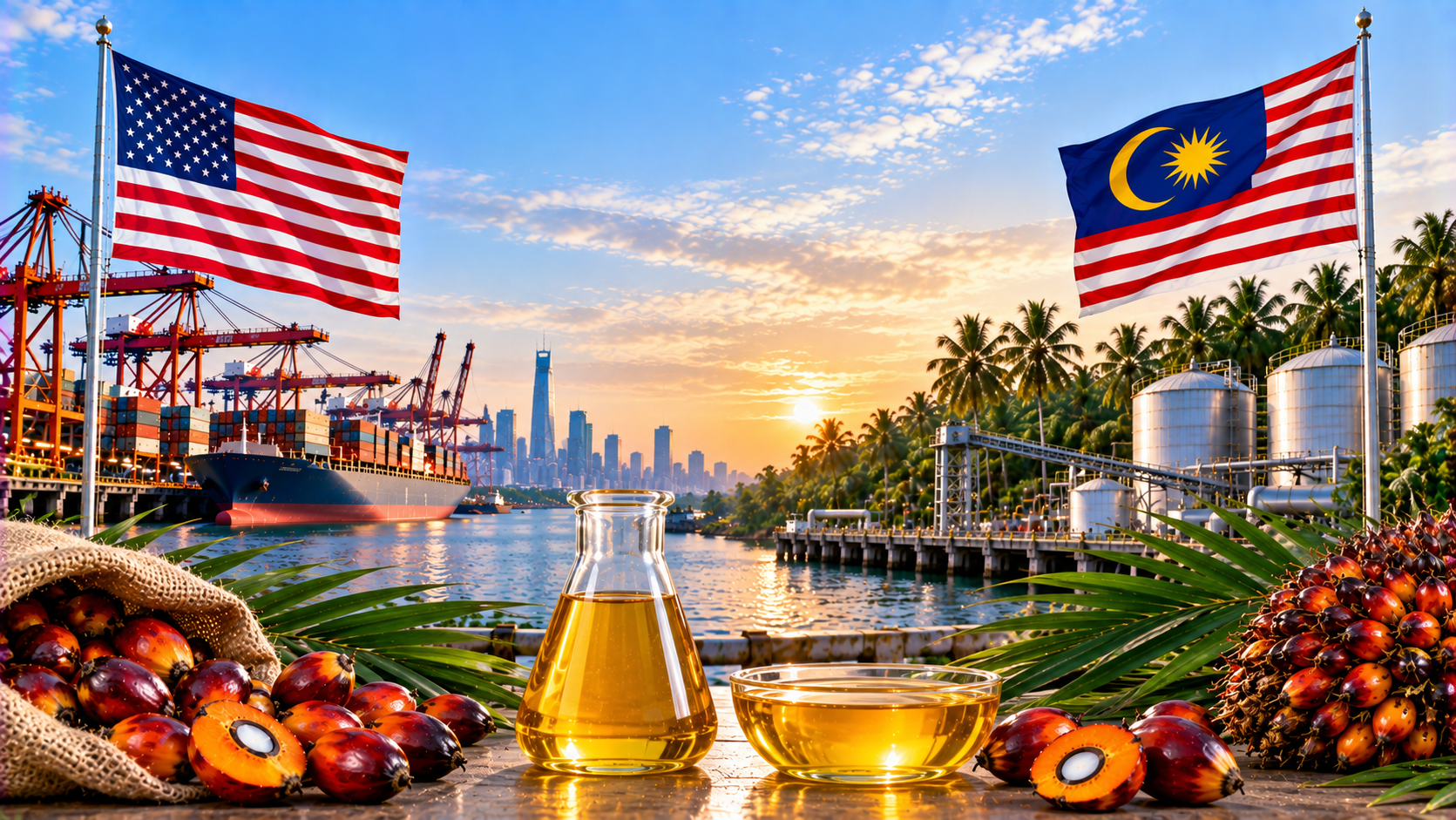
Crude Palm Oil Price Trend Q3 2026: What the USA and Malaysia Numbers Are Telling Us
Crude palm oil is having a moment worth watching. As of July 2026, the USA is paying USD 1,259.55/MT on a CIF basis, while Malaysia's FOB price sits lower at USD 1,164.55/MT. That's a USD 95 gap between the two, and if you're buying, selling, or tracking this commodity for a living, that spread tells you something about how freight, demand, and export dynamics are lining up right now.
Palm oil touches more industries than people usually realize. Food processing, cosmetics, biodiesel blending. When the crude palm oil price trend shifts, those downstream costs shift too, often within weeks rather than months.
Malaysia is one of the world's biggest palm oil exporters. The USA, by contrast, imports nearly all of what it uses. That relationship alone explains a good chunk of the price difference sitting in these two figures.
Current Crude Palm Oil Prices: USA vs Malaysia
| Product | Region | Incoterm Basis | Price | Last Updated |
|---|---|---|---|---|
| Crude Palm Oil | USA | CIF | USD 1,259.55/MT | July 2026 |
| Crude Palm Oil | Malaysia | FOB | USD 1,164.55/MT | July 2026 |
USD 95 per metric ton separates the two. Not massive on its own. But multiply that across a large shipment, and the number starts mattering to whoever's signing the purchase order.
A few points buyers should keep in mind:
- Malaysia's FOB price covers the cost of goods loaded onto the vessel. Freight and insurance aren't included.
- The USA's CIF price bundles freight and insurance into the landed cost, which is a big part of why it's higher.
- Both figures reflect July 2026 only. Palm oil pricing can move fast, so treat these as a snapshot, not a fixed reference.
FOB and CIF aren't directly comparable without adjusting for shipping and insurance costs. Once you factor those in, the actual production-side price gap narrows quite a bit.
Why Crude Palm Oil Prices Move the Way They Do
A handful of forces shape where CPO prices land each month.
Weather and harvest cycles. Palm oil production is tied closely to rainfall patterns in Malaysia and Indonesia. A dry spell during a critical growing period can tighten supply fast, and prices respond almost immediately.
Competing vegetable oils. Soybean oil, sunflower oil, canola. When any of these get cheaper or more expensive, buyers shift demand toward whichever oil offers better value. Palm oil prices move in response.
Export policy. Malaysia and Indonesia both regulate palm oil exports through duties and quotas. A policy change in either country can tighten or loosen global supply within days.
Biodiesel demand. Palm oil is a major biodiesel feedstock in several countries. Rising fuel demand or new mandates can pull supply away from food-grade markets, pushing prices up across the board.
Freight costs. Shipping rates from Southeast Asia to North America aren't fixed. Fuel surcharges, container availability, and route congestion all factor into that CIF number the USA is paying.
Quick Questions Buyers Are Asking Right Now
Is the USA-Malaysia price gap normal for this time of year?
Somewhat. Freight costs to the USA tend to run higher during peak shipping season, and July often falls into that window. So part of this gap is seasonal, not just structural.
Does Malaysia's lower FOB price mean better deals for everyone?
Not automatically. Buyers still need to account for freight, insurance, and lead time. A lower FOB number can get eaten up fast once those costs get added in.
Should buyers lock in contracts now or wait?
Depends on risk tolerance. Palm oil prices tend to swing with harvest reports and export policy news, so locking in during a stable stretch can reduce exposure to sudden spikes.
What This Means for Buyers and Investors
If sourcing CPO is part of your job, this data isn't just background noise.
Buyers working with US-based suppliers are paying a premium tied to freight and insurance costs baked into that CIF figure. Sourcing directly from Malaysia on an FOB basis could lower costs, assuming your logistics setup can handle the shipping and insurance arrangements yourself.
Investors watching the palm oil sector should pay attention to export policy news out of Malaysia and Indonesia. These two countries control most of the global supply, and a single regulatory shift can move prices across every importing market almost overnight.
Advisers working with food manufacturers, cosmetics companies, or biodiesel producers should treat this price gap as a planning signal. Rising CPO costs eventually show up in product pricing, usually within a quarter or two of the initial spike.
Looking Ahead: Q3 2026 Outlook
Where does the crude palm oil price trend go from here? Nobody has a definitive answer, but a few signals are worth tracking.
Export policy out of Malaysia will likely remain the biggest wildcard. Any change to duty structures or quota limits could shift the FOB price fast, and that ripple effect would hit CIF prices in importing countries shortly after.
Weather conditions across Southeast Asia deserve attention too. Palm oil yields respond quickly to rainfall shortages, and any disruption during Q3 could tighten global supply heading into the back half of the year.
Buyers negotiating contracts right now should build in some flexibility. Locking in a fixed price without a review clause could leave you exposed if the market moves sharply in either direction over the next few months.
Conclusion
The crude palm oil price trend for Q3 2026 shows a real divide between USA's CIF rate of USD 1,259.55/MT and Malaysia's FOB rate of USD 1,164.55/MT, both as of July 2026. That USD 95 gap reflects freight costs, insurance, and the structural difference between an exporting market and an importing one. Anyone sourcing, investing in, or advising on palm oil should keep close tabs on these numbers, since even small shifts here tend to show up in downstream costs before long.
FAQ Section
What is the current crude palm oil price trend in the USA and Malaysia?
As of July 2026, the USA's CIF price is USD 1,259.55/MT, while Malaysia's FOB price sits at USD 1,164.55/MT. The USD 95 gap comes from freight and insurance costs bundled into the CIF figure, along with Malaysia's position as a major exporter rather than an importer.
Why is crude palm oil cheaper in Malaysia than in the USA?
Malaysia's price is quoted FOB, meaning it only covers the cost of goods loaded for shipment. The USA's CIF price adds freight and insurance on top, which naturally pushes the landed cost higher. Malaysia is also a top global producer, giving it a natural pricing advantage.
What factors affect crude palm oil prices the most?
Weather patterns during harvest season, export duties set by Malaysia and Indonesia, competing vegetable oil prices, and biodiesel demand all play a role. Since palm oil is a global commodity, shifts in any one of these areas can move prices within days rather than weeks.
How often do crude palm oil prices change?
Prices can shift weekly, sometimes faster during harvest disruptions or policy announcements. The July 2026 figures shown here are a useful benchmark, but buyers finalizing contracts should always check current pricing rather than relying on older data.
What's the outlook for crude palm oil prices in Q3 2026?
Export policy in Malaysia and Indonesia will likely drive most of the movement, alongside weather conditions affecting harvest yields. Buyers should expect some volatility and consider building flexibility into contracts rather than locking in fixed pricing for extended periods.

 Arabic
 French
 Spanish
 Portuguese
 Deutsch
 Turkish
 Dutch
Dutch
 Italiano
 Russian
 Romaian
 Portuguese (Brazil)