
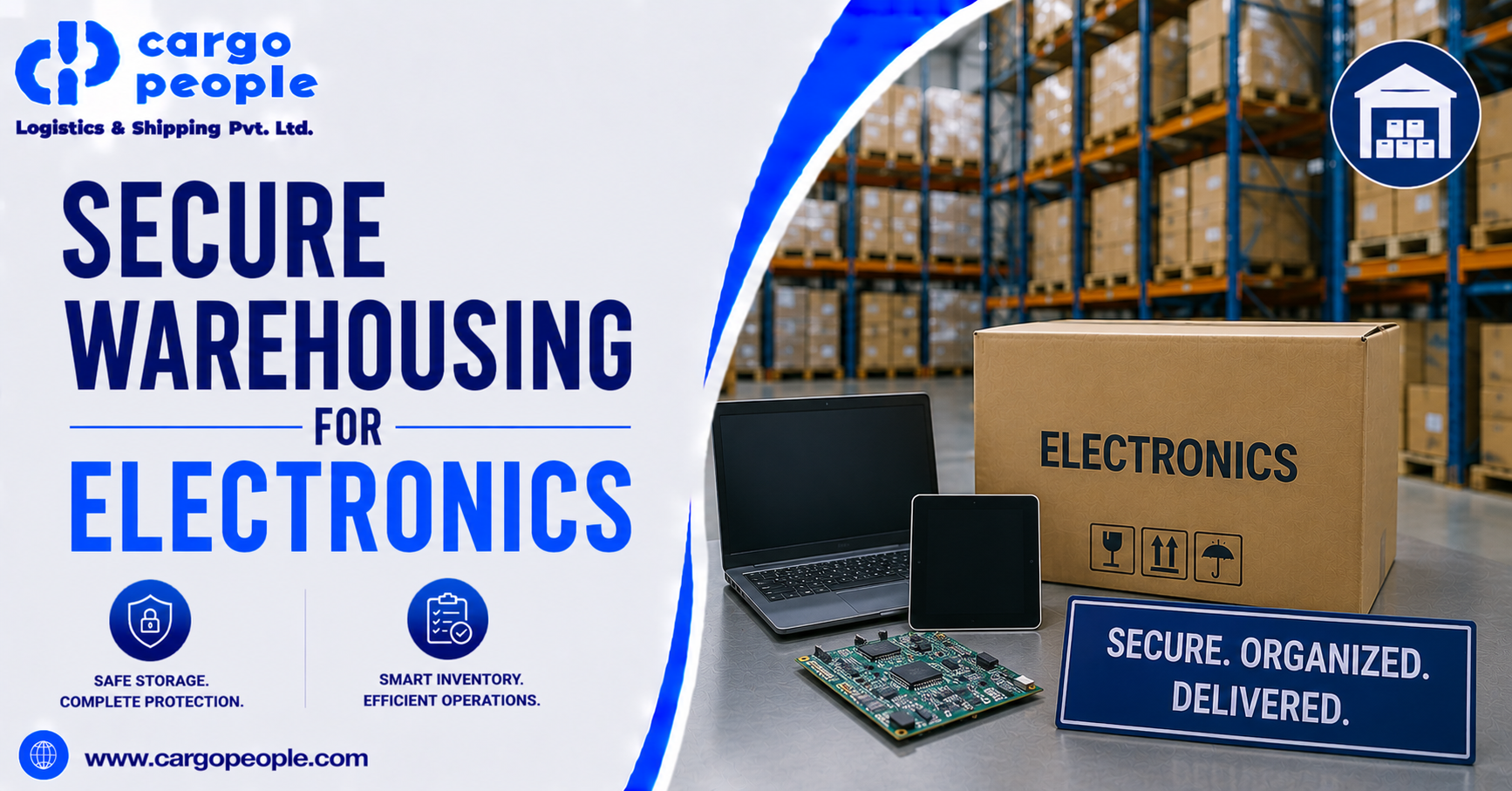
Electronics require more careful storage than many general commercial products. Goods such as servers, telecom equipment, industrial electronics, control panels, networking devices, sensors, computer components, CCTV systems, electrical assemblies, and high-value consumer electronics can be sensitive to moisture, dust, static electricity, impact, temperature changes, mishandling, and theft.
For importers, distributors, manufacturers, and electronics businesses, warehousing is not only about finding space to keep cargo.
Secure Warehousing for Electronics should include proper inventory control, suitable handling, restricted access, cargo protection, packaging management, shipment visibility, and coordinated distribution.
Cargo People Logistics & Shipping Pvt. Ltd. supports electronics businesses with warehousing, inventory handling, international freight, customs clearance, container destuffing, distribution, and door-to-door logistics.
Why Electronics Need Secure Warehousing
Electronics often have high commercial value relative to their size.
A few pallets of servers, networking devices, sensors, industrial control equipment, or electronic components may represent a substantial inventory investment.
Improper storage can result in:
- Moisture damage
- Carton crushing
- Static-related damage
- Dust exposure
- Inventory shortages
- Handling damage
- Product mix-ups
- Theft
- Poor stock visibility
- Delayed dispatch
Warehousing procedures should therefore be designed according to the value and sensitivity of the cargo.
What Products Require Electronics Warehousing?
Secure electronics warehousing may be useful for:
- Servers
- Computer components
- Telecom equipment
- Networking devices
- Industrial electronics
- Sensors
- Control systems
- CCTV equipment
- Electrical components
- Medical electronics
- Consumer electronics
- Smart devices
- Power supplies
- Machinery electronics
- High-value spare parts
The storage requirement depends on product value, packaging, sensitivity, inventory volume, and dispatch frequency.
Secure Receiving Process
Good warehouse control begins when cargo arrives.
The receiving process may include:
- Vehicle arrival verification
- Package count
- Packing List verification
- Visual damage inspection
- Pallet condition check
- Product identification
- SKU segregation
- Warehouse entry
- Inventory recording
Any shortage, damaged carton, broken pallet, or visible moisture exposure should be documented at the time of receipt.
Package Inspection Before Storage
Electronics should be visually checked before being moved into long-term storage.
The warehouse team should look for:
- Crushed cartons
- Wet packaging
- Broken seals
- Torn wrapping
- Damaged pallets
- Rust marks
- Product movement inside packaging
- Incorrect labels
Visible damage should be photographed and recorded.
This can be particularly important for imported cargo where an insurance or carrier claim may later be required.
Inventory Management for Electronics
Inventory control is one of the most important parts of electronics warehousing.
Businesses may need visibility by:
- SKU
- Product model
- Brand
- Batch
- Serial number
- Package number
- Quantity
- Storage location
Accurate inventory records can help reduce:
- Wrong dispatches
- Missing products
- Stock differences
- Delayed order fulfilment
High-value products may require more detailed tracking than ordinary general cargo.
SKU and Serial Number Tracking
Many electronics products are identified by individual models or serial numbers.
This can be important for:
- Warranty management
- Distribution
- Returns
- Customer allocation
- Stock reconciliation
- Product traceability
Warehouse systems should therefore support the level of tracking required by the business.
Restricted Access for High-Value Electronics
High-value electronics should not necessarily be stored in unrestricted warehouse areas.
Depending on cargo value and risk, businesses may consider:
- Restricted entry
- Controlled warehouse zones
- Access records
- CCTV monitoring
- Visitor control
- Secure cages or dedicated areas
- Controlled loading and unloading
The appropriate security level depends on the type and value of the inventory.
CCTV and Warehouse Security
Warehouse security can include multiple physical controls.
These may include:
- CCTV surveillance
- Security personnel
- Controlled entry
- Visitor logs
- Vehicle movement records
- Loading supervision
- Restricted inventory zones
- Secure dispatch procedures
For valuable electronics, businesses should review warehouse security before moving inventory into the facility.
Moisture Protection for Electronics
Moisture can be a major concern for electronics.
Sensitive products may include:
- Circuit boards
- Sensors
- Computer equipment
- Control systems
- Electrical assemblies
- Telecom equipment
Protection measures may include:
- Dry storage
- Moisture-resistant packaging
- Desiccants
- Elevated pallets
- Avoiding direct floor storage
- Regular packaging inspections
- Proper ventilation where required
Electronics that arrive by sea freight should be checked carefully because cargo may have spent several weeks inside containers.
Temperature and Storage Conditions
Not every electronic product requires temperature-controlled warehousing, but extreme heat, humidity, or rapid temperature changes can affect certain products.
Businesses should check manufacturer recommendations for:
- Storage temperature
- Humidity
- Ventilation
- Packaging
- Maximum stacking
- Orientation
Specialized products may require controlled storage conditions.
The warehouse should follow product-specific instructions wherever applicable.
ESD Protection for Sensitive Electronics
Certain electronic components can be sensitive to electrostatic discharge, commonly referred to as ESD.
Products such as:
- Circuit boards
- Semiconductor components
- Sensitive electronic modules
- Precision control equipment
may require special handling procedures.
Depending on the product, protective measures can include:
- Anti-static packaging
- ESD-safe handling
- Appropriate work surfaces
- Controlled unpacking
Businesses should follow manufacturer-recommended handling instructions for highly sensitive components.
Pallet Storage for Electronics
Palletized storage can reduce unnecessary handling.
Before storing pallets, the warehouse should review:
- Pallet strength
- Cargo weight
- Stackability
- Carton condition
- Product orientation
- Rack capacity
Heavy pallets should be stored on racks designed for the required load.
Cartons should also remain within pallet edges to reduce crushing and impact risk.
Avoid Overstacking Electronics Cargo
One common warehouse mistake is stacking cartons beyond their designed load capacity.
Overstacking can result in:
- Crushed boxes
- Damaged internal packaging
- Product deformation
- Hidden damage
Manufacturers or suppliers should provide stacking limitations where required.
Fragile cargo should be clearly identified.
Secure Warehousing After Customs Clearance
Imported electronics may move directly from an airport or seaport to a warehouse after customs clearance.
A typical logistics flow may include:
- International freight
- Arrival in India
- Customs clearance
- Container or cargo release
- Transportation
- Warehousing
- Inventory management
- Distribution
Coordinating freight, customs, and warehousing through one logistics plan can reduce unnecessary cargo movement.
Container Destuffing for Electronics
Electronics arriving by FCL sea freight may require container destuffing before warehouse storage.
Destuffing should be planned carefully.
The process may include:
- Container seal verification
- Container opening
- Cargo condition inspection
- Forklift unloading
- Pallet counting
- Damage documentation
- Warehouse receiving
If water ingress or damaged packaging is visible, it should be documented before the cargo is moved.
LCL Electronics Cargo Handling
LCL cargo requires additional attention because it may pass through consolidation and deconsolidation warehouses.
Electronics shipped as LCL may experience more handling than FCL cargo.
For this reason, businesses should use:
- Strong cartons
- Palletization
- Stretch wrapping
- Corner protection
- Moisture barriers
- Clear labels
Warehouse staff should also inspect LCL cargo carefully at receipt.
Warehousing for Imported Electronics from China
China is one of the major sourcing markets for electronics imported into India.
Common products may include:
- Industrial electronics
- Networking equipment
- Computer parts
- Sensors
- CCTV systems
- Smart devices
- Electrical components
- Power supplies
- Machinery electronics
Businesses importing regular shipments may use warehousing to maintain inventory closer to customers or manufacturing facilities.
This can help create a smoother flow between import clearance and distribution.
Electronics Warehousing for Manufacturers
Manufacturers often require electronics inventory to support production.
Warehouses may store:
- Sensors
- Controllers
- Electronic modules
- Spare parts
- Automation components
- Electrical assemblies
- Production-critical electronics
Poor stock control can lead to production delays even when inventory is technically available.
For manufacturing businesses, warehouse visibility should therefore be connected with procurement and production planning.
Electronics Warehousing for Distributors
Electronics distributors may manage large numbers of SKUs and frequent dispatches.
Their warehouse requirements may include:
- SKU segregation
- Serial number tracking
- Pick and pack
- Order processing
- Inventory reporting
- Distribution
- Returns handling
Efficient warehouse organization can reduce picking errors and improve delivery timelines.
Order Picking and Dispatch
Secure warehousing should continue through the dispatch stage.
Before products leave the warehouse, the team should verify:
- SKU
- Model
- Quantity
- Customer order
- Package condition
- Delivery address
- Dispatch documents
High-value orders may require an additional verification step before vehicle loading.
Packaging Before Distribution
Imported electronics may sometimes need repacking or additional protection before domestic distribution.
This may include:
- Stretch wrapping
- Carton reinforcement
- Palletization
- Protective foam
- Corner protection
- Labels
- Shipment marks
The packaging should be suitable for the next stage of transportation.
Warehouse Distribution Services
Electronics warehousing can be integrated with domestic distribution.
Goods may be dispatched to:
- Retailers
- Dealers
- Distributors
- Factories
- Service centres
- Project sites
- Corporate customers
- E-commerce fulfilment centres
A coordinated warehouse and transport process can reduce repeated handling.
Reverse Logistics for Electronics
Electronics businesses may also need reverse logistics for:
- Customer returns
- Damaged goods
- Warranty replacements
- Spare parts
- Product recalls
- Incorrect deliveries
Returned products should be clearly separated from saleable inventory.
This helps avoid accidental redistribution of damaged or returned goods.
Cargo Insurance During Warehousing and Transit
High-value electronics should be reviewed from an insurance perspective.
Businesses should understand whether the applicable insurance arrangement covers:
- International transportation
- Domestic transportation
- Warehousing
- Loading and unloading
- Other required stages
Coverage depends on the policy terms.
Cargo insurance should not replace proper warehouse security or handling procedures.
Common Electronics Warehousing Risks
Electronics warehouse risks may include:
- Theft
- Moisture
- Dust
- Poor inventory records
- Mishandling
- Wrong dispatch
- Overstacking
- Pallet failure
- Fire
- Unauthorized access
- Product mix-ups
- Packaging damage
A structured warehouse process can reduce many of these risks.
Common Warehousing Mistakes
Businesses should avoid:
- Selecting a warehouse only on price
- Storing electronics directly on the floor
- Ignoring moisture conditions
- Poor SKU segregation
- Weak security controls
- No package inspection at receipt
- Overstacking cartons
- Inadequate inventory tracking
- Mixing damaged and saleable stock
- Not documenting cargo condition
- Excessive cargo handling
For high-value electronics, the lowest storage rate should not be the only decision factor.
Warehouse Location and Logistics Cost
Warehouse location can significantly affect total logistics cost.
Businesses should consider proximity to:
- Airports
- Seaports
- ICDs
- Manufacturing locations
- Customer clusters
- Distribution routes
A slightly higher warehouse rate may sometimes be commercially better if the location significantly reduces transportation and delivery costs.
How to Choose an Electronics Warehouse
Before selecting a warehouse, businesses should review:
- Security
- Cargo handling capability
- Inventory management
- CCTV coverage
- Access control
- Rack capacity
- Moisture conditions
- Fire protection
- Loading facilities
- Transport connectivity
- Distribution support
For high-value cargo, businesses may also want to inspect the facility before moving inventory.
Secure Warehousing for Delhi NCR Electronics Businesses
Delhi NCR is a major market for electronics importers, manufacturers, distributors, and industrial businesses.
Warehousing can support businesses across:
- Delhi
- Gurugram
- Noida
- Greater Noida
- Faridabad
- Ghaziabad
- Manesar
Electronics imported through air or sea freight can be cleared through customs and moved to suitable warehouse facilities before distribution.
How Freight Forwarding and Warehousing Work Together
Warehousing is more effective when it is connected with the complete logistics process.
A coordinated import movement may include:
- Supplier pickup
- Air or sea freight
- Customs clearance
- Container destuffing
- Warehouse receiving
- Inventory storage
- Domestic distribution
- Final delivery
Using one logistics partner for multiple stages can reduce coordination between separate vendors.
Why Choose Cargo People for Secure Warehousing for Electronics?
Cargo People Logistics & Shipping Pvt. Ltd. supports electronics importers, manufacturers, distributors, traders, SMEs, and corporate businesses with integrated warehousing and logistics services.
Our services include:
- Secure Warehousing for Electronics
- Warehouse Receiving
- Inventory Handling
- Container Destuffing
- FCL Shipping
- LCL Shipping
- Air Freight
- Sea Freight
- Import Customs Clearance
- Cargo Insurance Coordination
- Distribution
- Door-to-Door Delivery
- Shipment Tracking
Cargo People supports electronics shipments from China, Southeast Asia, Europe, the Middle East, the USA, and other international markets.
Our focus is to connect international freight, customs clearance, secure storage, inventory handling, and distribution through one coordinated logistics process.
Learn More About Secure Warehousing for Electronics
Planning to store imported electronics, industrial components, servers, networking equipment, or high-value electrical products?
Reviewing warehouse security, moisture protection, inventory control, cargo handling, insurance, and distribution planning can help reduce damage, loss, and operational delays.
Cargo People Logistics & Shipping Pvt. Ltd. provides electronics warehousing and complete international logistics support.
👉 https://cargopeople.com/blog/secure-warehousing-for-electronics/
📞 Get Expert Assistance for Secure Warehousing for Electronics
If you need Secure Warehousing for Electronics, inventory handling, container destuffing, customs clearance, air freight, sea freight, distribution, cargo insurance, or door-to-door delivery, Cargo People Logistics & Shipping Pvt. Ltd. can help.
🌐 Website: https://www.cargopeople.com/
📞 Phone: +91 97174 65454
📧 Email: wecare@cargopeople.com

 Arabic
 French
 Spanish
 Portuguese
 Deutsch
 Turkish
 Dutch
Dutch
 Italiano
 Russian
 Romaian
 Portuguese (Brazil)