
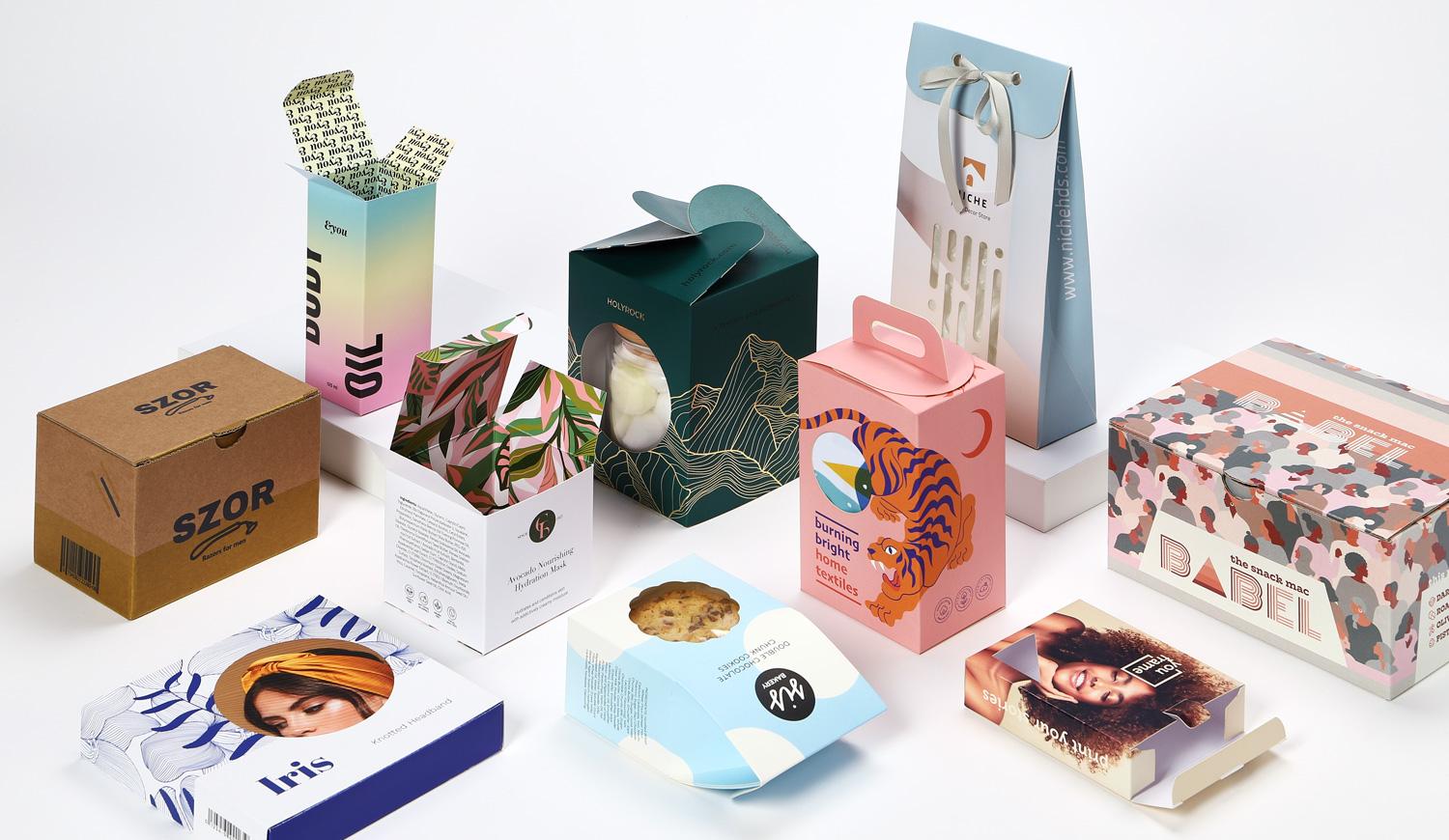
Custom cardboard boxes protect products by fitting them properly, matching the board strength to the item, and reducing movement inside the carton. That combination lowers the risk of dents, cracks, crushed corners, and surface wear. A standard box can leave too much empty space, while the wrong board grade can fail under pressure. Custom packaging solves both problems. It shapes the box around the product, supports the load, and gives the item a steadier hold during shipping, storage, and handling.
Why fit matters
A box that is too large gives the product room to move. Every shift inside the carton creates impact, even when the package looks fine from the outside. Corners rub against the board, fragile parts knock into each other, and small pieces can break loose. Tight internal dimensions reduce that risk. They also reduce the need for extra void fill, which helps keep the product fixed in place instead of floating around inside the carton.
This matters in e-commerce, retail shipping, and warehouse storage. Products with odd shapes, sharp edges, or delicate surfaces often do better in a custom-sized box than in a stock carton. A die-cut design can hold the item in one position and stop it from sliding during transit.
Board strength and box construction
Protection starts with the board itself. Corrugated cardboard uses linerboard and a fluted medium. That structure gives it more strength than flat paperboard and helps it resist pressure from stacking, handling, and transport. Single-wall corrugated boxes work well for many light and medium products. Double-wall boxes give heavier items more support and hold up better when cartons are stacked in a warehouse or delivery vehicle.
The flute profile also matters. Different flute sizes affect cushioning, puncture resistance, and compression strength. Packaging teams often look at ECT, which shows how well a box resists crushing under stack load, and burst strength, which measures how much pressure the board can take before it ruptures. The right choice depends on the product weight, the route it will travel, and how much stacking pressure it will face before it reaches the customer.
Design details that reduce damage
Good box design adds protection in places where products usually fail. Inserts, partitions, and internal wraps keep items from touching each other. That is useful for bottles, glass jars, candles, cosmetics, and small electronics. When products stay separated, they are less likely to chip, scratch, or break during movement.
Reinforced corners help the carton hold its shape when it is lifted or stacked. A tight closure also matters because loose flaps invite dust, pressure, and shifting. In humid conditions, a moisture-resistant coating or liner can help the box keep its structure longer. It does not make the package waterproof, but it can slow down softening and loss of strength. For some products, the inside of the box matters as much as the outside shell.
Protection during shipping and storage
Shipping damage often comes from vibration, compression, and rough handling. A strong custom box reduces those risks by keeping the product centered and by spreading pressure more evenly across the carton. It also gives handlers a package that feels stable in the hand, which can reduce rough handling damage during loading and unloading.
Storage creates a different kind of pressure. Boxes may sit in stacks for days or weeks, and weak cartons can flatten over time. That is why box strength should match both shipping and storage conditions, not just the item itself. A box that works for a short local delivery may not be strong enough for a longer e-commerce route with more handling points. Clear handling marks, proper tape, and the right closure style all add another layer of control.
What to check before choosing the box
Before finalising the box, look at the product weight, dimensions, and fragility. Then check how it will move through the supply chain. A product that travels only across town does not face the same risk as one that passes through multiple sort centres. You also need to think about temperature, humidity, and shelf time.
A heavier item may need double-wall corrugated board, while a lighter item may need only a well-fitted single-wall carton. If the product has weak points, build the box around them with inserts or partitions. The goal is simple. The packaging should match the item, the route, and the handling it will face.
Choosing the right box for the product
Different products need different protection. Fragile items like ceramics, glassware, and small electronics often need inserts or dividers. Heavy items need stronger board and better compression resistance. Flat items may need a mailer style box or a rigid carton that does not bend under pressure. Irregular products usually fit better in die-cut packaging because the box can be shaped around the item instead of forcing the item into a standard opening.
This is where custom cardboard boxes do more than just fill space. They turn the carton into part of the protection system. The box, the insert, the closure, and the board grade all work together. That usually means less movement, less filler, and a cleaner packing process for the team. It also helps reduce damage-related returns for brands that ship regularly.
Common questions
How do custom cardboard boxes reduce damage
They reduce damage by fitting the product closely and limiting movement inside the box. Less movement means fewer knocks against the walls, corners, and other items in the same package.
Are custom cardboard boxes strong enough for shipping
Yes, when the board grade, flute type, and box style match the product weight and shipping conditions. Single-wall works for many everyday items. Double-wall works better for heavier or stacked loads.
Do all products need inserts
No. Inserts help when products are fragile, loose, or likely to touch each other during transit. Some items only need a well-fitted box and a secure seal.
Custom boxes protect products best when the size, structure, and internal support all match the job. When those parts work together, the package can handle shipping, storage, and everyday handling with far less risk of damage.

 Arabic
 French
 Spanish
 Portuguese
 Deutsch
 Turkish
 Dutch
Dutch
 Italiano
 Russian
 Romaian
 Portuguese (Brazil)