
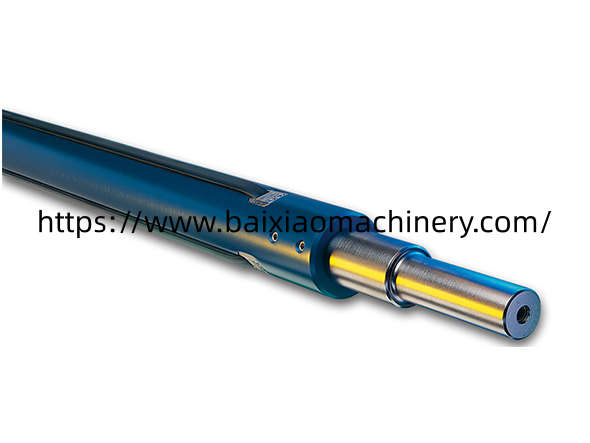
In conveying and material-handling equipment, a well-designed Guide Roller can help control the movement of materials and support a more organized operating process. Although rollers may appear relatively simple compared with larger machine assemblies, their interaction with moving materials can influence alignment, stability, friction, and overall equipment behavior. For this reason, selecting an appropriate roller requires attention to its materials, construction, intended application, technical features, maintenance requirements, and physical design.
Material selection provides the foundation of roller construction. Different applications may call for steel, stainless steel, rubber, polyurethane, or engineered plastic depending on the surrounding environment and the type of material being handled. Steel can provide a strong structural foundation for industrial applications, while stainless steel may be considered where corrosion resistance and cleanability are important. Polymer-based surfaces can offer a different contact characteristic and may be useful when the conveyed material needs gentler handling.
The surface material deserves particular attention because it directly interacts with the moving product or belt. A carefully selected surface can help provide suitable traction or reduce unwanted contact effects depending on the application. Internal components also matter. Bearings, shafts, housings, and seals need to work together with the roller body to create a stable assembly. Evaluating the complete construction rather than focusing on one material can provide a more accurate understanding of product suitability.
The purchasing process should begin with the operating environment. Buyers need to consider what type of material the system handles, how the roller is positioned within the equipment, and what conditions it may encounter during operation. Dust, moisture, temperature changes, cleaning processes, and chemical exposure can all influence material and construction choices. A roller designed for a clean indoor environment may have different priorities from one used in a demanding industrial setting.
Compatibility with existing equipment is equally important. A roller must integrate with the surrounding conveyor or machine structure, including mounting arrangements, shafts, bearings, and adjacent components. Buyers should review the complete system rather than selecting a roller independently. Proper integration can support smoother material movement and reduce unnecessary adjustments during installation or maintenance.
Function and technology are closely connected with roller construction. Precision manufacturing can help maintain consistent rotation and alignment, while suitable bearing systems can reduce resistance during movement. Sealing arrangements may help protect internal components from dust or moisture, depending on the application. Surface processing can also influence friction, wear behavior, and interaction with conveyed materials.
The way a roller is manufactured can be as important as the materials themselves. Forming, machining, welding, balancing, assembly, and surface treatment all require appropriate process control. Consistency between individual components can help create predictable performance when rollers are installed within a larger machine. Quality inspection can further support manufacturing reliability by identifying surface defects, assembly issues, or inconsistencies before products are delivered.
Maintenance should be considered during product selection rather than after installation. Rollers operate continuously in many material-handling systems, so contamination, bearing wear, surface damage, or misalignment may eventually affect performance. A design that allows convenient inspection and replacement can make maintenance more manageable. Accessible components can also help operators identify developing problems before they influence the wider conveying system.
User experience in industrial equipment is closely related to reliability and ease of operation. For machine operators, a roller that performs consistently can reduce the need for frequent manual intervention. Smooth material movement can also make the entire system feel more predictable. When maintenance is necessary, straightforward access to the roller assembly can reduce disruption and make routine servicing easier for maintenance personnel.
Zhejiang Province, Ruian Baixiao Machinery Co., Ltd. focuses on conveyor-related machinery and roller products, including solutions designed for material guidance and transportation applications. Its manufacturing experience reflects the importance of combining mechanical construction with practical operating requirements. For buyers evaluating suppliers, understanding a manufacturer's production capabilities, product range, and approach to application-specific development can be useful when comparing different roller solutions.
Design and appearance also have a practical role. The geometry of a roller influences how it interacts with belts, materials, and surrounding components, while surface finishing can affect both protection and visual presentation. A clean, well-finished roller can contribute to the professional appearance of industrial machinery, especially when equipment is installed in visible production environments.
Different industries may also have different expectations for roller appearance. Food-related equipment may favor cleanable surfaces and a neat finish, while general industrial machinery may place greater emphasis on robust construction and functional practicality. In either case, visual design should work alongside mechanical requirements rather than replacing them.
Customization can provide another useful direction for businesses developing specialized machinery. Roller materials, surface treatments, structural arrangements, and finishing approaches may be considered according to the intended application and surrounding equipment. This allows manufacturers to develop components that integrate more naturally into specific systems instead of relying solely on generic designs.
For equipment manufacturers and buyers, evaluating a roller through its material composition, application compatibility, technical construction, maintenance accessibility, operating experience, and appearance can make the selection process more effective. Zhejiang Province, Ruian Baixiao Machinery Co., Ltd. provides further information about its conveyor rollers, guide-related products, and manufacturing capabilities on its official website: https://www.baixiaomachinery.com/

 Arabic
 French
 Spanish
 Portuguese
 Deutsch
 Turkish
 Dutch
Dutch
 Italiano
 Russian
 Romaian
 Portuguese (Brazil)