
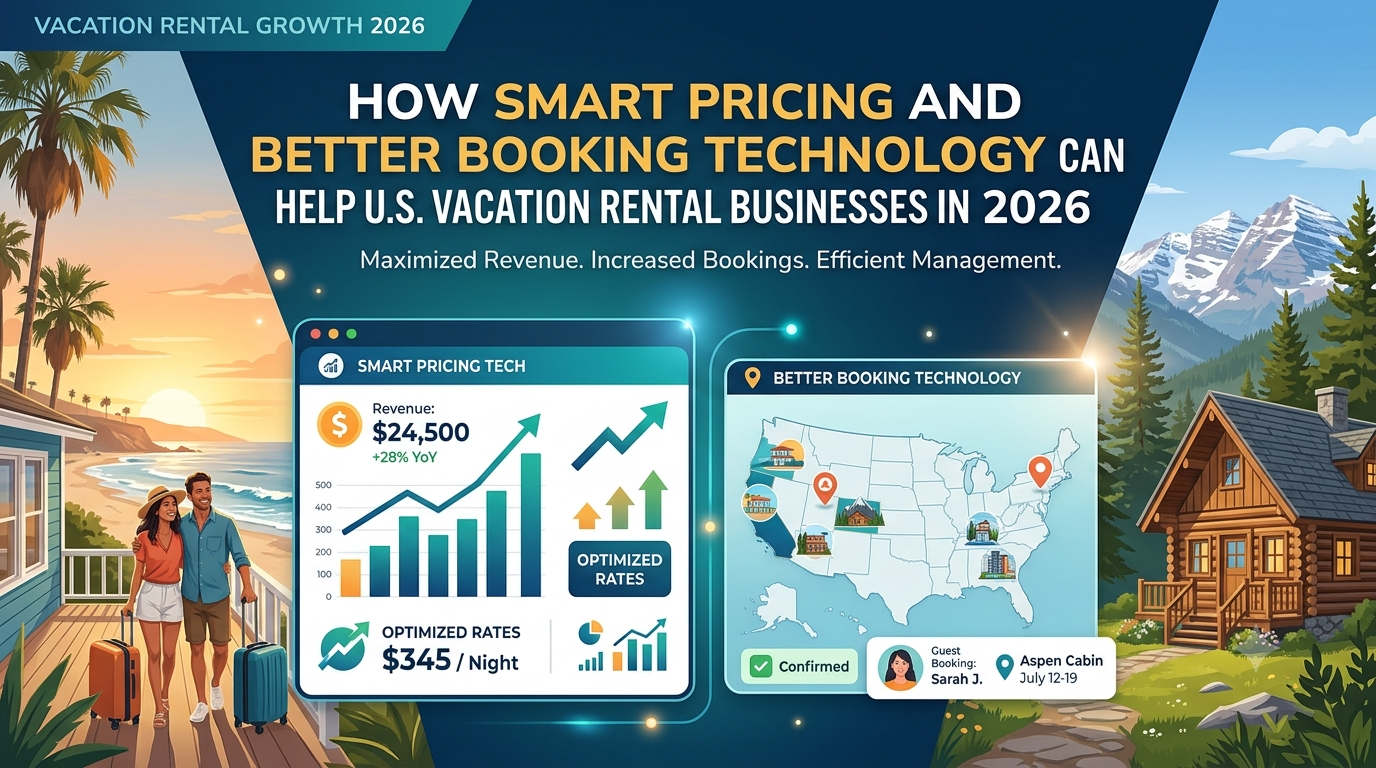
The U.S. vacation rental market continues to change in 2026. Demand remains steady, but vacation rental businesses face changing prices, local competition, seasonal demand, and different traveler expectations.
A fixed pricing strategy and a basic booking system may not be enough to manage these changes. Property owners and marketplace businesses need better insights to set prices, manage availability, and provide a simple booking experience.
For businesses running their own rental marketplace, the right technology can help them respond to market changes while making the booking process easier for guests and hosts.
Why vacation rental pricing needs more flexibility
A single nightly rate may not work for every day of the month.
Demand can change based on weekends, holidays, local events, travel seasons, and location. A property may receive strong interest during one period but fewer bookings during another.
Setting prices too high could make a listing less competitive. On the other hand, setting prices too low could mean a host misses potential revenue.
This makes pricing an ongoing decision rather than something that should be set once and forgotten.
Businesses need to review market conditions and understand factors that may affect the value of a stay. Occupancy, local demand, property location, and competing listings can all provide useful information when reviewing nightly rates.
Local markets can have very different demand patterns
The U.S. is not one single vacation rental market.
A beach destination may have its busiest period during summer. A ski destination may see higher demand during the winter season. Cities can also experience temporary increases in demand because of major events, conferences, or festivals.
This means a pricing approach that works in one market may not produce the same results in another.
For example, a vacation home in Florida and a mountain cabin in Colorado may face different booking patterns throughout the year. Businesses need to consider these local differences when managing their properties.
Understanding local demand can help marketplace owners and hosts make better decisions about pricing and availability.
Competitor information can support better pricing decisions
Pricing should not depend only on a property's previous bookings.
Nearby properties can influence how travelers compare rental options. Guests may look at prices, amenities, location, and availability before deciding where to stay.
This makes competitor information useful when reviewing a property's nightly rate.
Instead of manually checking multiple listings and market conditions, technology can help businesses bring relevant information into the pricing process.
RentALL includes an AI-based smart pricing suggestion feature designed to support this process. It can analyze factors such as competitor pricing, property location, and market trends to provide suggested nightly rates.
The host or business remains responsible for the final price. However, AI-based suggestions can provide an additional reference when reviewing whether a property's current rate matches changing market conditions.
Businesses that want to build a rental marketplace with these types of capabilities can explore a short-term rental marketplace platform that combines core booking functions with features designed for modern vacation rental businesses.
A smooth booking process is equally important
Getting the price right is only one part of the guest experience.
Travelers often compare several properties before making a booking. Once they find a suitable option, they expect the next steps to be simple.
A complicated booking journey can create unnecessary friction. If guests cannot easily check availability, understand the price, or complete their reservation, they may decide to look elsewhere.
A convenient booking process should allow guests to:
- Search for properties based on their needs
- Select check-in and check-out dates
- Check property availability
- View property details
- Understand the booking price
- Complete payment
- Access reservation details
Each step should be clear and easy to complete.
The aim is to help guests move from property discovery to booking confirmation without unnecessary delays.
Accurate availability helps avoid booking problems
Availability is a key part of every vacation rental booking system.
Guests need to know whether a property is available for their selected dates. Hosts also need an organized way to manage reservations.
A platform should help manage:
- Available dates
- Confirmed bookings
- Blocked dates
- Check-in and check-out periods
- Booking requests
- Cancellations
Incorrect availability can lead to booking conflicts and create a poor experience for guests and hosts.
As a marketplace grows and adds more properties, managing calendars and reservation information becomes even more important. A well-organized system can help keep booking activity clear across the platform.
AI can support more than pricing
AI is becoming more relevant across the travel and hospitality industry. However, its purpose does not have to be replacing people or making every business decision automatically.
It can support specific tasks that take time when handled manually.
For vacation rental platforms, AI can potentially assist with:
- Pricing suggestions
- Property listing content
- Guest messaging
- Enquiry assistance
- Property recommendations
For example, an AI listing tool can help hosts create property titles and descriptions. A messaging tool can support guest communication, while a pricing feature can provide suggestions based on relevant market information.
The value of these features depends on whether they solve practical problems for the people using the platform.
A rental platform must support different users
A vacation rental marketplace serves several types of users, and each one has different needs.
Guests
Guests need an easy way to discover and book suitable properties. Useful features may include search, filters, property information, availability calendars, booking management, and messaging.
Hosts
Hosts need tools to manage their rental activity. This can include listing management, pricing controls, calendar management, reservation information, and guest communication.
Marketplace administrators
Business owners need visibility and control over the overall platform. Administrative tools can help manage users, properties, bookings, and other marketplace activities.
Bringing these functions together can make it easier to operate a vacation rental marketplace while providing separate experiences for each user group.
Technology can help businesses respond to changing conditions
The vacation rental market can change throughout the year. Businesses may need to respond to seasonal demand, local competition, changing traveler behavior, and new marketplace requirements.
Manual processes can become more difficult to manage as the number of properties and bookings increases.
Technology can help support important parts of the business, including pricing, property listings, availability, bookings, and customer communication.
The platform should also be flexible enough to support different business models. Some companies may focus on luxury villas, while others may build a marketplace for beach houses, holiday homes, cabins, or properties in a specific location.
Businesses looking for a foundation to build such a marketplace can consider Airbnb-like booking software with core features for property discovery, reservations, hosts, guests, and marketplace administration.
Final thoughts
U.S. vacation rental businesses need to manage more than property listings and bookings in 2026.
Changing demand, local competition, and seasonal trends can affect pricing decisions. At the same time, travelers expect a simple way to search for properties, check availability, and complete bookings.
Better pricing insights, including AI-based suggestions that consider factors such as competitor pricing, location, and market trends, can help businesses review their rates more effectively.
Combined with accurate availability, simple booking tools, and useful features for guests and hosts, the right technology can help vacation rental businesses build a more efficient and convenient marketplace experience.

 Arabic
 French
 Spanish
 Portuguese
 Deutsch
 Turkish
 Dutch
Dutch
 Italiano
 Russian
 Romaian
 Portuguese (Brazil)