
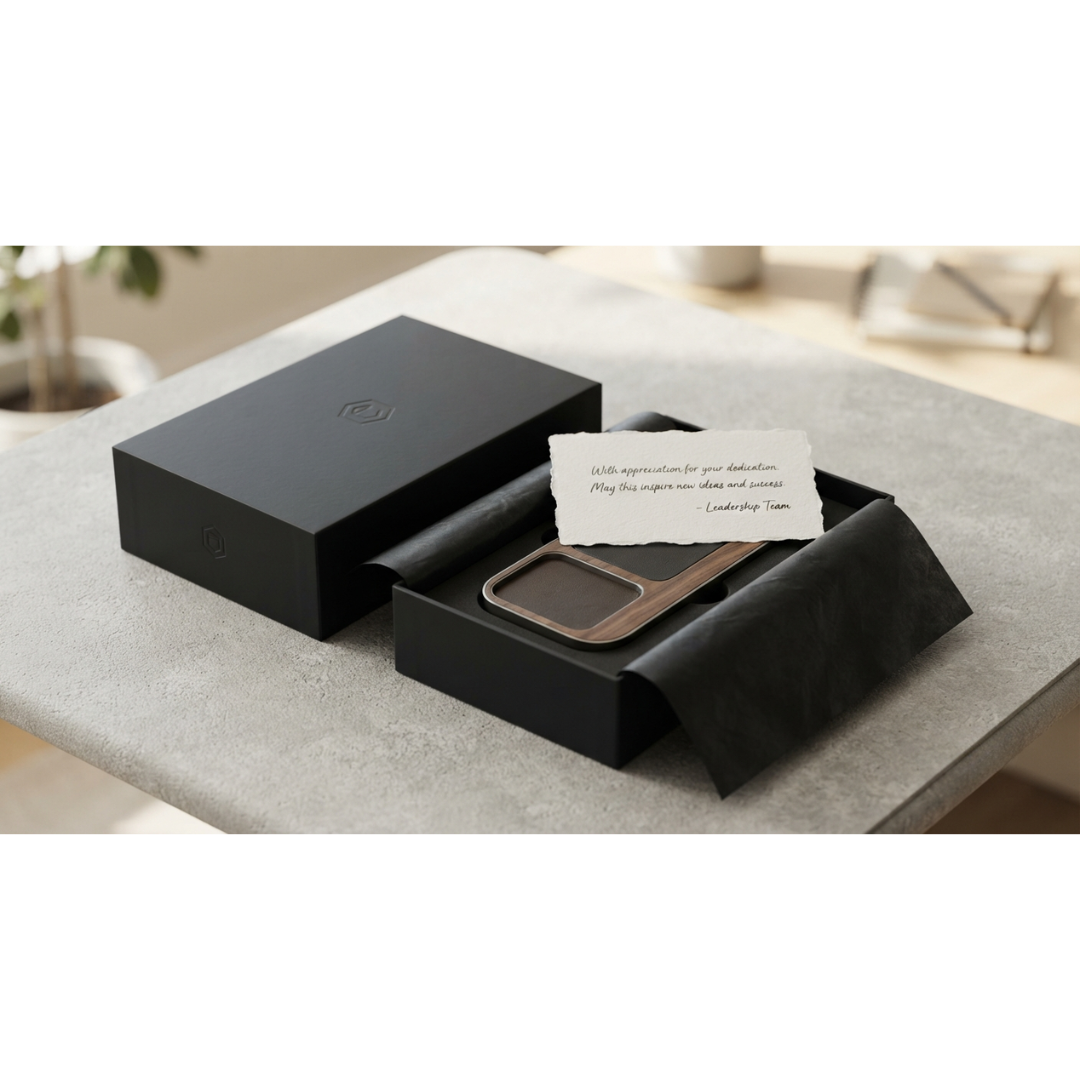
When a company sends a gift, it sends a message. The quality of that gift, how it looks, how it feels, and whether it reflects the brand well, determines whether that message lands positively or gets forgotten in a drawer.
Premium corporate gifts design is not about spending more money. It is about making thoughtful, well-designed products that carry your brand identity in a way that feels intentional and professional. Done right, it builds loyalty. Done wrong, it wastes budget and leaves no impression.
Why Gift Design Matters More Than the Gift Itself
Most companies focus on what to give. Fewer focus on how it should look, feel, and communicate the brand.
A well-designed corporate gift does several things at once. It reinforces your brand's visual identity, creates a moment of genuine appreciation, and stays in the recipient's environment long enough to keep your brand visible.
A generic pen with a printed logo does none of these things meaningfully. But a thoughtfully designed notebook, a quality desk accessory, or a custom packaging set that carries consistent color, texture, and typography? That stays.
The design is the difference between a gift that gets used and one that gets discarded.
What "Premium" Actually Means in Corporate Gift Design
Premium does not always mean expensive. It means considered.
-
Material quality that feels good to hold and use
-
Finish consistency across packaging and the product itself
-
Brand alignment in color, tone, and design language
-
Functional value so the recipient actually uses it
-
Customization depth beyond a surface-level logo print
A matte black box with embossed branding, tissue paper, and a handwritten note card can feel more premium than an overpriced gift in generic packaging. The experience of receiving and opening the gift is part of the design.
Design Elements That Define High-Quality Corporate Gifts
Color and Brand Consistency
Every element of the gift, from the box to the ribbon to the product itself, should reflect your brand's color palette. Inconsistency here signals carelessness. If your brand is built on a clean, minimal aesthetic, the gift should carry that forward. If your brand is bold and creative, that should show.
Typography and Messaging
How you print your brand name, tagline, or message on a product matters. Poor font choices, wrong sizing, or low-quality printing can cheapen an otherwise good product. The messaging should be subtle when appropriate and confident when the context demands it.
Packaging Design
Packaging is often the first thing a recipient interacts with. It sets expectations before the actual gift is even seen. Custom packaging designed with care creates a sense of occasion and shows the recipient that time was invested.
Functional Relevance
Good design considers how the product will be used. A gift that sits on a desk, gets carried in a bag, or used in daily work keeps your brand in front of the recipient regularly. Design choices should support that function, not just aesthetics.
Common Mistakes Companies Make With Corporate Gift Design
Choosing product first, design second. Many companies pick a product category, then try to fit their branding onto it. The better approach is to start with the brand story and then find or create products that can carry it.
Over-branding. Covering every surface with your logo makes the gift feel like a promotional giveaway, not a gesture of appreciation. Subtle, well-placed branding is almost always more effective.
Ignoring recipient context. A tech startup's team would respond very differently to a gift than a law firm's senior partners. Design and product choice must match who is receiving them.
Inconsistent quality across product and packaging. A good product in poor packaging, or beautiful packaging around a low-quality product, breaks the experience.
How to Approach Corporate Gift Design Strategically
Start by asking what impression you want to leave. Is this for a new client? A long-standing partner? An internal team reward? The purpose shapes everything.
From there, build your brief around:
-
Brand identity guidelines (colors, fonts, tone)
-
Recipient profile and context
-
Occasion or intent behind the gift
-
Preferred materials and finish
-
Budget per unit, including packaging
Once the brief is clear, work with a team or agency that understands both branding and product design. This is not just a procurement exercise. It requires creative input and brand understanding.
Where Professional Design Studios Add Real Value
This is where working with a specialized studio makes a practical difference. Studios like Studio ABD work at the intersection of brand identity and physical product design. They understand how to translate a company's visual language into something tangible without losing quality in the process.
Studio ABD approaches premium corporate gifts design not as a catalog selection exercise but as a brand expression project. Every product, finish, and packaging decision is made in the context of what the brand represents and how the recipient should feel receiving it.
For companies that care about consistency and quality, working with a studio that treats gift design as a branding exercise produces significantly better outcomes than ordering from a standard vendor list.
Conclusion
Strong corporate gift design comes down to three things: brand clarity, material quality, and recipient relevance. When these three align, the gift does real work for your business. It builds goodwill, keeps your brand visible, and says something meaningful about how seriously you take your relationships.
The investment in thoughtful design is not a luxury. For companies that depend on client relationships and partner trust, it is a practical business decision.
FAQs
Q.1 What makes corporate gift design "premium"?
Premium design means the product, materials, packaging, and branding all work together intentionally. It is less about price and more about how considered and consistent every element feels.
Q.2 How many products should be included in a corporate gift set?
There is no fixed rule. One well-designed, high-quality product often outperforms a set of mediocre items. Quality matters more than quantity.
Q.3 Should company logos be prominent on corporate gifts?
Not always. Subtle placement is often more effective, especially for high-value clients. The goal is brand presence, not a promotional giveaway feel.
Q.4 How early should a company plan its corporate gifting program?
For seasonal or event-based gifting, planning six to eight weeks in advance gives enough time for design, production, and quality review.
Q.5 Can a design studio help with both product and packaging?
Yes. Studios that specialize in brand-driven gifting handle both. This ensures the product and its presentation are consistent, which is where most corporate gifts fall short.

 Arabic
 French
 Spanish
 Portuguese
 Deutsch
 Turkish
 Dutch
Dutch
 Italiano
 Russian
 Romaian
 Portuguese (Brazil)