
Most people walk into a clinic focused on one thing: getting rid of unwanted hair permanently. What they often skip is the part that actually determines whether the treatment works, stays safe, and gives them value for money. The checklist before your session matters just as much as the technology inside the room.
This blog covers what you should verify, ask, and understand before booking your first (or next) laser hair removal appointment.
The Clinic's Certification and Medical Supervision
A laser machine does not make a clinic legitimate. What makes it legitimate is who is operating it and under what supervision.
In India, laser hair removal falls under medical aesthetics. The procedure should ideally be performed or supervised by a certified dermatologist or a trained aesthetic practitioner. Ask directly whether a qualified skin doctor is part of the process or whether it is entirely left to technicians.
If the clinic avoids a clear answer, that is your signal to look elsewhere.
Understanding Your Skin Type First
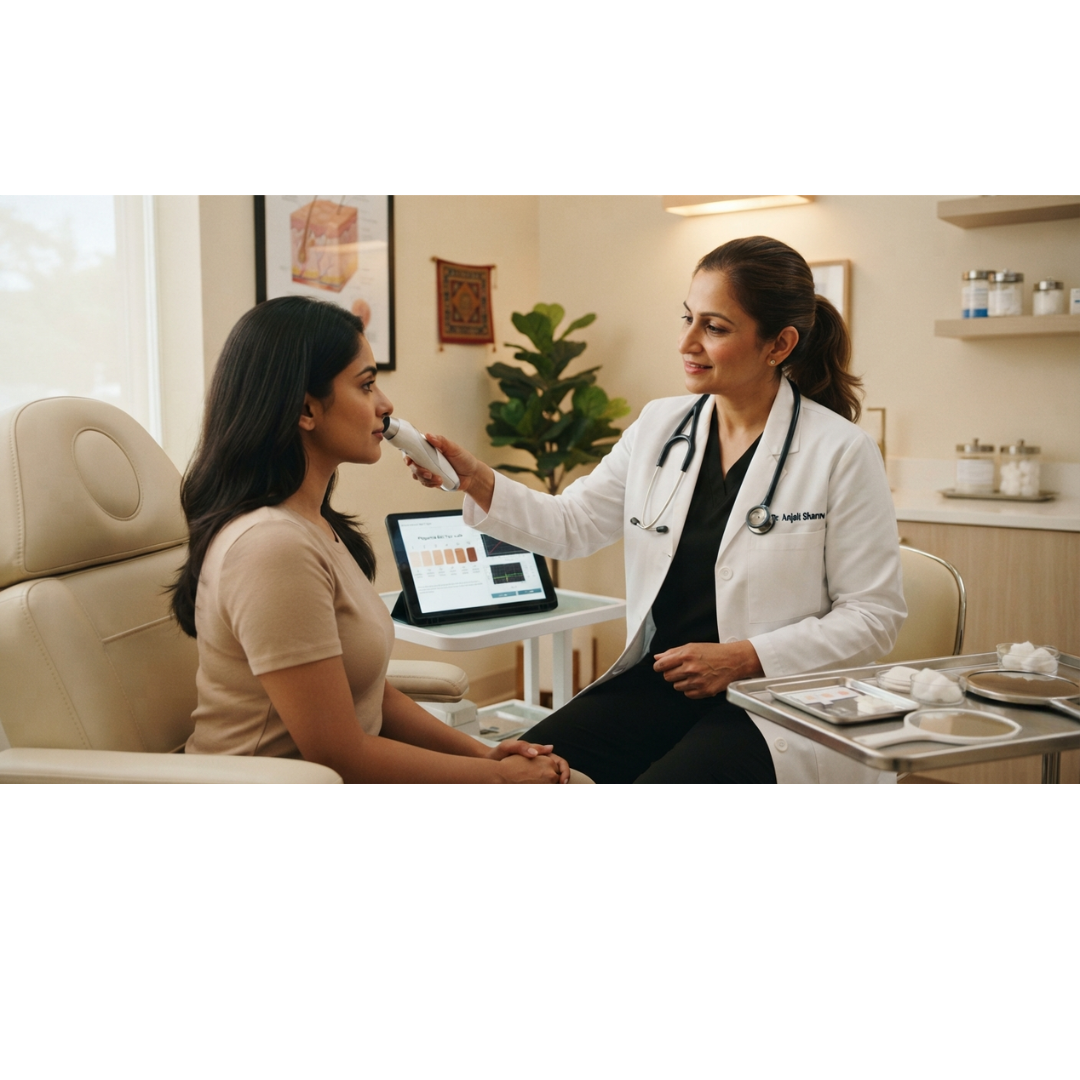
Before any session begins, a proper skin assessment should happen. This is not optional. Laser energy behaves differently on different skin tones, and what works for a fair skin type can cause burns or pigmentation on a deeper skin tone if the wrong settings are applied.
The Fitzpatrick scale is a standard tool used to classify skin types. Your clinic should mention it, or at least demonstrate that they are customizing settings based on your skin tone and hair color.
If someone is ready to start the session without any kind of assessment, walk away.
The Type of Laser Technology Being Used
Not all laser devices are equal. The most commonly used technologies for hair removal are:
-
Diode laser: Effective for a range of skin types, widely used
-
Nd:YAG laser: Safer for darker skin tones, slightly less effective for fine hair
-
Alexandrite laser: Works well for lighter skin tones with coarse hair
-
IPL (Intense Pulsed Light): Not technically a laser, less precise, often marketed as one
Ask the clinic specifically what machine they use and why it is appropriate for your skin type. Clinics that give a generic answer like "we use the latest technology" without naming the device or explaining its suitability are cutting corners on transparency.
Pre-Treatment Instructions They Should Be Giving You
A well-run clinic will give you a pre-treatment protocol before your appointment. This typically includes:
-
Avoiding sun exposure for at least two weeks before the session
-
Not waxing or threading the area (shaving is acceptable because it keeps the root intact)
-
Avoiding certain medications like blood thinners or photosensitive drugs
-
Staying off retinoids or active skincare ingredients in the treatment area
If no one has told you any of this before your appointment, that is a problem. Proper prep directly affects both results and skin safety.
Patch Test: Non-Negotiable for New Patients
A patch test is a small trial done on a section of the treatment area to check how your skin reacts to the laser. It should happen at least 24 to 48 hours before your full session.
Some clinics skip this to save time or push you into booking immediately. Do not let that happen. Skin reactions can include redness, blistering, or hyperpigmentation, and it is far better to know beforehand than to deal with it across a large area.
Realistic Expectations vs. Sales Promises
Laser hair removal requires multiple sessions. On average, most people need between six to eight sessions spaced weeks apart, depending on the area and hair growth cycle. Anyone promising permanent results in two or three sessions is overstating what the treatment can do.
Also, "permanent hair removal" in the clinical sense means permanent reduction, not that every single hair follicle will be destroyed forever. Fine hair or hormonal regrowth may occur over time. A good clinic will tell you this upfront.
Pricing Transparency and Package Structures
Packages that look extremely cheap often involve underpowered machines, undertrained staff, or sessions that do not actually deliver sufficient energy to the follicle.
Ask what is included in the package. Check if follow-up sessions after a reaction are covered. Understand the cancellation and refund policy. These are not rude questions. They are reasonable ones.
What Post-Treatment Care Looks Like
After a session, the treated skin is temporarily sensitive. Sweat, heat, direct sun, and certain skincare products can cause irritation or infection in that window.
Your clinic should hand you a post-care guide covering:
-
Avoiding gym or hot showers for 24 to 48 hours
-
Using a gentle moisturizer and broad-spectrum sunscreen
-
What to do if you experience unusual redness or blisters
If post-care is never discussed, the clinic is not managing the full treatment cycle.
Why Hyderabad Patients Need to Be Especially Selective
Hyderabad has seen a significant rise in aesthetic clinics over the past few years. The demand for laser hair removal in Hyderabad has grown across age groups and genders, which means more options but also more variation in quality.
Clinics like The New You have built their approach around medically supervised treatments and proper skin assessments before any procedure begins. When evaluating any provider for laser hair removal in Hyderabad, the points above are your standard checklist regardless of brand or price point.
One More Thing: Ask About Hormonal or Medical Conditions
Conditions like PCOS, thyroid disorders, or certain medications can affect hair growth patterns and treatment response. A clinic that does not ask about your medical history before starting is skipping a step that directly affects your results.
This is especially relevant for women dealing with hormonal hair growth because laser treatment works differently in those cases and may need to be combined with medical management for best outcomes.
Conclusion
Before you book a session, you now have a clear set of things to verify:
-
Is there a dermatologist or qualified practitioner involved?
-
Are they assessing your skin type before selecting laser settings?
-
Is a patch test part of the process?
-
Are they transparent about realistic outcomes and number of sessions?
-
Do they give pre and post care guidance as standard?
The quality of your results depends less on which clinic has the fanciest branding and more on whether they follow the right clinical steps. Choosing laser hair removal in Hyderabad should involve the same level of due diligence you would apply to any medical procedure, because technically, that is exactly what it is.
Frequently Asked Questions
Q.1 How many sessions does laser hair removal typically require?
Most people need six to eight sessions for significant hair reduction. The number depends on the treatment area, hair type, and individual hair growth cycles.
Q.2 Is laser hair removal safe for darker skin tones?
Yes, but it requires the right laser type. Nd:YAG lasers are generally considered safer for darker skin. Always confirm that the clinic adjusts settings based on your specific skin tone.
Q.3 Can I shave before a laser session?
Yes. Shaving is recommended before a session because it keeps the hair follicle intact while removing surface hair. Waxing or threading should be avoided.
Q.4 What should I avoid after a laser hair removal session?
Avoid sun exposure, hot showers, workouts, and active skincare ingredients like retinoids for at least 24 to 48 hours post-session. Use sunscreen and a gentle moisturizer instead.
Q.5 How do I know if a clinic is trustworthy?
Look for clinics that conduct a skin assessment before treatment, perform a patch test, have a qualified dermatologist involved, and are transparent about expected results and number of sessions required.
Q.6 Is there a difference between IPL and laser hair removal?
Yes. IPL uses broad-spectrum light and is less precise than a true laser. Laser devices target specific follicle depths with focused wavelengths. IPL is often marketed similarly but does not perform the same way,

 Arabic
 French
 Spanish
 Portuguese
 Deutsch
 Turkish
 Dutch
Dutch
 Italiano
 Russian
 Romaian
 Portuguese (Brazil)