
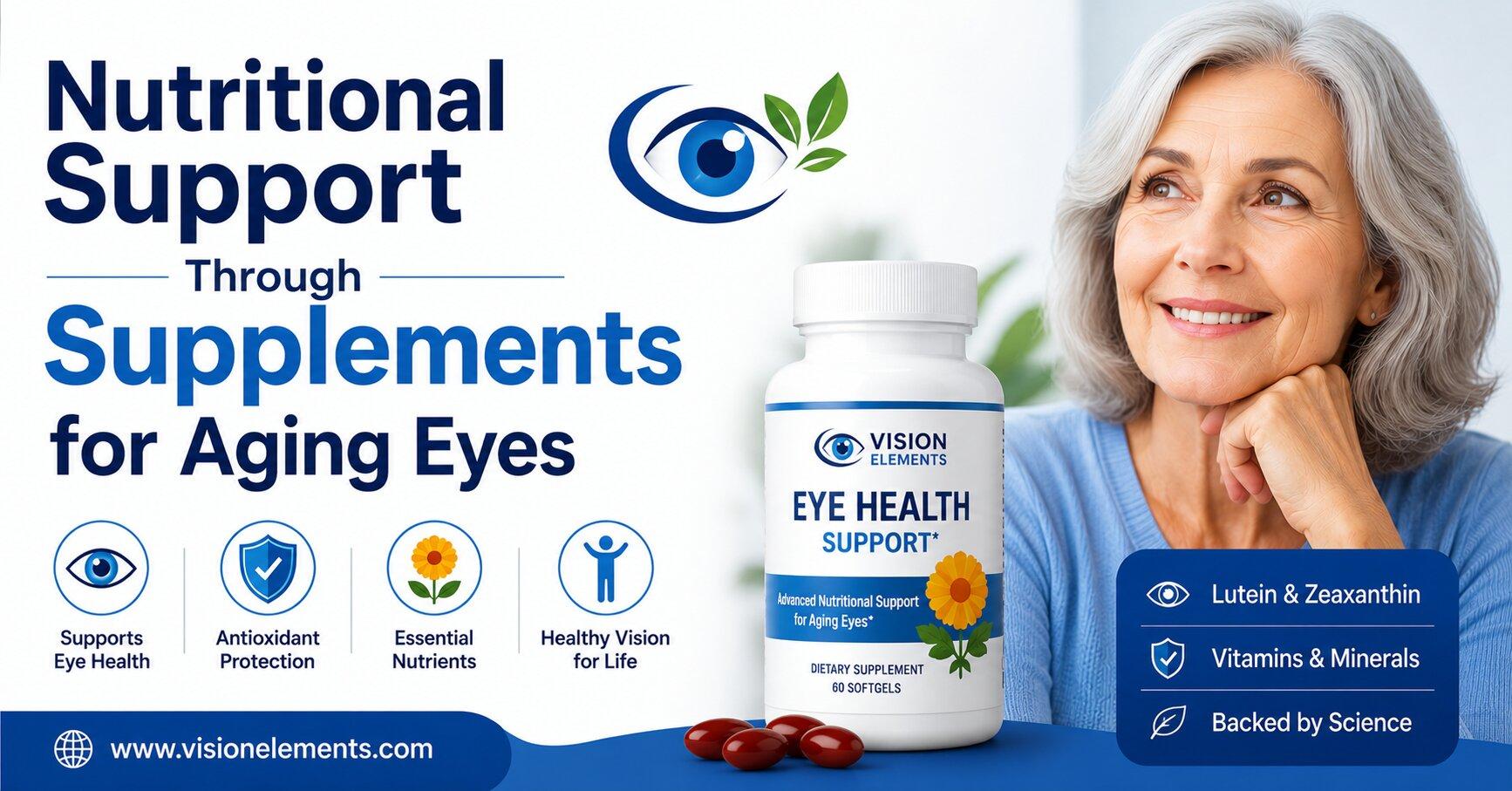
The aging process affects every organ system in the human body, and the eyes are no exception. Beginning as early as the fourth decade of life, gradual changes in the retina, lens, and macula begin to accumulate. These changes, initially imperceptible, increase the long-term risk of age-related visual conditions, including cataracts and macular degeneration. In response, an expanding body of clinical research has established that targeted nutritional support can meaningfully slow age-related ocular decline and preserve functional vision into later life.
This article examines the rationale for nutritional support of aging eyes, the specific nutrients involved, and the practical considerations that inform effective supplementation.
The Biological Basis for Nutritional Support
The eye is uniquely vulnerable to oxidative stress. Its constant exposure to light generates reactive oxygen species that must be continuously neutralized to prevent cumulative damage. In younger adults, robust antioxidant defenses handle this stress without difficulty. With age, however, the body's capacity to maintain adequate levels of protective nutrients, particularly the macular carotenoids lutein and zeaxanthin, gradually declines. Macular pigment density decreases. Antioxidant reserves diminish. The result is an eye increasingly susceptible to oxidative damage precisely when it needs the most protection.
Quality supplements for aging eyes are designed to address this age-related vulnerability by providing consistent, clinically meaningful delivery of the nutrients on which ocular tissue depends. Their function is preventive and protective, aimed at slowing the natural rate of decline and reducing long-term risk of degenerative disease.
Key Nutrients and Their Roles
Quality supplements for aging eyes are built around a defined set of nutrients:
- Lutein — the principal carotenoid in macular pigment, at doses around 10 mg daily.
- Zeaxanthin—lutein's natural partner, at doses around 2 mg daily.
- Meso-zeaxanthin—the third macular carotenoid in premium formulations.
- Vitamin C — water-soluble antioxidant concentrated in the lens.
- Vitamin E — protects cellular membranes from peroxidative damage.
- Zinc balanced with copper — supports retinal function and mineral homeostasis.
- Omega-3 fatty acids — support retinal cell structure and tear film stability.
Reputable macular degeneration supplements build on this baseline in ways appropriate to specific patient needs.
The Clinical Evidence Base
The most substantial evidence supporting nutritional care for aging eyes comes from the Age-Related Eye Disease Studies, AREDS and AREDS2, conducted by the National Eye Institute. The original AREDS trial established that a specific combination of antioxidants and zinc reduced the risk of progression from intermediate to advanced AMD by approximately twenty-five percent over five years. AREDS2 refined the formulation by substituting lutein and zeaxanthin for beta-carotene, producing a version that is safer for smokers and equally effective.
Subsequent research has continued to build on this foundation. Studies examining meso-zeaxanthin have suggested additional benefits for macular pigment coverage. Investigations into omega-3 fatty acids have added supporting evidence for retinal health and dry eye management. The cumulative weight of evidence firmly establishes quality supplementation as a credible element of preventive care for aging eyes.
Identifying Quality Products
The market for aging-eye supplements varies considerably in quality. Several markers consistently distinguish well-formulated products:
- Adherence to clinically studied doses, particularly for macular carotenoids.
- Transparent labeling that discloses each ingredient and its exact dose.
- Manufacturing in facilities certified to Good Manufacturing Practice standards.
- Independent third-party verification of purity and potency.
- Bioavailable nutrient forms, including free-form carotenoids and chelated minerals.
Principles of Effective Use
Supplements for aging eyes operate through gradual accumulation of protective nutrients within ocular tissue. Measurable increases in macular pigment density typically appear over three to six months of consistent daily use, with associated visual benefits emerging over subsequent months. This timeline makes consistency the single most important determinant of clinical effectiveness.
Optimal absorption of fat-soluble carotenoids requires dietary fat at the time of intake. Taking supplements with a meal that includes healthy fat is therefore the standard recommendation. Individuals on prescription medications, particularly anticoagulants or zinc-interacting agents, should consult a healthcare provider before initiating supplementation.
Setting Realistic Expectations
It is essential to understand what supplementation for aging eyes can and cannot accomplish. It cannot reverse damage that has already occurred, alter refractive error, or eliminate the need for regular comprehensive eye examinations. Its value lies in preventing further decline, supporting the function of remaining healthy tissue, and reducing the long-term risk of degenerative disease. These are protective benefits rather than restorative ones but for individuals seeking to preserve their vision across the decades, they are precisely the benefits that matter most.
The Importance of Early Initiation
Perhaps the single most valuable principle in nutritional support for aging eyes is the importance of early initiation. The protective carotenoids accumulate within ocular tissue slowly, and the eyes benefit most when their pigment reserves are built up and consistently maintained well before significant age-related decline has occurred. Individuals who begin supplementation in their forties or fifties give their eyes years or decades of steady protective support that individuals starting much later cannot fully replicate. This does not mean later initiation lacks value — protecting healthy tissue is worthwhile at any age. But the compounding benefit of early, sustained supplementation is genuinely meaningful.
Integration With Comprehensive Care
Nutritional supplementation delivers its greatest benefit when integrated into a broader framework of ocular health. Ultraviolet protection through quality sunglasses, regular comprehensive eye examinations, a diet rich in leafy greens and oily fish, adequate sleep, hydration, and avoidance of smoking all reinforce the protective effect. Together, these measures form a coordinated preventive approach that supports eye health through multiple complementary mechanisms.
Conclusion
Supplements for aging eyes represent a well-established and evidence-supported element of modern preventive care. Backed by decades of clinical research and a clear physiological rationale, they provide consistent delivery of the nutrients on which the aging eye's defensive systems depend. For adults seeking to preserve their vision across the decades, a quality formulation taken consistently combined with sensible lifestyle habits and regular professional care offers a credible foundation for lifelong ocular health

 Arabic
 French
 Spanish
 Portuguese
 Deutsch
 Turkish
 Dutch
Dutch
 Italiano
 Russian
 Romaian
 Portuguese (Brazil)