
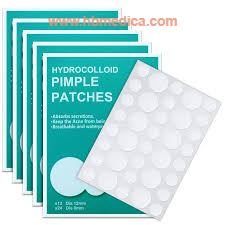
The skincare industry has witnessed an explosion of adhesive patches marketed specifically for blemish treatment, yet consumers remain divided on their actual value. Some users report dramatic overnight improvements, while others notice no visible change after multiple applications. This discrepancy raises fundamental questions about whether these products address physiological wound healing or simply provide psychological reassurance during breakouts. HBmedica, a medical products manufacturer based in Zhejiang Province, produces Acne Patch solutions that incorporate hydrocolloid dressing technology originally developed for clinical wound care applications. Does the scientific foundation of these patches support their growing popularity among skincare enthusiasts?
Hydrocolloid dressings represent the core technology behind most commercial blemish patches, a material initially designed for chronic wound management in hospital settings. The dressing consists of an absorbent layer that interacts with wound exudate, forming a gel-like substance that maintains moisture balance while protecting damaged tissue from external contaminants. Clinical studies examining hydrocolloid efficacy have demonstrated measurable improvements in wound healing rates, particularly for superficial abrasions and minor burns, where the moist environment accelerates epithelial cell migration. The application of this established medical technology to cosmetic blemishes appears logical, yet the physiological characteristics of inflammatory acne differ significantly from the wounds for which hydrocolloids were originally developed.
Clinical investigations specifically examining acne patches have produced encouraging but limited evidence regarding their therapeutic value. A study conducted with mild to moderate acne patients revealed that hydrocolloid patch usage over three to seven days yielded noticeable improvements in lesion severity and inflammatory markers compared to control conditions. The research documented reduced redness, decreased oiliness, and diminished post-inflammatory hyperpigmentation among patch users, suggesting genuine biological activity rather than purely psychological benefit. However, dermatologists caution that these findings do not establish acne patches as primary treatment options, particularly given the absence of active pharmaceutical ingredients in standard hydrocolloid formulations.
The mechanism through which acne patches exert their effects involves multiple simultaneous processes rather than a single therapeutic action. The adhesive seal creates a physical barrier that prevents manual manipulation of blemishes, reducing trauma from touching or picking that frequently exacerbates inflammation and extends healing duration. This protective function alone may account for perceived improvements, as uninterrupted healing proceeds naturally without external interference. Additionally, the absorption capacity of hydrocolloid materials draws excess fluid and sebum from the blemish surface, reducing the swollen appearance and flattening raised lesions. These actions occur independently of any active ingredient, explaining why even non-medicated patches demonstrate some degree of effectiveness.
The placebo component of acne patch usage deserves serious consideration in any efficacy evaluation. Skincare behaviours carry significant psychological weight, particularly for individuals struggling with persistent blemishes that affect self-perception and social confidence. The act of applying a patch transforms passive waiting into active intervention, providing a sense of control over an otherwise unpredictable skin condition. This psychological shift may reduce stress-related hormone fluctuations that worsen acne, creating a genuine biological improvement driven by mental state rather than topical action. The challenge lies in distinguishing between these pathways when assessing patch effectiveness in real-world usage conditions.
Hydrocolloid patches exhibit selective efficacy that depends heavily on blemish type and developmental stage. Open comedones with visible drainage points benefit most from the absorptive properties, as the dressing can effectively draw out accumulated fluids and cellular debris. Closed comedones and cystic lesions present a different scenario, as the patch cannot penetrate the intact skin barrier to reach the inflammation residing in deeper tissue layers. Users who apply patches to unsuitable blemish types naturally experience disappointing results, potentially concluding that all acne patches lack genuine therapeutic value. This selective effectiveness does not indicate product failure but rather highlights the importance of appropriate usage matching.
Safety considerations surrounding acne patches relate primarily to the occlusive environment they create on the skin surface. The anaerobic conditions beneath an adhesive patch may actually promote proliferation of Cutibacterium acnes, the bacterial species implicated in inflammatory acne development. Extended wear periods or poor patch breathability can transform a protective dressing into a bacterial growth medium, potentially worsening the very condition the user intends to treat. This paradoxical outcome explains some negative user experiences and underscores the necessity of proper patch selection and usage duration. Quality manufacturers address this concern through material engineering that balances adhesion with oxygen permeability.
Professional dermatology perspectives on acne patches reflect cautious acceptance within defined limitations. Clinical guidelines continue to prioritise established pharmaceutical treatments including topical retinoids, benzoyl peroxide, and antibiotic preparations, which demonstrate robust evidence across diverse patient populations. Patches occupy a supplementary role, suitable for occasional use or as an adjunct to conventional therapy rather than a replacement for proven interventions. This positioning acknowledges both the observed benefits and the current limitations of patch technology, encouraging realistic expectations among consumers.
The regulatory classification of acne patches as medical devices or cosmetics in most jurisdictions influences the available evidence base for their efficacy. Device regulations require demonstration of safety and performance characteristics but do not demand the same rigorous clinical trial requirements applied to pharmaceutical products. This regulatory distinction allows patches to reach consumers without the extensive efficacy documentation required for drug approvals, resulting in a research gap that perpetuates uncertainty about their optimal place in acne management. Consumers evaluating patches must therefore weigh available evidence against their personal experience and treatment needs.
For individuals seeking properly manufactured adhesive products with documented quality controls, https://www.hbmedica.com/product offers comprehensive solutions across wound care, personal hygiene, and beauty applications. Does the cumulative evidence from clinical studies, material science principles, and real-world usage patterns support the classification of acne patches as legitimate treatment tools rather than expensive psychological comfort?

 Arabic
 French
 Spanish
 Portuguese
 Deutsch
 Turkish
 Dutch
Dutch
 Italiano
 Russian
 Romaian
 Portuguese (Brazil)