
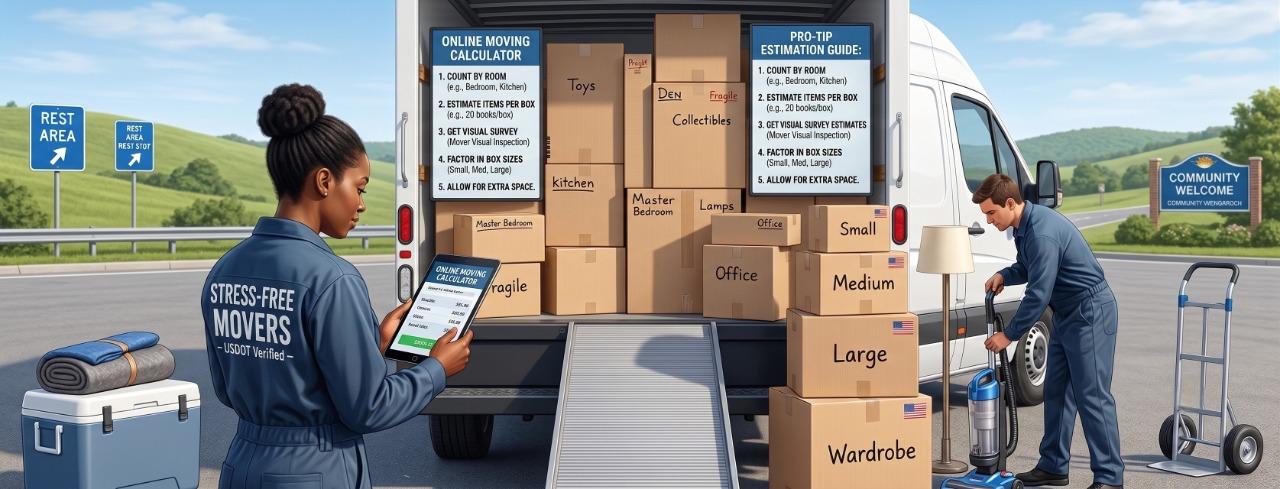
Moving to a new home is exciting, but it also comes with many decisions. One of the most common questions people ask is, "How many moving boxes do I actually need?" Buying too few boxes can delay packing, while buying too many wastes money and storage space.
At My Good Movers, careful planning is always the first step toward a successful move. Estimating your home moving boxes correctly saves time, reduces stress, and helps keep your belongings organized throughout the moving process.
The good news is that estimating moving box quantities doesn't have to be difficult. By looking at the size of your home, the number of rooms, and the types of items you own, you can create an accurate estimate before you begin packing.
In this guide, you'll learn practical methods used by experienced movers to determine the right number of boxes for any household.
Why Accurate Box Estimates Matter
Many people underestimate how many boxes they'll need. Others purchase far more than necessary because they worry about running out. Neither approach is ideal.
A good estimate helps you:
- Stay within your moving budget.
- Pack more efficiently.
- Keep similar items together.
- Reduce last-minute shopping trips.
- Make loading and unloading easier.
When every item has an appropriate box, there's less chance of damage during transportation. Proper packing also makes unpacking much simpler after arriving at your new home.
Factors That Affect the Number of Boxes You Need
Several factors determine how many boxes you'll require.
Size of Your Home
Larger homes naturally contain more belongings.
Here is a general estimate:
| Home Size | Estimated Boxes |
|---|---|
| Studio Apartment | 15–25 |
| One-Bedroom Home | 25–40 |
| Two-Bedroom Home | 40–60 |
| Three-Bedroom Home | 60–90 |
| Four-Bedroom Home | 90–120+ |
These numbers are only starting points. Every household is different.
Lifestyle
Someone who has lived in the same house for fifteen years usually owns far more possessions than someone who moved only two years ago.
Ask yourself:
- Do you collect books?
- Do you own seasonal decorations?
- Do you have hobbies requiring equipment?
- Is your garage full of storage bins?
- Have you recently decluttered?
Answering these questions gives you a more realistic estimate.
Family Size
A family of five generally needs considerably more home moving boxes than a single person living in a similar-sized house.
Children often have:
- Toys
- Books
- Clothing
- School supplies
- Sports equipment
Each category adds to your overall box count.
Decluttering Before Packing
One of the easiest ways to reduce moving costs is to declutter before packing.
Consider donating or selling:
- Old clothes
- Unused kitchen gadgets
- Broken electronics
- Outdated paperwork
- Unwanted furniture
Packing fewer items means purchasing fewer boxes and spending less time moving.
Room-by-Room Box Estimation Guide
Estimating room by room is often the most accurate method used by professional movers.
Living Room
Typical contents include:
- Books
- Electronics
- Picture frames
- Decorative items
- Games
- Lamps
Estimated boxes:
- Small boxes: 8–12
- Medium boxes: 4–6
- Large boxes: 2–4
Fragile decorations should be wrapped carefully using packing paper or bubble wrap.
Kitchen
The kitchen usually requires the greatest number of boxes because it contains many fragile items.
Expect to pack:
- Plates
- Glasses
- Pots
- Pans
- Small appliances
- Pantry items
Estimated boxes:
- Small boxes: 12–20
- Medium boxes: 8–10
- Specialty dish boxes: 2–4
Small boxes are ideal because dishes become extremely heavy when packed together.
Primary Bedroom
Bedrooms contain more than clothing.
You'll likely pack:
- Shoes
- Bedding
- Books
- Decorations
- Electronics
- Accessories
Estimated boxes:
- Medium boxes: 6–10
- Large boxes: 4–6
- Wardrobe boxes: 2–4
Wardrobe boxes allow clothes to remain on their hangers, making unpacking much easier.
Bathroom
Bathrooms usually require fewer boxes than other rooms.
Typical items include:
- Towels
- Toiletries
- Hair tools
- Cleaning products
- First-aid supplies
Estimated boxes:
- Small boxes: 3–5
- Medium boxes: 1–2
Be sure to seal liquids tightly to prevent leaks during transport.
Home Office
A home office can contain surprisingly heavy items.
Common belongings include:
- Books
- Files
- Office supplies
- Computers
- Printers
- Monitors
Estimated boxes:
- Small boxes: 8–12
- Medium boxes: 3–5
Books should always be packed in small boxes to avoid excessive weight.
Children's Bedrooms
Children's rooms often contain more items than expected. Along with clothing and bedding, there may be toys, books, puzzles, stuffed animals, art supplies, and school projects that need careful packing.
A simple way to estimate boxes is to separate items into categories before packing begins.
Typical items include:
- Clothes
- Shoes
- Toys
- Books
- School supplies
- Electronics
- Sports equipment
- Decorative items
Estimated boxes:
| Box Type | Quantity |
|---|---|
| Small Boxes | 4–8 |
| Medium Boxes | 4–6 |
| Large Boxes | 2–4 |
If your child has many collectible toys or fragile decorations, consider using specialty boxes with dividers for extra protection.
Garage, Basement, and Storage Areas
Garages, attics, and basements are often the most overlooked spaces during a move. These areas tend to collect years of seasonal decorations, old tools, camping gear, gardening supplies, and storage bins.
Before packing, sort everything into three groups:
- Keep
- Donate
- Dispose
This simple process can dramatically reduce the total number of boxes you need.
Typical garage items include:
- Power tools
- Gardening equipment
- Paint supplies
- Holiday decorations
- Sports equipment
- Hardware
- Extension cords
- Cleaning products
Estimated boxes:
| Box Type | Quantity |
|---|---|
| Small Boxes | 8–12 |
| Medium Boxes | 6–10 |
| Large Boxes | 4–8 |
Avoid packing hazardous materials such as gasoline, propane tanks, paint thinners, or certain chemicals in moving boxes, as many moving companies cannot transport them.
Choosing the Right Moving Box Sizes
Not every item belongs in the same size box. Using the correct box size protects your belongings and makes lifting much easier.
Small Boxes
Small boxes are designed for heavy items.
Best for:
- Books
- Canned food
- Kitchenware
- Tools
- Small electronics
Although these boxes are compact, they can become quite heavy. Avoid overfilling them.
Medium Boxes
Medium boxes are the most versatile option for nearly every move.
They're ideal for:
- Clothing
- Toys
- Kitchen appliances
- Office supplies
- Decorations
Most households use more medium boxes than any other size.
Large Boxes
Large boxes should only hold lightweight items.
Perfect for:
- Pillows
- Blankets
- Comforters
- Towels
- Lampshades
Packing heavy items into large boxes makes them difficult to lift and increases the risk of damage.
Specialty Boxes
Some belongings require extra protection.
Specialty boxes include:
- Wardrobe boxes
- Dish packs
- TV boxes
- Mirror boxes
- Picture frame boxes
Although these boxes cost more, they can prevent expensive damage during transport.
A Simple Formula to Estimate Your Moving Boxes
Professional movers often begin with a basic estimate and then adjust based on the household's contents.
A practical approach is:
- Count each room.
- Estimate the amount of furniture and belongings.
- Add storage areas such as garages and closets.
- Include extra boxes for fragile or oversized items.
- Add 10–15% more boxes as a safety margin.
For example:
| Home Type | Estimated Total Boxes |
|---|---|
| Studio | 20 |
| One Bedroom | 35 |
| Two Bedrooms | 55 |
| Three Bedrooms | 80 |
| Four Bedrooms | 110 |
These estimates work well for average households. Families with extensive collections, libraries, or hobby equipment may require additional boxes.
Packing Tips from My Good Movers
The team at My Good Movers recommends planning your packing schedule several weeks before moving day. Packing a little each day is much less stressful than trying to finish everything in a single weekend.
Some practical tips include:
- Label every box clearly.
- Write the destination room on each box.
- Mark fragile items on multiple sides.
- Use quality packing tape.
- Fill empty spaces with packing paper.
- Keep boxes under 50 pounds whenever possible.
- Pack an essentials box for your first night.
An essentials box should include:
- Medications
- Chargers
- Toiletries
- Basic kitchen supplies
- A change of clothes
- Important documents
Having these necessities readily available can make your first day in your new home much more comfortable.
Common Mistakes to Avoid
Even experienced movers can make simple packing mistakes. Being aware of these issues can save time, money, and frustration.
Underestimating Your Belongings
Many homeowners forget to account for items stored in closets, cabinets, and storage areas. These spaces often contain far more belongings than expected.
Using Too Many Large Boxes
Large boxes are tempting because they hold more volume, but they can quickly become too heavy. Reserve them for lightweight items such as linens and pillows.
Forgetting About Specialty Items
Large mirrors, televisions, artwork, and delicate glassware often require specialty boxes. Planning for these in advance helps protect valuable possessions.
Waiting Until the Last Minute
Packing in a hurry often leads to poor organization, damaged items, and unnecessary stress. Creating a schedule several weeks before moving day allows you to pack methodically and avoid feeling overwhelmed.
Frequently Asked Questions
1. How many home moving boxes does the average family need?
The number depends on the size of your home and the amount of belongings you own. As a general guideline:
| Home Size | Estimated Boxes |
|---|---|
| Studio Apartment | 15–25 |
| One-Bedroom Home | 25–40 |
| Two-Bedroom Home | 40–60 |
| Three-Bedroom Home | 60–90 |
| Four-Bedroom Home | 90–120+ |
These estimates provide a helpful starting point, but families with large collections, hobby equipment, or years of accumulated belongings may need additional boxes.
2. Should I buy extra moving boxes?
Yes. Purchasing about 10–15% more boxes than your initial estimate is a smart idea. Unexpected items often appear during packing, and having spare boxes prevents last-minute trips to the store.
Extra boxes can also be useful for organizing donations, keeping important documents separate, or storing seasonal items after the move.
3. Which box size is best for books?
Small boxes are the best choice for books because they prevent the box from becoming too heavy. Packing books in large boxes can make lifting difficult and increase the chance of the box breaking.
For added protection:
- Pack books flat or upright.
- Fill empty spaces with packing paper.
- Avoid overloading the box.
- Seal the bottom with strong packing tape.
4. Can I reuse old cardboard boxes?
Absolutely. Reusing clean, sturdy boxes is an excellent way to save money and reduce waste. However, inspect every box before using it.
Avoid boxes that have:
- Water damage
- Torn corners
- Weak bottoms
- Mold
- Crushed sides
If a box no longer holds its shape, it's better to replace it than risk damage to your belongings.
5. How can I reduce the number of boxes I need?
Decluttering before your move is the most effective strategy. Go through each room and separate items into categories:
- Keep
- Donate
- Sell
- Recycle
- Dispose
Reducing unnecessary belongings lowers moving costs, shortens packing time, and makes unpacking much easier in your new home.
6. Are specialty moving boxes worth the extra cost?
Yes, especially for valuable or fragile belongings. Specialty boxes are designed to provide additional protection during transport.
Examples include:
- Wardrobe boxes for hanging clothes
- Dish packs for plates and glassware
- TV boxes for flat-screen televisions
- Mirror boxes for large mirrors
- Picture boxes for artwork and framed photos
Although they may cost more than standard boxes, they can help prevent costly damage.
7. When should I start packing?
Most moving professionals recommend beginning three to six weeks before moving day. Start with items you rarely use, such as seasonal decorations, books, and guest-room belongings.
As moving day approaches, pack everyday items while leaving only essential necessities for the final few days.
A packing schedule reduces stress and helps ensure everything is organized before the movers arrive.
8. Where can I learn more about packing best practices?
Helpful moving and packing guidance is available from the Federal Motor Carrier Safety Administration (FMCSA), which offers consumer resources for planning a household move:
Conclusion
Estimating the right number of home moving boxes doesn't have to be complicated. By evaluating your home's size, assessing each room individually, and choosing the appropriate box sizes, you can create a reliable packing plan that saves both time and money.
Working room by room provides one of the most accurate methods for determining your box requirements. It also helps you stay organized throughout the moving process, making both loading and unpacking much more efficient. Don't forget to declutter before packing, as removing unwanted items can significantly reduce the number of boxes you'll need.

 Arabic
 French
 Spanish
 Portuguese
 Deutsch
 Turkish
 Dutch
Dutch
 Italiano
 Russian
 Romaian
 Portuguese (Brazil)