
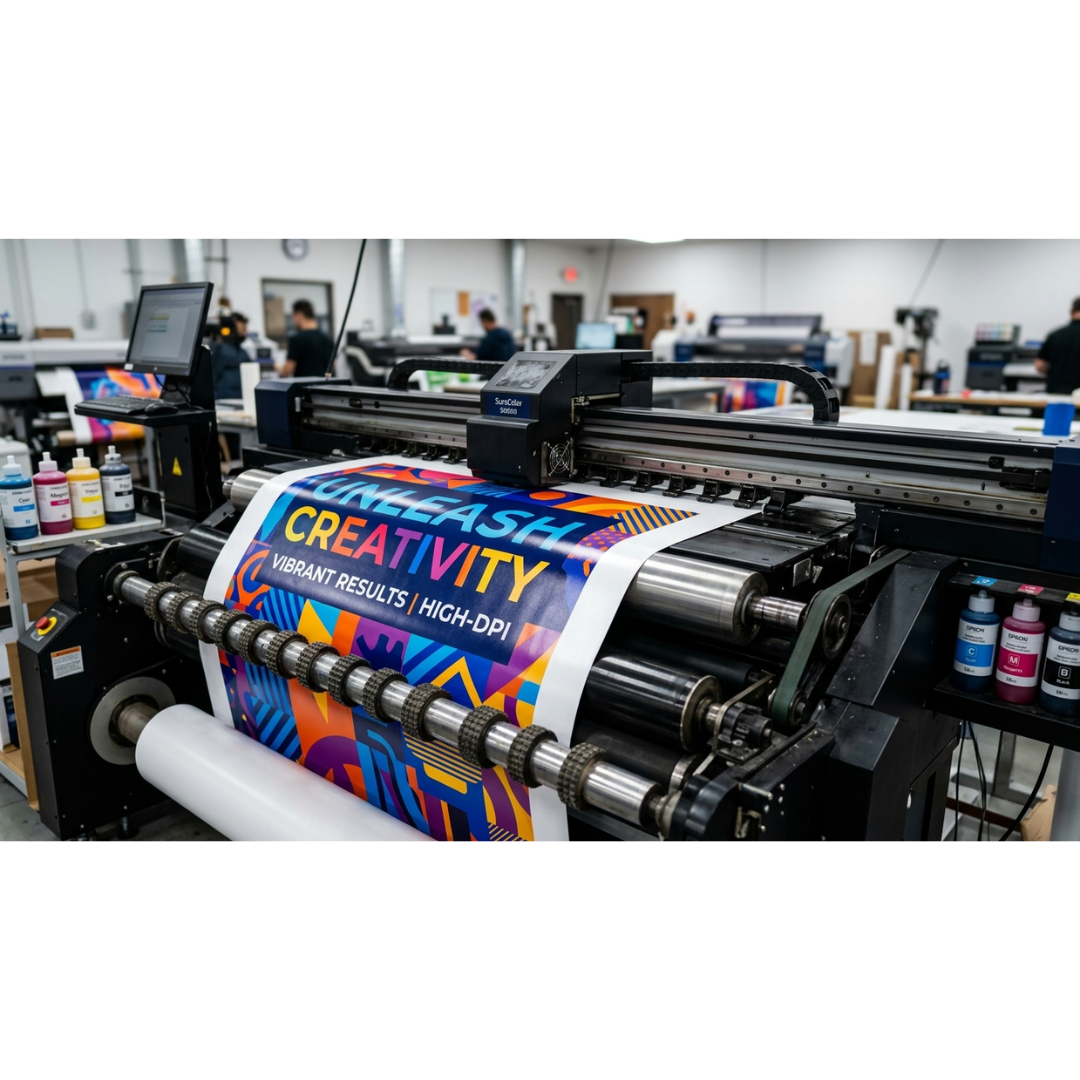
Printed posters remain one of the most cost-effective ways for businesses to communicate a message quickly, whether it is a product launch, a sale announcement, an event, or a brand awareness campaign.
They work because they are visual, immediate, and physical. People see them in real spaces where decisions are made.
This blog covers how businesses actually use poster printing, what makes a good poster for marketing or events, and what to look for when getting them produced.
Why Printed Posters Still Work in a Digital World
It is easy to assume digital advertising has replaced print. It has not, at least not completely.
Posters placed in retail stores, offices, malls, event venues, and public spaces reach people who are physically present and already in a buying or decision-making mindset. That is something a social media ad cannot always replicate.
For businesses in high-footfall areas, printed display materials drive immediate awareness without recurring ad spend. You print once, and the message works for days, weeks, or even months depending on placement.
Common Business Use Cases for Poster Printing
Businesses across industries use posters differently. Here are the most practical examples:
Retail and F&B
Seasonal sales, new product arrivals, combo offers, and daily specials. Posters inside and outside the store guide purchase decisions at the point of sale.
Corporate Events and Conferences
Directional posters, speaker profiles, agenda displays, and sponsor recognition boards. Large-format printing handles these needs with clarity.
Real Estate and Property
Project launches, open house announcements, and development highlights. Posters placed in lobbies or on-site boards generate early interest.
Healthcare Clinics and Gyms
Service information, hygiene protocols, offer promotions, and membership plans. These replace repetitive verbal explanations and set professional expectations.
Hospitality and Entertainment
Event nights, menu promotions, live performances, and venue branding. Posters in lobbies and elevators catch guest attention naturally.
What Makes a Poster Effective for Marketing
A poster that does not communicate within three seconds is not doing its job.
Here is what actually matters:
Visual Hierarchy
The most important message should be the biggest element. Do not try to fit everything on one poster. One message, one action.
Print Quality
Blurry or pixelated posters reflect poorly on the brand. High-resolution printing with the right paper stock makes a difference customers notice, even if they do not consciously register it.
Size and Placement
A3 works for indoor retail. A2 or A1 works for event spaces and lobbies. Large-format works for exhibitions, storefronts, and outdoor displays. Match the size to where it will actually be seen.
Finish Selection
Matte finishes reduce glare and work well in brightly lit spaces. Gloss finishes make colors pop and work well for product photography or fashion. Choosing the wrong finish can reduce visual impact.
Choosing the Right Printing Partner
Getting posters printed is not just about sending a file and receiving a product. The quality depends on the printer's material options, color accuracy, and finishing capabilities.
When evaluating a provider, ask about:
-
Paper weight options (gsm) for different use cases
-
Available sizes including custom dimensions
-
Turnaround time, especially for event deadlines
-
File format requirements and prepress support
-
Quantity flexibility for small or large runs
For businesses in Dubai looking for reliable poster production, Printery Dubai offers a dedicated poster printing service with options across sizes, finishes, and quantities.
Whether you need a small batch for an in-store promotion or a bulk run for an event rollout, having a printer that handles both without compromising quality matters.
Getting the File Right Before You Print
One of the most common problems businesses face is poor print output caused by incorrect file preparation, not the printer.
Key points to follow before submitting:
-
Use CMYK color mode, not RGB
-
Set resolution to at least 300 DPI
-
Add bleed (usually 3mm on each side) to avoid white edges after trimming
-
Embed all fonts or convert them to outlines
-
Get a proof approved before printing the full run
If your design team is not familiar with print specifications, a good print provider like Printery Dubai will guide you through the requirements before production starts.
Posters Printing for Event Campaigns: What to Plan Ahead
Events have fixed deadlines. Posters printing for event campaigns needs to be planned with enough buffer time for design revisions, approval, printing, and delivery.
A general timeline for event posters:
-
Design finalization: 5 to 7 days before the print deadline
-
Print and finishing: 2 to 3 business days depending on quantity
-
Delivery and installation: 1 to 2 days before the event
Rushing this process leads to errors, wrong sizes, or poor quality. Plan backwards from the event date, not forwards from when you start designing.
Conclusion
Printed posters serve a real purpose in business marketing and event promotion. They are not outdated. They are simply misunderstood when compared to digital alternatives.
The key is knowing what you want to communicate, matching the format and finish to the location, and working with a printer that delivers consistent quality.
Whether you are running a campaign for a product, an event, or a seasonal promotion, well-produced posters printing work when the message is clear and the execution is right.
Frequently Asked Questions
Q.1 What is the standard size for business marketing posters?
The most common sizes are A3 (297 x 420mm) for indoor retail, A2 (420 x 594mm) for lobbies and event spaces, and A1 (594 x 841mm) for larger display areas. Custom sizes are also available depending on specific placement needs.
Q.2 What file format should I submit for poster printing?
PDF is the most accepted format for print. Make sure it is in CMYK color mode, 300 DPI resolution, and includes a 3mm bleed on all sides. AI and EPS files are also accepted by most professional printers.
Q.3 How many posters should I print for an event?
This depends on the venue size and number of display points. For a mid-sized corporate event, 20 to 50 posters is a typical range. For large-scale exhibitions or multi-venue campaigns, quantities can go into the hundreds.
Q.4 What is the difference between matte and gloss finish for posters?
Matte finish reduces light reflection and is better for text-heavy designs or brightly lit environments. Gloss finish makes colors more vibrant and is suited for image-heavy posters like product promotions or photography-based campaigns.
Q.5 How quickly can posters be printed and delivered?
Most professional printing providers deliver within 2 to 4 business days for standard orders. Urgent or same-day printing may be available at an additional cost, depending on the provider and order volume.

 English
 Arabic
 French
 Spanish
 Portuguese
 Deutsch
 Turkish
 Dutch
Dutch
 Italiano
 Russian
 Romaian