
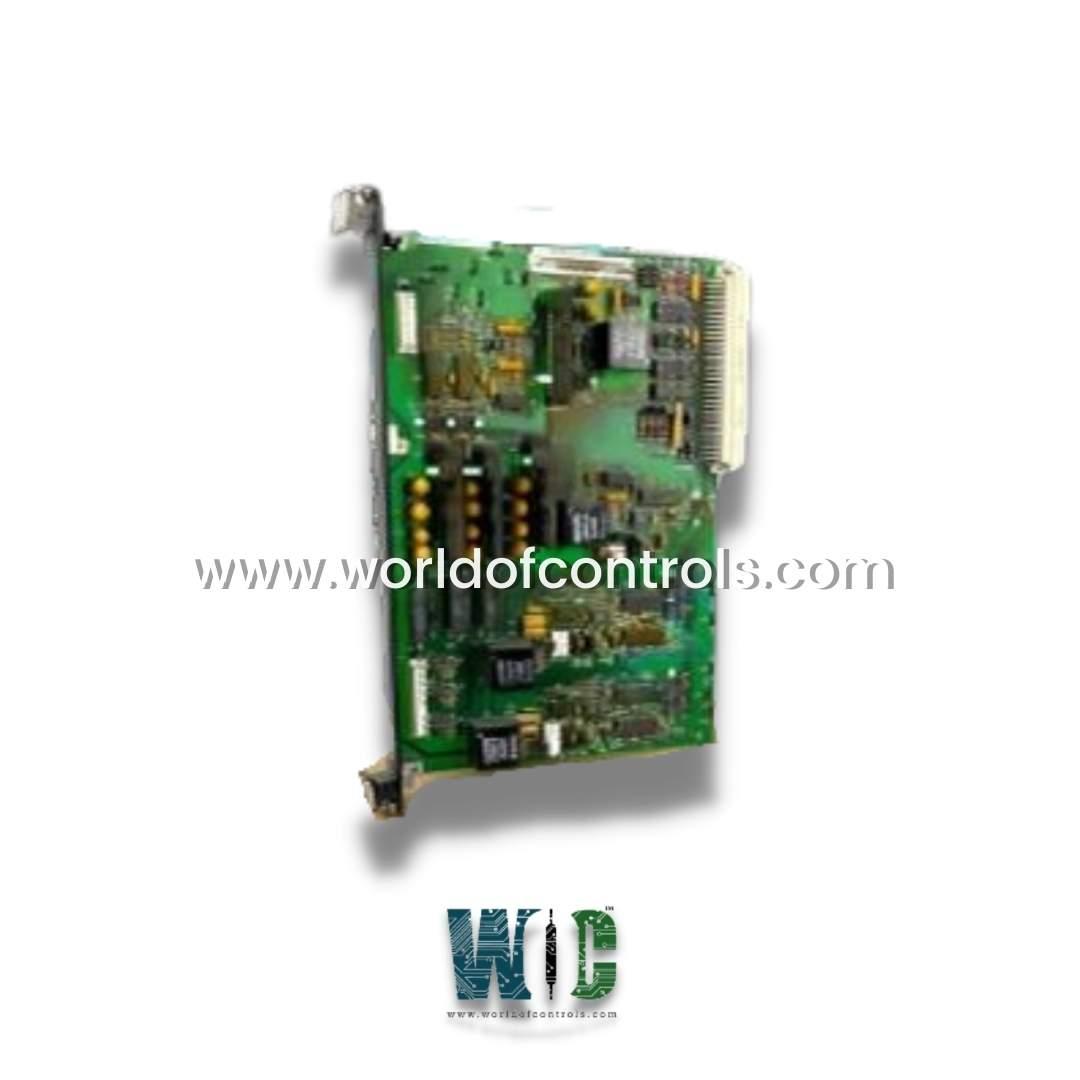
Efficient data communication is a fundamental requirement for modern industrial automation systems. Controllers, sensors, actuators, monitoring equipment, and operator interfaces must continuously exchange information to ensure safe and reliable operation. Any disruption in communication can affect control accuracy, equipment protection, and overall productivity.
The Signal Conditioning and Networking Card plays a critical role in supporting this communication infrastructure. By improving signal quality and facilitating reliable network connectivity, it helps ensure that information moves accurately and efficiently throughout the control system.
Understanding Industrial Data Communication
Industrial control systems depend on a constant flow of information between field devices and central controllers. Sensors gather operational data, controllers process this information, and output devices execute commands based on system requirements.
Reliable communication is important for:
- Process monitoring
- Equipment protection
- Alarm management
- Control system responsiveness
- Operational efficiency
However, industrial environments often contain factors that can interfere with communication performance, including electromagnetic interference, electrical noise, signal degradation, and network disturbances.
Without proper signal management, these challenges can lead to inaccurate data and reduced system performance.
The Role of the Signal Conditioning and Networking Card
The Signal Conditioning and Networking Card serves as a bridge between field devices and the control system. It helps prepare incoming signals for processing while supporting communication between various system components.
Its primary functions include:
- Conditioning incoming signals
- Supporting industrial network communications
- Improving signal integrity
- Facilitating data transmission
- Assisting with system integration
By performing these tasks, the card helps ensure that critical operational information reaches its destination accurately and efficiently.
How the Signal Conditioning and Networking Card Enhances Data Communication
Improves Signal Accuracy
Field signals are often exposed to electrical interference generated by motors, generators, switching equipment, and other industrial devices.
The Signal Conditioning and Networking Card helps improve signal quality by filtering unwanted noise and stabilizing incoming signals before they are processed by the control system.
Cleaner signals result in more accurate measurements and improved decision-making throughout the automation process.
Supports Reliable Network Communication
Industrial control systems rely on dependable communication pathways to exchange information between controllers, monitoring systems, and field devices.
The card helps facilitate this communication by supporting reliable data transmission and reducing the likelihood of communication errors.
Stable communication networks help ensure that critical operational data is delivered accurately and on time.
Enhances System Integration
Modern automation environments often involve numerous interconnected devices that must work together efficiently.
The Signal Conditioning and Networking Card supports seamless integration by helping connect various components within the control network. This capability enables effective information sharing across the entire system.
Improved integration contributes to greater operational efficiency and more coordinated system performance.
Increases Operational Reliability
Communication failures can lead to process interruptions, inaccurate readings, and delayed responses to operating conditions.
By supporting consistent signal quality and dependable networking functions, the card helps improve overall system reliability. Reliable communication enables continuous monitoring, accurate control actions, and effective equipment protection.
This stability is particularly valuable in critical industrial applications where downtime must be minimized.
Benefits for Industrial Operations
Improved Process Control Accuracy
Accurate signals and dependable communication help controllers make better operational decisions.
Faster Decision-Making and System Response
Reliable information flow enables quicker responses to changing process conditions.
Reduced Troubleshooting and Maintenance
Stable communication systems experience fewer errors, reducing maintenance efforts and diagnostic time.
Increased System Uptime
Improved communication reliability helps minimize disruptions and supports continuous operation.
Applications in Industrial Control Systems
Gas Turbine Control Systems
Gas turbines rely on continuous communication between sensors, controllers, and protection systems.
Steam Turbine Automation
Reliable data transmission supports accurate monitoring and control of steam turbine operations.
Generator Monitoring and Protection
Generator systems require dependable communication to maintain safe and efficient performance.
Industrial Process Automation
Manufacturing and processing facilities depend on accurate data exchange to maintain productivity and quality.
Maintenance Best Practices
To maintain optimal performance, organizations should implement regular maintenance procedures.
Recommended activities include:
- Inspecting communication wiring and connectors
- Verifying signal quality
- Monitoring network performance
- Checking for signs of component wear
- Performing scheduled preventive maintenance
These practices help ensure reliable long-term operation.
Conclusion
Reliable communication is essential for the success of industrial automation systems. By improving signal accuracy, supporting dependable network communications, enhancing system integration, and increasing operational reliability, the Signal Conditioning and Networking Card serves as a vital component within industrial control environments.
Components such as the IS200SCNVG1A Signal Conditioning and Networking Card help ensure accurate information exchange between field devices and controllers, supporting improved process control, enhanced system reliability, and long-term operational efficiency.

 English
 French
 Spanish
 Portuguese
 Deutsch
 Turkish
 Dutch
Dutch
 Italiano
 Russian
 Romaian
 Portuguese (Brazil)