
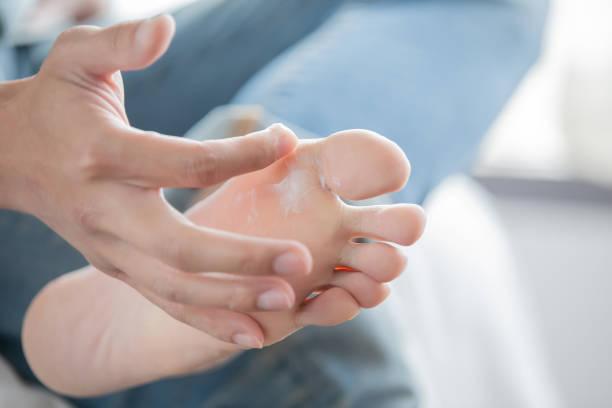
Athlete's foot—clinically known as tinea pedis—is a highly contagious fungal infection that thrives in warm, damp environments. Despite its name, it doesn't just affect sports stars. Anyone navigating Edinburgh's infamously wet weather, wearing heavy waterproof boots, or using public changing spaces like the Royal Commonwealth Pool can easily contract it.
The infection typically starts as a persistent itch between the toes, quickly evolving into peeling skin, painful cracks, a burning sensation, and a distinct odor. If left unmanaged, the fungus can spread to your toenails, leading to a much deeper infection that requires months of medical treatment. Seeking professional guidance from a Podiatry Clinic in Edinburgh is the fastest way to eliminate the fungus and prevent a frustrating recurrence.
1. Why Self-Treatment Often Fails
Many people try to treat athlete's foot using generic over-the-counter creams from the local pharmacy. While these can offer temporary relief, they frequently fail to clear the infection entirely.
-
Incomplete Eradication: Most commercial creams only address the surface symptoms. As soon as you stop applying the cream, the deeply rooted fungal spores reactivate, causing the infection to flare up again.
-
Misdiagnosis: Several skin conditions mimic athlete's foot, including pustular psoriasis, contact dermatitis, and severe dry skin (anhidrosis). Applying an antifungal to a non-fungal condition can irritate the skin further. A specialist at a Podiatry Clinic in Edinburgh can accurately identify the exact strain of fungus or skin condition through visual analysis or skin scrapings.
2. Advanced Clinical Treatments for Fast Relief
When you visit a specialist foot care center, your treatment plan is accelerated using professional-grade therapies that aren't available over the counter.
-
Prescription-Strength Topicals: Podiatrists have access to high-potency antifungal agents that penetrate deeper into the skin layers, killing the fungus at its source.
-
Reduction of Hyperkeratotic Skin: If the infection has caused a thick buildup of dead skin (often seen in the "moccasin" variety of athlete's foot), a podiatrist can safely debride (clear away) this layer. Removing the dead skin allows the active medications to absorb directly into the living tissue where the fungus thrives.
3. Combating the Damp Edinburgh Climate
Our local weather plays a massive role in foot health. Rain, mist, and heavy footwear create a perfect incubator for fungal growth.
-
The Boot Dilemma: Wearing thick leather shoes or rain boots keeps sweat trapped against your skin. A podiatrist will provide a targeted hygiene protocol, advising you to switch to moisture-wicking merino wool or synthetic socks that pull dampness away from the skin.
-
Shoe Sanitization: Fungal spores can live inside your footwear for months. To treat the issue quickly, you must disinfect your shoes. Many clinics recommend using specialized UV shoe sterilizers or antifungal powders inside your boots to prevent re-infecting your feet every morning.
4. The 2026 Protocol for Hard-to-Treat Infections
For stubborn or recurring cases that resist standard creams, modern podiatry clinics utilize advanced combination therapies.
-
Photodynamic Therapy (PDT): A cutting-edge 2026 treatment that uses specific light wavelengths combined with a photosensitizing gel to selectively destroy fungal cells without harming the surrounding healthy skin.
-
Oral Medication Coordination: If the infection is exceptionally widespread, your podiatrist can coordinate directly with your GP to prescribe a short course of oral antifungal tablets, attacking the infection from the inside out.
5. Essential Home-Care Steps to Support Your Treatment
To guarantee the fastest possible recovery, clinical treatments must be paired with precise daily habits at home.
-
The "Two-Towel" Rule: Never use the same towel for your face or body that you used to dry your feet. Use a dedicated towel for your feet and wash it on a hot cycle after a single use to avoid spreading the spores.
-
Thorough Interdigital Drying: After showering, make sure the spaces between your toes are completely dry before putting on socks. If necessary, use a hair dryer on a cool setting to remove every trace of moisture from between the joints.
6. Identifying Different Types of Athlete's Foot
Not all fungal infections present the same way. An expert at a Podiatry Clinic in Edinburgh will diagnose which specific manifestation you have to tailor your medication.
-
Interdigital Infection: The most common variety, usually nesting between the two smallest toes. It causes peeling, oozing, and intense itching that worsens immediately after removing your shoes.
-
Moccasin Type: This starts as a subtle dryness or irritation on the sole and heel. It is frequently mistaken for eczema or simple dry skin, allowing it to spread across the entire foot bed unchallenged.
-
Vesicular Infection: A less common type characterized by sudden outbreaks of painful blisters on the underside of the foot, requiring targeted topical anti-inflammatories alongside antifungals.
7. Preventing Cross-Contamination at Home
When dealing with a highly contagious condition, protecting your family members or flatmates is a crucial part of the recovery process.
-
Shared Bathrooms: Fungal spores survive easily on smooth shower trays and bath surfaces. Spraying the shower floor with a bleach-based disinfectant after use is vital until your infection clears.
-
Barefoot Restrictions: Walking barefoot on carpets and rugs deposits microscopic fungal spores that can infect others weeks later. Wearing breathable flip-flops or clean cotton socks around the house is a mandatory rule during active treatment.
8. Long-Term Maintenance and Immunity Support
Once your skin has healed, your foot health strategy shifts from eradication to permanent defense.
-
Skin Barrier Enhancement: Intact skin is your best defense against fungal invasion. Your Podiatry Clinic in Edinburgh can recommend specialized urea-infused creams that keep the skin supple and free from micro-cracks.
-
Rotational Footwear Habits: Avoid wearing the same pair of shoes two days in a row. Giving your boots a full 24 hours to air out ensures the dark interior dries completely, neutralizing any latent fungal spores before they can multiply.
Conclusion: Reclaim Comfortable, Itch-Free Feet
Athlete's foot is highly treatable, but speed is key. The faster you interrupt the fungal lifecycle, the less chance it has to spread to your family members or colonize your toenails. By booking an appointment at a qualified Podiatry Clinic in Edinburgh, you bypass the trial-and-error of high street creams and move straight to an elite, evidence-based cure tailored to your lifestyle and our unique Scottish climate.

 Arabic
 French
 Spanish
 Portuguese
 Deutsch
 Turkish
 Dutch
Dutch
 Italiano
 Russian
 Romaian
 Portuguese (Brazil)