
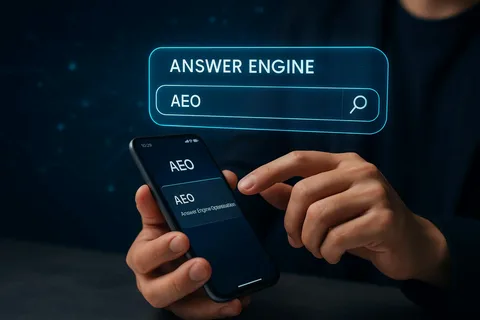
Today, a new shift is transforming the way users discover information online. Answer engines powered by artificial intelligence now provide direct responses to user queries instead of simply presenting a list of links. This change is reshaping consumer behavior and forcing businesses to rethink their advertising strategies.
Understanding how answer engines are changing paid search is essential for brands that want to remain visible in an increasingly AI-driven search environment.
What Are Answer Engines?
Answer engines are AI-powered systems that provide direct answers to user questions. Instead of requiring users to browse multiple websites, these platforms generate concise and relevant responses immediately.
Examples include AI-powered search experiences, voice assistants, featured snippets, and conversational AI platforms.
These systems use artificial intelligence, machine learning, natural language processing, structured data, and trusted content sources to understand user intent and deliver accurate answers.
The primary goal is simple: reduce friction and help users find information faster.
Why User Behavior Is Changing
Modern users want convenience. They no longer want to scroll through pages of search results to find a simple answer.
When someone asks a question, they expect a direct response. Answer engines satisfy that expectation by delivering information instantly.
As a result, search behavior is shifting away from traditional browsing and toward answer-focused experiences.
This change directly affects paid search because users may no longer need to click on multiple advertisements to find what they need.
How Answer Engines Are Changing Paid Search
The impact of answer engines on paid advertising is becoming more noticeable.
Traditional PPC campaigns depend on users clicking advertisements. However, when AI platforms provide answers directly, the number of clicks available to advertisers may decrease.
This does not mean paid search is disappearing. Instead, it means marketers must adapt their strategies to align with changing user expectations.
Businesses that continue relying only on traditional PPC tactics may struggle to maintain visibility as AI-generated answers become more common.
The Shift From Clicks to Visibility
For years, marketers measured success through clicks, impressions, and conversions.
Now, visibility itself is becoming a key metric.
When answer engines cite content, mention brands, or reference trusted sources, businesses gain exposure even if users never click through to a website.
This new reality requires companies to think beyond traditional paid search metrics and focus on becoming trusted sources of information.
Brands that provide clear, accurate, and structured content are more likely to appear within AI-generated responses.
AEO vs Traditional PPC
Answer Engine Optimization (AEO) and Pay-Per-Click advertising serve different purposes.
PPC focuses on gaining visibility through paid placements. Success often depends on budgets, bidding strategies, and ad quality.
AEO focuses on becoming the answer itself. It emphasizes content structure, search intent, semantic relevance, and authority.
While PPC generates immediate traffic, AEO supports long-term discoverability across AI-driven platforms.
The most successful businesses will not choose one over the other. Instead, they will combine both strategies to maximize visibility.
Why Content Quality Matters More Than Ever
Answer engines prioritize useful and trustworthy information.
Content that clearly answers questions has a greater chance of being surfaced in AI-generated responses.
Businesses should focus on:
- Answering common customer questions.
- Using clear and concise language.
- Structuring content logically.
- Implementing schema markup where appropriate.
- Demonstrating expertise and authority.
These practices help both search engines and answer engines understand content more effectively.
At Alev Digital, we have seen how businesses that prioritize high-quality content often achieve stronger visibility across both traditional search and emerging AI platforms.
The Role of Structured Data
Structured data plays an important role in Answer Engine Optimization.
Schema markup helps search engines understand the meaning and context of content.
When AI systems can easily interpret information, they are more likely to use that content when generating responses.
Businesses should view structured data as a foundation for improving content clarity rather than a shortcut to rankings.
Alev Digital frequently incorporates structured content strategies to help businesses improve discoverability across evolving search environments.
Building a Future-Ready Search Strategy
The future of digital marketing will likely include both paid media and answer engine visibility.
Brands should prepare by:
- Investing in authoritative content.
- Optimizing for user intent.
- Improving website structure.
- Implementing relevant schema markup.
- Creating content designed to answer real questions.
These strategies support long-term growth and help businesses remain competitive as AI continues to reshape online discovery.
Why Businesses Must Adapt Now
Answer engines are not a temporary trend. They represent a significant shift in how users interact with information online.
As AI-powered search becomes more advanced, businesses that adapt early will have a stronger advantage.
Paid search will continue to play an important role, but it will no longer be the only path to visibility. Brands that combine PPC with Answer Engine Optimization will be better positioned to reach customers across every stage of the search journey.
If your business wants to stay competitive in this evolving landscape, now is the time to strengthen your search strategy. A balanced approach that combines content authority, AI visibility, and paid media can create lasting results. To explore how your business can improve discoverability across both traditional search and answer engines, Book a Consultation with Alev Digital and start building a strategy designed for the future of search.
Conclusion
Understanding how answer engines are changing paid search is essential for modern marketers. User behavior is evolving, AI-powered platforms are delivering direct answers, and visibility now extends beyond traditional search results.
Businesses that invest in AEO, content quality, structured data, and strategic paid advertising will be better equipped to succeed in this new search environment. The future belongs to brands that become trusted answers, not just visible advertisements.

 Arabic
 French
 Spanish
 Portuguese
 Deutsch
 Turkish
 Dutch
Dutch
 Italiano
 Russian
 Romaian
 Portuguese (Brazil)