
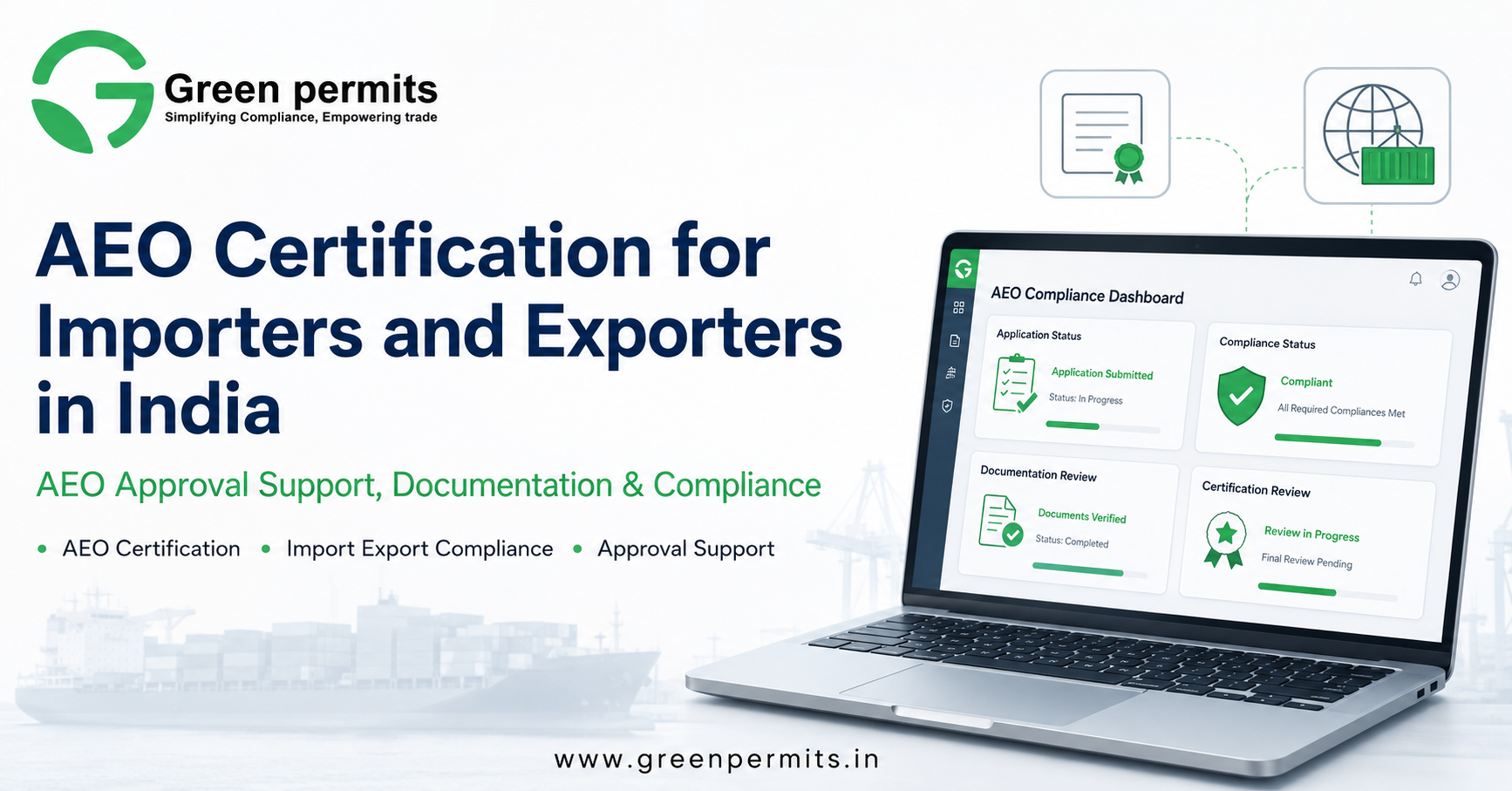
International trade is becoming increasingly complex, with businesses facing challenges related to customs procedures, cargo inspections, documentation requirements, and supply chain security. Importers and exporters are constantly looking for ways to reduce delays, improve operational efficiency, and strengthen their position in global markets. One of the most effective programs available for achieving these objectives is the Authorized Economic Operator (AEO) Certification.
The AEO program was introduced by the Central Board of Indirect Taxes and Customs (CBIC) to promote secure and efficient international trade. It recognizes businesses that maintain high levels of compliance, financial integrity, and supply chain security. Companies that obtain AEO certification are treated as trusted trade partners by customs authorities and receive several benefits that help simplify import-export operations.
For businesses involved in international trade, AEO certification is more than just a compliance approval. It is a strategic advantage that can improve customs clearance speed, reduce operational costs, and enhance business credibility both in India and globally.
What is AEO Certification
Authorized Economic Operator (AEO) Certification is a voluntary program that recognizes businesses with a strong history of compliance and secure trade practices. The framework is based on the World Customs Organization's SAFE Framework of Standards, which encourages customs administrations worldwide to facilitate secure and efficient global trade.
When a company receives AEO status, customs authorities consider it a low-risk and reliable business. As a result, the company receives preferential treatment during customs procedures, allowing shipments to move more smoothly through ports, airports, and border checkpoints.
The certification helps create trust between customs authorities and businesses, making international trade more efficient and predictable.
Why AEO Certification is Important
Importers and exporters often face delays due to cargo inspections, document verification, and customs examinations. These delays can increase storage costs, affect production schedules, and disrupt customer deliveries.
AEO certification helps businesses overcome many of these challenges. Since customs authorities recognize certified companies as compliant and trustworthy, shipments often receive faster processing and reduced inspections.
In addition to operational benefits, AEO certification improves business reputation. Many international buyers, suppliers, and logistics partners prefer working with organizations that maintain recognized compliance standards. This can help businesses strengthen commercial relationships and improve market competitiveness.
As global supply chains become more interconnected, companies with AEO certification are often better positioned to manage international trade efficiently.
Who Can Apply for AEO Certification
The AEO program is available to a wide range of businesses involved in international trade and logistics operations.
Eligible applicants generally include:
- Importers
- Exporters
- Manufacturers involved in export activities
- Customs brokers
- Freight forwarders
- Warehouse operators
- Logistics service providers
- Transport operators
The applicant must demonstrate a satisfactory compliance history, sound financial standing, and adequate supply chain security measures.
Businesses with regular import-export operations often gain the greatest value from certification because they can utilize the customs facilitation benefits more frequently.
Types of AEO Certification
The AEO program offers different categories of certification depending on the business profile and compliance maturity.
AEO-T1 serves as the entry-level certification for businesses meeting basic compliance requirements. AEO-T2 provides additional facilitation benefits and is intended for organizations with stronger compliance systems. AEO-T3 represents the highest level of certification and is generally awarded to businesses with advanced compliance management and security practices.
There is also an AEO-LO category designed for logistics operators such as customs brokers, warehouse operators, freight forwarders, and transport service providers.
Selecting the appropriate category depends on the organization's operational activities and compliance history.
Benefits of AEO Certification
One of the most significant advantages of AEO certification is faster customs clearance. Since certified businesses are considered low-risk, customs authorities often process their shipments with reduced intervention.
This leads to shorter clearance times, improved inventory management, and better supply chain planning. Businesses can reduce warehousing expenses, avoid unnecessary delays, and improve customer satisfaction through more reliable delivery schedules.
AEO-certified businesses may also experience fewer physical inspections and document examinations. This helps reduce administrative burden and allows companies to focus more on business growth rather than regulatory procedures.
Other important benefits include improved relationships with customs authorities, enhanced business credibility, and greater recognition in international markets.
For companies handling high volumes of imports and exports, these advantages can translate into substantial operational and financial savings over time.
Documents Required for AEO Certification
Proper documentation plays a crucial role in the certification process. Customs authorities evaluate various aspects of the business before granting approval.
The documents generally required include:
- Import Export Code (IEC)
- GST Registration Certificate
- PAN Card
- Company Incorporation Documents
- Financial Statements
- Customs Compliance Records
- Supply Chain Security Procedures
- Business Process Documentation
- Internal Control Policies
Additional documents may be requested depending on the certification category and nature of operations.
Maintaining organized and accurate records significantly improves the chances of successful certification.
AEO Certification Process
The certification process begins with a review of the business's compliance history and operational readiness. Companies should evaluate their customs compliance practices, security measures, financial records, and internal controls before submitting an application.
Once the required documentation is prepared, the application is submitted to the designated customs authority. The authorities review the information and assess whether the applicant meets the eligibility criteria.
During the evaluation process, customs officials may verify operational procedures, compliance records, and supply chain security arrangements. Depending on the certification level, site visits or detailed assessments may also be conducted.
After successful verification, the applicant receives AEO certification and becomes eligible to avail the associated customs facilitation benefits.
Compliance Requirements After Certification
Obtaining AEO certification is only the beginning. Businesses must continue maintaining the standards that formed the basis of certification.
Companies are expected to maintain accurate records, follow customs regulations, implement security measures, and cooperate with customs authorities during audits or reviews.
Any significant changes in business operations, ownership structure, or compliance systems should be properly communicated to the authorities.
Maintaining strong compliance practices ensures that businesses continue to enjoy the benefits associated with AEO status.
Why AEO Certification is a Strategic Investment
Many businesses view AEO certification simply as a customs facilitation tool. However, the long-term value extends much further. The certification strengthens supply chain reliability, improves international business relationships, and demonstrates a commitment to regulatory compliance.
As global trade becomes increasingly competitive, companies that can move goods efficiently and maintain secure operations gain a clear advantage. AEO certification helps businesses achieve these goals while building trust with customs authorities and international partners.
For organizations planning to expand their import-export operations, AEO certification can become an important part of long-term growth and risk management strategies.
Learn the Complete AEO Certification Process
Planning to obtain AEO certification for your import-export business? Understanding eligibility requirements, documentation, customs compliance, certification procedures, and operational benefits is essential before applying.
Read the complete guide here:
👉 https://www.greenpermits.in/04/aeo-certification-in-india-process-benefits-timeline/
📞 Get Expert Assistance for AEO Certification
Need assistance with AEO certification, IEC registration, customs compliance, import-export documentation, or trade facilitation approvals? The experts at Green Permits Consulting can guide you throughout the complete process.
🌐 Website: https://www.greenpermits.in
📞 Phone: +91 78350 06182
📧 Email: wecare@greenpermits.in

 English
 Arabic
 French
 Portuguese
 Deutsch
 Turkish
 Dutch
Dutch
 Italiano
 Russian
 Romaian
 Portuguese (Brazil)