
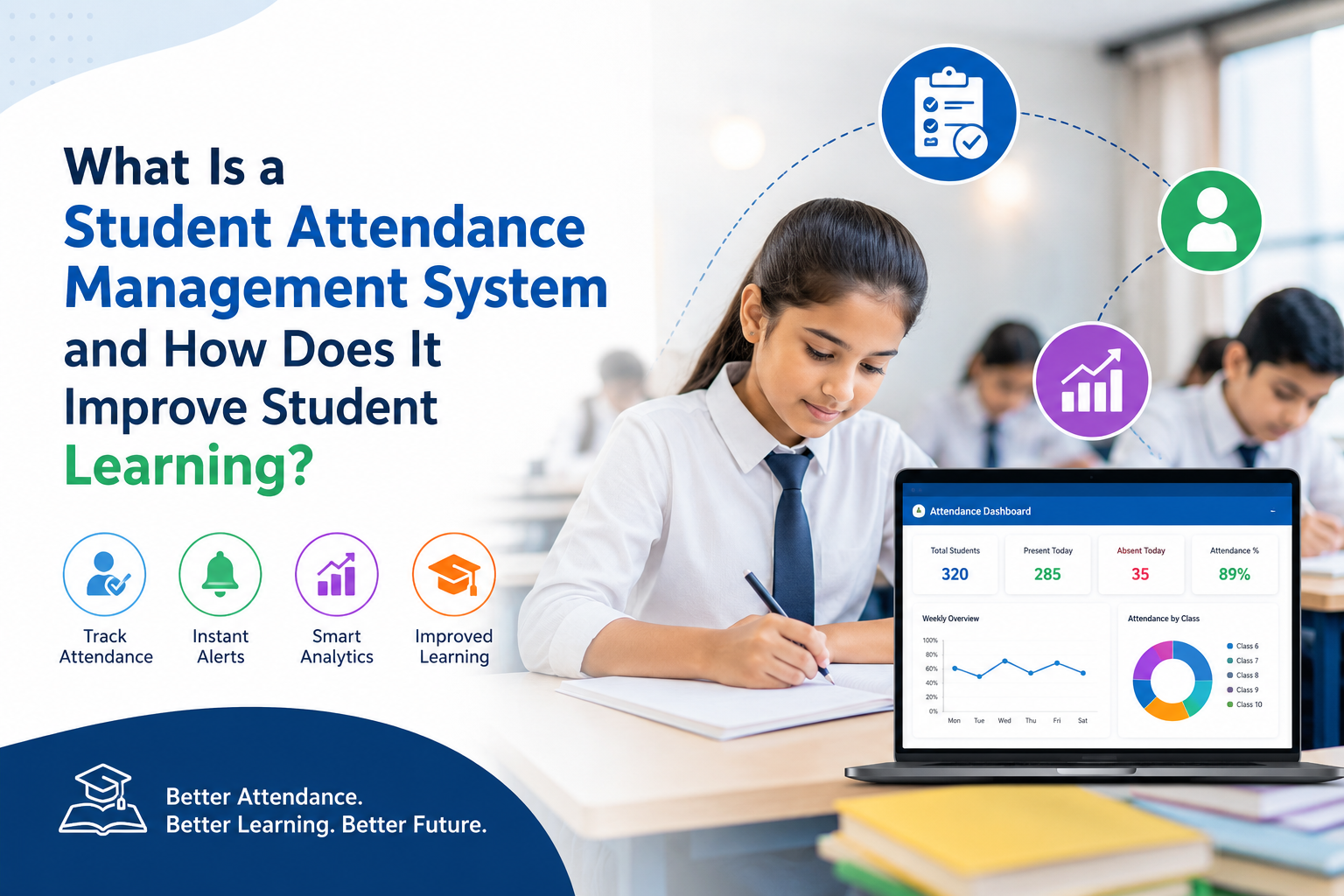
Schools are constantly looking for ways to improve student performance, streamline administrative tasks, and create a better learning experience. One of the most important tools helping educational institutions achieve these goals is a Student Attendance Management System. Attendance is more than just a record of who is present in class; it directly impacts student engagement, academic performance, and overall educational outcomes.
Traditional attendance methods often involve manual registers, paper records, and time-consuming administrative processes. However, modern schools are adopting technology-driven solutions that automate attendance tracking while providing valuable insights into student behavior and learning patterns.
This article explores what a Student Attendance Management System is, how it works, and how it contributes to improved student learning and school efficiency.
What Is a Student Attendance Management System?
A Student Attendance Management System is a digital solution designed to record, monitor, and manage student attendance in real time. It replaces manual attendance registers with automated processes that allow teachers and administrators to track attendance accurately and efficiently.
The system can be integrated with various technologies such as:
- RFID cards
- Biometric scanners
- QR codes
- Mobile applications
- Facial recognition systems
- Cloud-based platforms
By automating attendance management, schools can reduce errors, save time, and gain immediate access to attendance reports.
Most modern attendance systems are integrated with School ERP Software allowing institutions to manage attendance, academics, communication, examinations, and administrative functions from a single platform.
Why Attendance Matters in Education?Student attendance is closely linked to academic success. Students who attend classes regularly are more likely to:
- Understand lessons better
- Participate actively in classroom discussions
- Complete assignments on time
- Build stronger relationships with teachers
- Achieve higher academic performance
Conversely, frequent absenteeism can lead to learning gaps, reduced engagement, and lower examination scores.
A Student Attendance Management System helps schools identify attendance issues early and take corrective actions before they negatively impact learning outcomes.
Key Features of a Student Attendance Management System1. Real-Time Attendance Tracking:
Teachers can mark attendance instantly using computers, tablets, or mobile devices. The system updates records in real time, ensuring accurate data collection.
This eliminates the need for manual attendance sheets and reduces administrative workload.
2. Automated Notifications:
Many systems automatically send notifications to parents when students are absent or late.
This feature helps parents stay informed and encourages greater accountability among students.
3. Attendance Reports and Analytics:
Schools can generate detailed attendance reports that highlight:
- Daily attendance
- Monthly attendance trends
- Class-wise attendance
- Student absentee patterns
These insights help educators identify students who may require additional support.
4. Integration with School Systems:
Modern attendance solutions seamlessly integrate with School Management Software, creating a centralized platform for managing academic and administrative operations.
This integration improves data accuracy and reduces duplicate record-keeping.
5. Cloud-Based Accessibility:
Administrators, teachers, and parents can access attendance records anytime and from anywhere through secure cloud-based platforms.
This accessibility improves communication and transparency throughout the educational ecosystem.
How Does a Student Attendance Management System Improve Student Learning?Better Student Engagement:
When attendance is monitored consistently, students become more aware of their participation and accountability.
Regular attendance encourages students to remain engaged in classroom activities, discussions, and collaborative learning opportunities.
As a result, students develop stronger learning habits and better academic discipline.
Early Identification of Learning Risks:
Attendance data can serve as an early warning indicator for potential academic challenges.
Students who frequently miss classes may struggle to keep up with coursework. A Student Attendance Management System allows schools to identify these students quickly and provide timely interventions.
Teachers can offer additional support, counseling, or academic assistance before learning gaps become significant.
Improved Parent Involvement:
Parental engagement plays a critical role in student success.
Automated attendance alerts keep parents informed about their child's attendance patterns. When parents receive immediate notifications about absences, they can take corrective action and encourage consistent school attendance.
Increased parent involvement often leads to better student performance and improved learning outcomes.
Enhanced Teacher Productivity:
Teachers spend valuable classroom time taking attendance manually.
Automation reduces administrative tasks, allowing educators to focus more on teaching, lesson planning, and student interaction.
When teachers have more time to dedicate to instruction, students benefit from a richer learning experience.
Data-Driven Decision Making:
Schools can use attendance analytics to identify trends and make informed decisions.
For example, administrators may discover:
- Attendance drops during specific periods
- Certain classes have higher absentee rates
- Particular student groups need additional support
These insights help schools develop targeted strategies to improve attendance and learning outcomes.
The Role of School ERP Software in Attendance ManagementA modern School ERP Software solution integrates attendance management with various educational functions.
Instead of using separate systems for attendance, examinations, fees, communication, and academics, schools can manage everything from a single platform.
Benefits include:
- Centralized student information
- Improved operational efficiency
- Better communication among stakeholders
- Accurate reporting and analytics
- Reduced administrative costs
The integration of attendance management into a broader ERP system helps educational institutions create a more connected and efficient learning environment.
How School Management Software Enhances Overall Efficiency?While attendance management is essential, schools require comprehensive solutions to manage their daily operations.
School Management Software combines multiple modules that support:
- Student admissions
- Attendance management
- Examination management
- Fee collection
- Timetable scheduling
- Staff management
- Parent communication
By automating routine tasks, schools can focus more on educational excellence and student development.
The combination of attendance tracking and school management capabilities creates a strong foundation for academic success.
The Connection Between Attendance and Library ResourcesEducational success is not limited to classroom attendance. Access to learning resources also plays a crucial role.
Many institutions integrate their attendance systems with Library Management Software to create a complete educational ecosystem.
Library Management Software helps schools:
- Track book circulation
- Manage digital resources
- Monitor student library usage
- Encourage reading habits
- Improve resource accessibility
Students who attend school regularly are more likely to utilize library resources effectively, further enhancing their learning experience.
Together, attendance management and library systems support continuous academic growth.
Benefits for Schools and StudentsBenefits for Students:
- Improved academic performance
- Better learning consistency
- Increased accountability
- Enhanced engagement
- Stronger communication with parents
Benefits for Schools:
- Accurate attendance records
- Reduced administrative workload
- Better compliance reporting
- Improved student retention
- Data-driven educational planning
These advantages contribute to a more efficient and student-focused educational environment.
Conclusion:A Student Attendance Management System is much more than a tool for recording attendance. It is a strategic solution that helps schools improve student engagement, identify learning challenges early, and enhance academic performance.
When integrated with School ERP Software, School Management Software, and Library Management Software, attendance management becomes part of a comprehensive educational ecosystem that supports both administrative efficiency and student success.
As schools continue embracing digital transformation, investing in an advanced Student Attendance Management System can play a significant role in improving learning outcomes, strengthening parent involvement, and creating a more productive educational environment for future generations.


 Arabic
 French
 Spanish
 Portuguese
 Deutsch
 Turkish
 Dutch
Dutch
 Italiano
 Russian
 Romaian
 Portuguese (Brazil)