
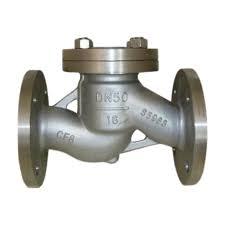
The Lift Check Valve Supplier plays an important role in delivering valves that prevent reverse flow and keep industrial systems running safely. A dependable Lift Check Valve Supplier must provide products that combine tight sealing, strong pressure resistance, and long service life for pipelines in water treatment, petrochemical processing, HVAC, and power generation. This article explores how lift check designs support stable operation, why material selection matters, and how professional manufacturing improves performance across demanding applications.
Understanding the Operating Principle
A lift check valve works through a simple but highly effective motion. When fluid flows in the correct direction, pressure lifts the disc away from the seat and allows passage through the valve body. When the flow weakens or reverses, the disc drops back into position and blocks return flow automatically. That self-acting behavior makes the valve especially valuable in systems where backflow could damage pumps, contaminate fluid lines, or interrupt production. In many installations, the compact internal structure helps reduce turbulence while still providing reliable shutoff. Because of that balance between efficiency and protection, these valves are often selected for systems that require dependable one-way flow control without constant operator intervention.
Material Choice and Structural Strength
Long-term performance depends heavily on the materials used in the valve body and internal parts. Carbon steel is common where strength and economy are important, while stainless steel is preferred when corrosion resistance and cleanliness are necessary. Alloy materials may be chosen for harsher conditions involving temperature variation, aggressive media, or continuous operation. The seat and disc must also be machined with precision so the valve closes tightly after each cycle. Surface treatment can further improve resistance to wear and environmental exposure. Engineers often refine the geometry of the lift path to improve response and reduce impact at closure, which helps limit wear and extend operational life in demanding pipeline networks.
Applications Across Industrial Systems
These valves appear in many sectors because reverse-flow protection is essential almost everywhere fluid moves through pipes. In water treatment plants, they help maintain correct flow direction and protect pumps from damage caused by sudden pressure change. In chemical and petrochemical lines, they guard against contamination and preserve process consistency. In boiler and steam systems, they support safe circulation by preventing hot media from moving backward into sensitive equipment. They are also used in HVAC systems, where stable circulation supports temperature control and energy efficiency. Across these industries, the valve's ability to act automatically without power or complex control logic makes it a practical choice for reliable system protection.
FY-Valve Quality and Manufacturing Focus
The manufacturing process behind a high-quality lift check valve depends on accurate machining, careful assembly, and repeated testing. Precision in the seat alignment and disc movement directly affects how well the valve seals and how long it lasts in service. A strong production system also includes pressure testing, dimensional inspection, and material verification before the product is released. In this area, FY-Valve emphasizes consistency, which helps customers choose equipment suited to specific pressure ratings, fluid conditions, and installation environments. That attention to detail matters because a well-made valve does more than control flow; it protects expensive equipment, reduces downtime, and supports safer plant operation over time.
Maintenance, Inspection, and Service Life
Even durable valves benefit from planned inspection and routine maintenance. Technicians should look for signs of seat wear, debris buildup, or unusual movement in the disc assembly. If a valve begins to close slowly or shows leakage under reverse pressure, the internal surfaces may need cleaning or replacement. Proper installation also matters, since misalignment or poor piping support can affect performance and shorten service life. Good operating practice includes checking upstream conditions, monitoring pressure changes, and keeping records of service intervals. When these steps are followed, lift check valves can perform reliably for many years with minimal interruption. For more technical information and product details, visit https://www.fy-valve.com/ .

 Arabic
 French
 Spanish
 Portuguese
 Deutsch
 Turkish
 Dutch
Dutch
 Italiano
 Russian
 Romaian
 Portuguese (Brazil)