
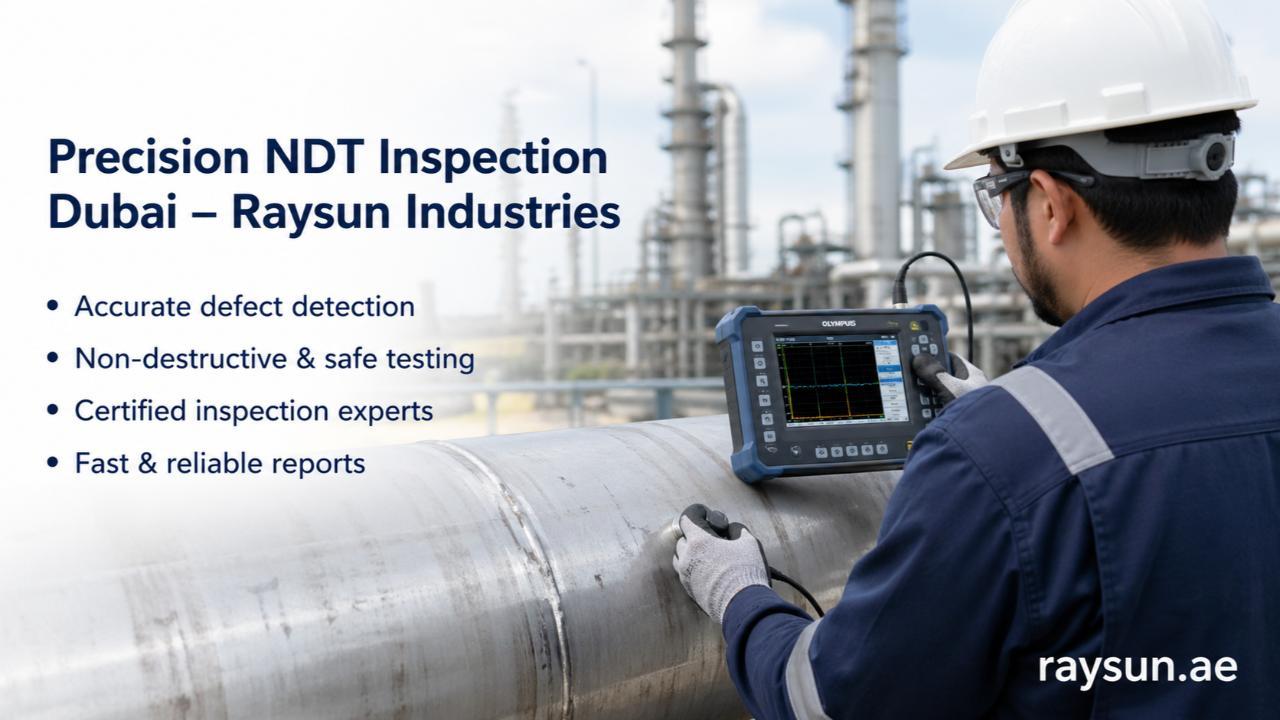
Introduction
Imagine you’ve just built a massive bridge or a high-tech engine. It looks perfect on the outside, but how do you know there isn't a tiny, invisible crack hiding deep inside the metal? You can't exactly chop the bridge in half to check, right? That’s where NDT Inspection comes in. Think of it like a medical check-up for machines and structures. Just like a doctor uses an X-ray to see if a bone is broken without opening you up, engineers use these special techniques to peek inside solid objects. It is the ultimate look but don't touch method that keeps our world from falling apart. By using NDT Inspection, we ensure that everything from the planes we fly in to the pipelines under our feet is safe, sturdy, and ready for action without causing any damage to the parts themselves.
Why We Need This Superpower in Engineering
The modern world is built on things that are under a lot of pressure—literally. Skyscrapers, high-speed trains, and energy plants are constantly working, and over time, they get tired. In the old days, if you wanted to test if a part was strong, you might pull it until it snapped and then say, Okay, it took ten tons to break that. That’s great for data, but now you have a broken part.
Modern engineering can't afford that waste. We need to know the health of a component while it’s still working. This is why non-destructive testing is such a game-changer. It allows us to find the hidden enemies like corrosion, air bubbles in a weld, or microscopic fatigue before they turn into big, expensive, and dangerous problems. It turns guessing into knowing, which is the backbone of any reliable piece of machinery.
Note: Raysun Techno Industries LLC offers specialized NDT inspection in Dubai to support the booming construction and oil sectors. We deliver precise evaluations of welds and structural components to guarantee operational excellence. Enhance your project’s reliability and compliance by reaching out to us for a comprehensive consultation on your testing needs.
Key Features of High-Quality NDT Inspection
When people talk about these tests, they aren't just using one single tool. It’s more like a toolbox where every tool has a specific job. Some tools use sound, some use magnets, and some use light. The goal is always the same: find the flaw without leaving a scratch.
Here is a quick breakdown of what makes these methods so special:
-
Zero Destruction: The most obvious win is that the part stays intact. You test it, it passes, and it goes right back to work.
-
Deep Detection: Some methods, like ultrasonic testing, allow us to see several inches (or even feet) into solid steel to find internal gaps.
-
Surface Sensitivity: Other methods are incredibly good at finding cracks on the skin of a metal that are so thin the human eye would never see them.
-
Speed and Portability: Many of these gadgets are now handheld, meaning a technician can climb up a wind turbine or crawl into a ship’s hull to do a check on the spot.
Staying One Step Ahead of Trouble
Reliability isn't just about fixing things when they break; it’s about making sure they never break in the first place. This is what engineers call predictive maintenance. Instead of waiting for a pipe to leak, you use NDT Inspection to measure the thickness of the pipe wall every year. If you notice it’s getting thinner because of rust, you can replace it during a scheduled break rather than dealing with an emergency at 3:00 AM.
This approach saves an incredible amount of money. Think about a massive factory. If one belt or gear fails unexpectedly, the whole line stops, and the company loses thousands of dollars every minute. By using liquid penetrant testing to check for surface cracks during a routine weekend check, the team can spot a failing part early. It’s the difference between a quick $50 fix and a $50,000 disaster. Plus, it keeps people safe. Reliability in engineering is ultimately about trust—trust that the elevator will hold and the bridge will stay firm.
The Invisible Guard Keeping Us Safe
It is easy to take the modern world for granted, but almost everything you interact with has likely been through some form of internal check. When a new skyscraper goes up, the massive steel beams are checked to make sure the welds are perfect. When you sit on a plane, the engine blades have been inspected with radiographic testing to ensure there are no hidden flaws from the casting process.
These methods are the silent guardians of our infrastructure. They don't get much glory because when they work, nothing happens—and in engineering, nothing happening is the best possible outcome. No leaks, no snaps, and no failures. By integrating these checks into every step of the building and maintenance process, we create a world that is much more resilient than what we had even fifty years ago. It’s all about having that X-ray vision to see through the solid exterior and ensure the heart of the machine is beating strong.
Conclusion
At the end of the day, engineering is only as good as the reliability of the materials being used. We can design the most beautiful structures in the world, but if the materials fail, the design doesn't matter. That is why having a rigorous eye for detail is so vital. By embracing the various methods of finding flaws early, we build a future that is not just innovative but also incredibly safe. For those who need to ensure their projects stand the test of time, partnering with experts who understand these nuances is key. At Raysun Techno Industries LLC, we believe that quality is never an accident; it is the result of careful, consistent, and expert NDT Inspection.

 Arabic
 French
 Spanish
 Portuguese
 Deutsch
 Turkish
 Dutch
Dutch
 Italiano
 Russian
 Romaian
 Portuguese (Brazil)