
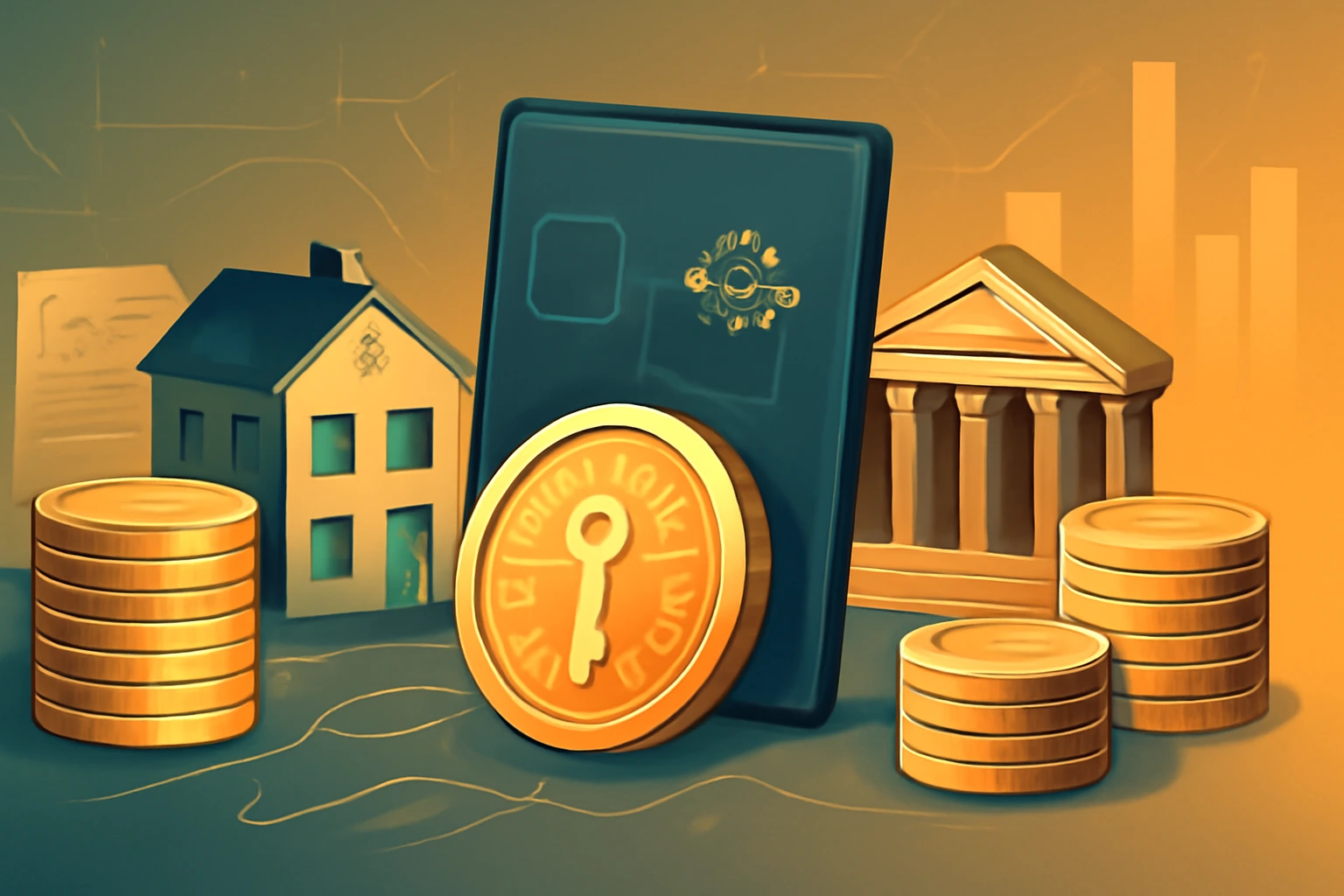
The financial world is undergoing a profound transformation as blockchain technology enables the conversion of physical assets into digital tokens. Known as real-world asset (RWA) tokenization, this process allows tangible assets—such as real estate, industrial infrastructure, commodities, and even fine art—to be represented as digital shares on a blockchain. By bridging the gap between the physical and digital realms, tokenization development is creating new opportunities for global investors, expanding access to previously illiquid markets, and fostering innovation in finance.
RWA tokenization is not merely a technological innovation; it is reshaping investment strategies, capital markets, and asset management. By providing fractional ownership, transparent records, and global accessibility, it empowers investors of all sizes to participate in high-value markets while enhancing liquidity, efficiency, and security.
Understanding Real-World Asset Tokenization
Real-world asset tokenization is the process of creating digital tokens on a blockchain that represent ownership, revenue rights, or claims on a physical asset. Each token is a fraction of the underlying asset, allowing for divisible ownership that can be traded, transferred, or held.
For example, a $100 million industrial warehouse can be tokenized into 100 million digital tokens, with each token representing $1 of ownership. Investors worldwide can purchase tokens, receive revenue proportional to their holdings, and trade them in secondary markets, all while the ownership and financial details are securely recorded on a blockchain.
Key features of RWA tokenization include:
- Fractional Ownership: Lowering barriers to entry by enabling investors to buy small portions of high-value assets.
- Global Accessibility: Removing geographic restrictions, allowing investors from any jurisdiction to participate.
- Enhanced Liquidity: Tokens can be traded on secondary markets, offering flexibility and faster exit strategies.
- Transparency and Security: Blockchain provides immutable records, smart contracts automate compliance, and revenue distribution is verifiable.
- Efficient Capital Raising: Developers and asset owners can attract investors globally without relying solely on traditional financing methods.
How RWA Tokenization Unlocks Digital Opportunities
The real world asset tokenization of physical assets is transforming traditional investment models into digitally enabled opportunities. Here’s how:
1. Fractional Ownership and Democratization
Historically, high-value assets like commercial real estate, industrial infrastructure, and fine art were accessible only to wealthy individuals or institutions. Tokenization breaks these barriers by offering fractional ownership, allowing small investors to participate in markets that were previously exclusive.
Example: Tokenized shares of a luxury resort allow thousands of investors worldwide to hold fractional equity and earn proportional revenue without purchasing the entire property.
2. Global Investment Accessibility
Tokenization enables cross-border participation, bypassing the complex legal and financial hurdles of international investment. Investors can acquire tokens of properties or infrastructure projects in other countries without physically managing the assets.
Example: Investors in Europe can buy digital shares of industrial facilities in Southeast Asia, diversifying their portfolios while mitigating local market risks.
3. Liquidity for Traditionally Illiquid Assets
Illiquidity has long been a limiting factor in physical asset investment. Selling real estate, industrial plants, or collectibles can take months or years. Tokenization converts these assets into digital shares that can be traded quickly, providing liquidity akin to stocks or ETFs.
Example: Tokenized art or historical collectibles can be bought and sold on digital marketplaces, allowing investors to exit positions without lengthy sale processes.
4. Transparency and Automated Compliance
Blockchain technology ensures that all tokenized asset transactions are secure, verifiable, and transparent. Smart contracts automate compliance, revenue distribution, and governance, reducing administrative overhead and mitigating risks associated with fraud or mismanagement.
Example: Rental income from tokenized commercial properties is automatically distributed to token holders based on their proportional ownership, eliminating delays and manual reconciliation.
Popular Business Models in RWA Tokenization
Several business models have emerged to structure tokenized real-world assets effectively:
1. Equity-Based Tokenization
Tokens represent fractional equity ownership of a physical asset, allowing investors to participate in capital appreciation and revenue streams.
Example: Investors purchase tokens representing shares in a commercial building. They earn rental income proportional to their holdings and benefit from property value appreciation.
2. Revenue-Sharing Tokenization
Tokens entitle holders to a share of revenue generated by the asset rather than direct ownership. This model is popular in sectors like hospitality, retail, and industrial leasing.
Example: Token holders of a luxury hotel receive a portion of the hotel’s monthly revenue via automated smart contracts.
3. Hybrid Models
Hybrid tokenization combines equity and debt, offering both fixed income returns and ownership benefits. These models attract both conservative investors seeking stable returns and growth-oriented participants looking for capital gains.
Example: A renewable energy project issues tokens that provide a fixed annual return plus a share of long-term appreciation in project value.
4. Tokenized Funds
Funds holding diversified physical assets issue tokens representing proportional ownership of the portfolio. This model allows investors to gain exposure to multiple properties or assets without investing in each individually.
Example: A tokenized real estate fund holds residential, commercial, and industrial properties globally, offering investors diversified exposure in a single investment.
5. Rent-to-Own Tokenization
Tenants or investors gradually acquire ownership of a property through tokens that accumulate based on rental payments or other contributions.
Example: Residents of a residential complex earn tokens corresponding to monthly rent payments, which eventually provide full ownership of their unit.
Use Cases Across Industries
RWA tokenization is reshaping multiple sectors:
1. Real Estate
Fractional token ownership of residential, commercial, and industrial properties allows global investors to participate in real estate markets. Tokenization also facilitates liquidity, cross-border investment, and automated revenue distribution.
2. Industrial and Logistics Assets
Warehouses, factories, and infrastructure projects can be tokenized to attract global capital. Investors gain access to income streams from lease agreements and property appreciation.
3. Hospitality and Tourism
Hotels, resorts, and vacation properties use tokenized revenue-sharing models to distribute income globally. Tokenization democratizes access to luxury hospitality investment opportunities.
4. Art and Collectibles
Rare art, collectibles, and historical artifacts can be fractionalized through tokenization, enabling investors to participate in markets traditionally reserved for high-net-worth individuals.
5. Renewable Energy and Infrastructure
Tokenization supports sustainable development projects by allowing global investors to fund solar farms, wind projects, and other infrastructure initiatives, earning income from energy sales or government incentives.
Benefits Driving RWA Tokenization Development
The expansion of RWA tokenization is fueled by several advantages:
- Reduced Capital Requirements: Fractional ownership allows smaller investors to participate in high-value markets.
- Global Market Access: Investors can diversify geographically and across asset classes.
- Enhanced Liquidity: Tokens can be traded on secondary marketplaces.
- Transparency and Security: Blockchain ensures accurate ownership and transaction records.
- Efficient Revenue Distribution: Smart contracts automate income allocation and governance.
- Innovative Investment Models: Hybrid and fund-based structures attract a broader investor base.
Challenges and Considerations
Despite its potential, RWA tokenization faces challenges:
- Regulatory Compliance: Tokenized assets may fall under securities laws in multiple jurisdictions.
- Valuation and Pricing: Accurate and transparent valuation is critical for investor confidence.
- Technology Risks: Smart contract vulnerabilities, blockchain network issues, and cybersecurity threats must be managed.
- Market Development: Secondary marketplaces for tokenized assets are still maturing.
- Investor Education: Understanding blockchain, token economics, and asset-specific risks is crucial.
The Future of RWA Tokenization
The future of RWA tokenization is promising. As blockchain technology matures and regulatory frameworks clarify, tokenization is expected to become mainstream for global investors. Key trends include:
- Integration with Decentralized Finance (DeFi): Tokenized assets may be used for lending, staking, and collateralized derivatives.
- Institutional Participation: Banks, asset managers, and investment funds are exploring tokenized asset offerings.
- Enhanced Market Liquidity: Secondary marketplaces will grow, facilitating real-time trading of tokenized assets.
- Cross-Border Efficiency: Investors can seamlessly access global markets, reducing costs and administrative complexity.
Conclusion
Real-world asset tokenization bridges the gap between physical assets and digital investment opportunities. By converting tangible assets into fractional digital shares, tokenization enhances accessibility, liquidity, transparency, and efficiency. Investors can diversify globally across real estate, infrastructure, hospitality, art, and renewable energy, accessing markets that were previously illiquid or exclusive.
As adoption grows, tokenization development will continue to reshape investment landscapes, enabling innovative business models, democratizing wealth creation, and connecting global investors with high-value assets. The shift from physical assets to digital opportunities represents not only a technological evolution but also a fundamental change in how wealth is built, managed, and shared worldwide.

 English
 Arabic
 French
 Spanish
 Portuguese
 Deutsch
 Turkish
 Dutch
Dutch
 Russian
 Romaian
 Portuguese (Brazil)