
Introduction
Limestone is one of the most useful natural materials on Earth. It is used in construction, cement making, roads, agriculture, and even in water treatment. Many countries depend on limestone for their industries and daily needs.
In this article, we will explain in simple words where limestone comes from and the main places around the world where it is found. This guide is easy to read and helps you understand everything step by step.
Note :- Lime stone deposits are natural formations of sedimentary rock made mainly from calcium carbonate. These deposits are formed over millions of years from the remains of marine organisms like shells and corals. Limestone is widely used in construction, cement production, agriculture, and industrial processes due to its strength and versatility.
What Is Limestone?

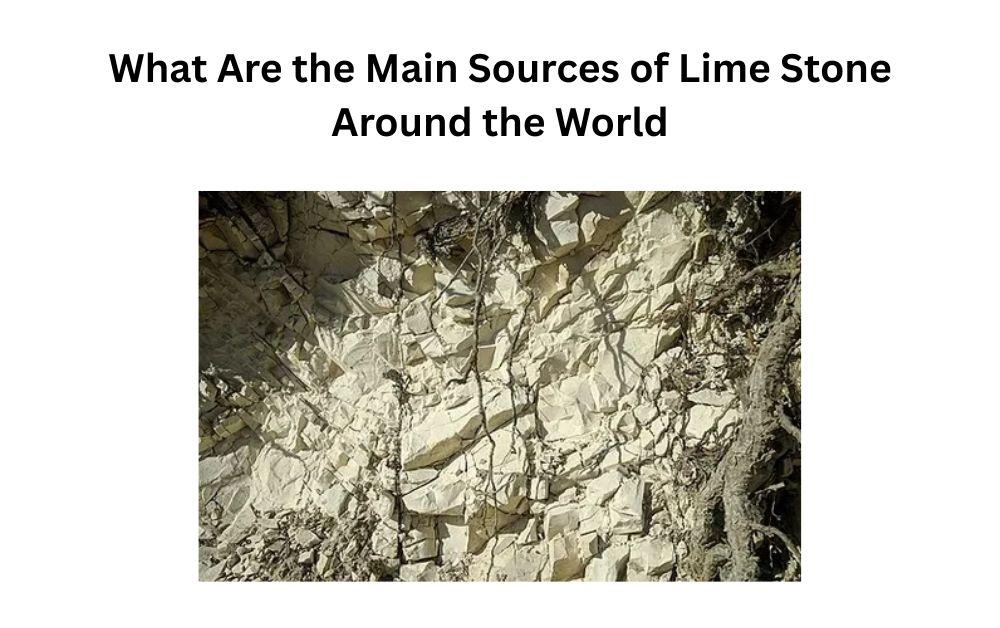
Limestone is a type of rock that is mostly made of calcium carbonate. This material comes from the remains of sea animals like shells and coral. Over many years, these remains get pressed and turn into solid rock.
Limestone is usually white, grey, or light brown. It is soft compared to other rocks, so it is easy to cut and shape. This is why it is widely used in building and construction.
How Is Limestone Formed?
Limestone forms mainly in water, especially in oceans and lakes. Here is a simple explanation:
- Small sea animals live in water.
- When they die, their shells settle at the bottom.
- Over time, layers of shells build up.
- Pressure turns these layers into solid rock.
This process takes millions of years. That is why limestone is found in large layers underground.
Why Limestone Is Important
Before we talk about the sources, let’s understand why limestone is so important:
Used in Construction
Limestone is a key material in cement and concrete. Buildings, bridges, and roads depend on it.
Used in Steel Industry
It helps remove impurities when making steel.
Used in Agriculture
Farmers use limestone to improve soil quality.
Used in Water Treatment
It helps clean water by balancing its pH level.
Because of these uses, limestone is mined in many parts of the world.
Main Sources of Limestone Around the World
Now let’s look at the major countries and regions where limestone is found in large amounts.
1. China
China is one of the biggest producers of limestone in the world.
Why China Has So Much Limestone
- Large land area
- Many natural rock formations
- Strong mining industry
Where It Is Found in China
Limestone is found in provinces like:
- Guangxi
- Sichuan
- Shandong
Usage in China
China uses limestone mainly for:
- Cement production
- Construction projects
- Steel manufacturing
Because of fast growth in cities, the demand for limestone in China is very high.
2. India
India is another country with large limestone reserves.
Major Limestone States in India
- Rajasthan
- Madhya Pradesh
- Andhra Pradesh
- Gujarat
- Tamil Nadu
Why India Has Good Limestone Sources
India has many sedimentary rock areas, which are perfect for limestone formation.
Usage in India
- Cement industry (very large in India)
- Road construction
- Agriculture
India is one of the top producers of cement, and limestone plays a big role in it.
3. United States
The United States has large and high-quality limestone deposits.
Key Areas in the USA
- Texas
- Florida
- Pennsylvania
- Missouri
Why Limestone Is Important in the USA
- Used in highways and buildings
- Important for steel production
- Used in chemical industries
The USA has advanced mining methods, making limestone production efficient.
4. Russia
Russia has huge natural resources, including limestone.
Where It Is Found
- Ural Mountains
- Siberia
- Central Russia
Usage in Russia
- Construction materials
- Industrial uses
- Cement production
Due to its large land size, Russia has many untapped limestone reserves.
5. Brazil
Brazil is rich in natural minerals, including limestone.
Major Areas
- Minas Gerais
- São Paulo
- Bahia
Uses in Brazil
- Cement industry
- Agriculture (soil treatment)
- Construction
Brazil uses limestone heavily in farming to improve soil quality.
6. Vietnam
Vietnam is known for its beautiful limestone mountains and islands.
Famous Limestone Areas
- Ha Long Bay
- Ninh Binh
Special Feature
Vietnam has limestone karst formations, which create stunning natural landscapes.
Usage
- Cement production
- Tourism (due to natural beauty)
Limestone is both an economic and natural asset for Vietnam.
7. United Kingdom
The UK has been using limestone for many years.
Main Limestone Regions
- Peak District
- Yorkshire Dales
- South Wales
Usage in the UK
- Building materials
- Road construction
- Cement
Many old buildings in the UK are made from limestone.
8. Germany
Germany also has strong limestone resources.
Where It Is Found
- Bavaria
- North Rhine-Westphalia
Uses
- Cement production
- Industrial processing
- Environmental uses
Germany uses limestone in both construction and eco-friendly applications.
9. Egypt
Egypt is famous for its limestone, especially in history.
Historical Use
The pyramids were built using limestone blocks.
Main Areas
- Nile Valley
- Sinai Peninsula
Modern Use
- Construction
- Cement industry
Egypt has been using limestone for thousands of years.
10. Canada
Canada has large limestone reserves spread across the country.
Major Areas
- Ontario
- Quebec
- British Columbia
Usage
- Construction
- Road base material
- Cement production
Canada uses limestone in both urban and rural development.
Types of Limestone Found Around the World
Different regions have different types of limestone. Here are some common types:
Chalk
Soft and white limestone, often used in classrooms and farming.
Coquina
Made from broken shells, found in coastal areas.
Travertine
Used in tiles and decoration, often found near hot springs.
Fossiliferous Limestone
Contains visible fossils of plants and animals.
Each type has its own use based on its strength and texture.
How Limestone Is Mined
Limestone is usually mined using open-pit mining. Here is how it works:
- Remove top soil
- Drill and blast the rock
- Break into smaller pieces
- Transport to factories
This process is simple but needs proper planning to avoid environmental damage.
Environmental Impact of Limestone Mining
While limestone is useful, mining can affect the environment.
Common Issues
- Dust pollution
- Noise from machines
- Damage to land and trees
Solutions
- Use better mining methods
- Restore land after mining
- Control dust and waste
Many countries now follow strict rules to protect the environment.
Future of Limestone Industry
The demand for limestone is expected to grow in the future.
Reasons
- More construction projects
- Growing population
- Increase in infrastructure work
New Trends
- Eco-friendly mining
- Recycling materials
- Better technology
Limestone will continue to play an important role in development.
Conclusion
Limestone is a very important natural resource used across the world. It forms over millions of years and is found in many countries like China, India, the USA, and Brazil.
Each country uses limestone in different ways, but the main uses remain the same—construction, cement, agriculture, and industry.
For more insightful articles related to this topic, feel free to visit livecityin.com

 Arabic
 French
 Spanish
 Portuguese
 Deutsch
 Turkish
 Dutch
Dutch
 Italiano
 Russian
 Romaian
 Portuguese (Brazil)