
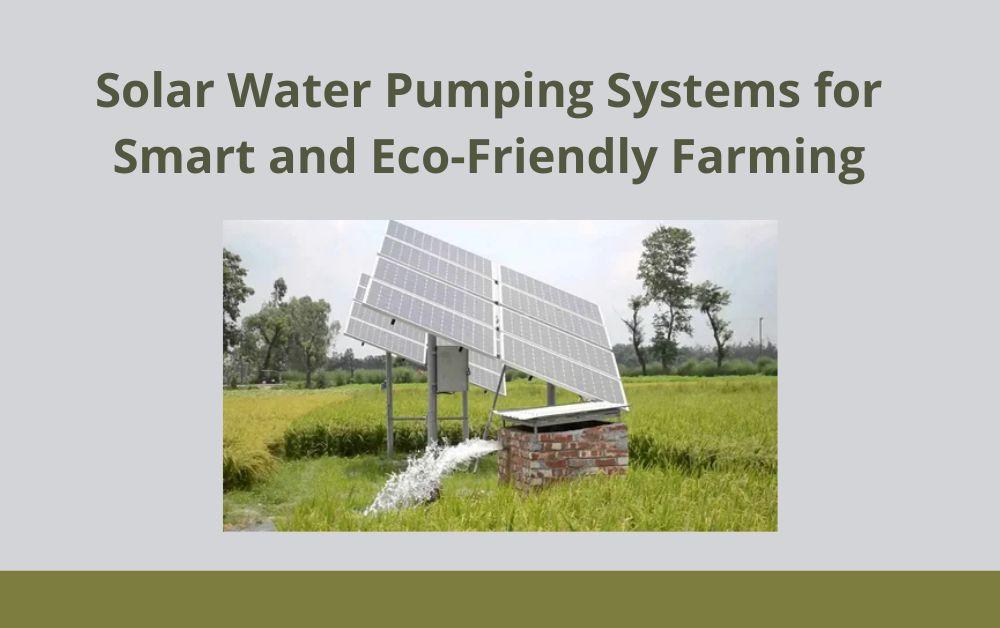
Farming has changed a lot over the years. Today, farmers are not only focused on growing crops but also on saving water, reducing costs, and protecting the environment. One of the best ways to do this is by using solar water pumping systems.
These systems use sunlight to pump water for irrigation. They are simple, cost-saving, and eco-friendly. Farmers no longer need to depend fully on electricity or diesel to run water pumps. With solar systems, they can get a steady water supply while also reducing expenses.
In this article, you will learn everything about solar water pumping systems in simple and easy words.
What Are Solar Water Pumping Systems?
Solar water pumping systems are machines that use energy from the sun to pump water from sources like wells, rivers, or boreholes.
Basic Working of Solar Pumps
These systems have solar panels that collect sunlight and convert it into electricity. This electricity is then used to run a motor, which pumps water.
Main Components of the System
Solar Panels
Solar panels capture sunlight and convert it into electrical energy.
Pump Controller
The controller manages the power flow and ensures smooth operation.
Water Pump
The pump lifts water from the source and delivers it to the field or storage tank.
Storage Tank
Water can be stored in tanks for later use when sunlight is not available.
Why Solar Water Pumping Systems Are Important for Farming

Farmers need water regularly for crops. Traditional methods can be expensive and unreliable.
Key Benefits for Farmers
Reduced Energy Costs
Solar energy is free. Once the system is installed, there are very low running costs.
Reliable Water Supply
Solar pumps work during the day when irrigation is often needed most.
Environment-Friendly
These systems do not produce pollution, making them safe for the environment.
Easy to Use
Solar systems are simple and require less manual effort.
Types of Solar Water Pumping Systems
Different farms have different needs. That is why there are different types of solar pumping systems.
Surface Pumps
Surface pumps are used when water sources are close to the ground.
Suitable For
- Ponds
- Rivers
- Shallow wells
These pumps are easy to install and maintain.
Submersible Pumps
Submersible pumps are placed inside deep water sources like borewells.
Suitable For
- Deep wells
- Boreholes
They are powerful and can lift water from great depths.
AC and DC Pumps
Solar pumps can run on AC or DC power.
DC Pumps
These work directly with solar panels and are more efficient.
AC Pumps
These can be used with existing electrical systems and offer flexibility.
How Solar Water Pumping Systems Work in Daily Farming
Understanding daily use is important for farmers.
Morning Operation
As the sun rises, solar panels start generating electricity. The pump begins working and water starts flowing.
Midday Performance
During peak sunlight, the system works at full capacity. This is the best time for irrigation.
Evening Storage Use
Water stored in tanks can be used later in the day or at night.
Cost Benefits of Solar Water Pumping Systems
One of the biggest reasons farmers choose solar systems is cost savings.
Initial Investment vs Long-Term Savings
The installation cost may seem high, but it is a one-time investment. Over time, savings on fuel and electricity make up for the cost.
No Fuel Costs
Unlike diesel pumps, solar systems do not need fuel.
Low Maintenance Costs
Solar systems have fewer moving parts, so maintenance is simple and affordable.
Environmental Benefits of Solar Water Pumping Systems
Solar systems are good not only for farmers but also for the environment.
Reduced Carbon Emissions
These systems do not release harmful gases.
Conservation of Natural Resources
They reduce the use of diesel and electricity from non-renewable sources.
Support for Sustainable Farming
Solar pumps help farmers adopt eco-friendly practices.
Challenges and Solutions
Like any system, solar water pumps also have some challenges.
High Initial Cost
Solution
Government subsidies and financing options can help reduce the burden.
Weather Dependency
Solar systems depend on sunlight.
Solution
Water storage tanks can store water for cloudy days.
Technical Knowledge
Some farmers may find it difficult to operate the system at first.
Solution
Training and support from suppliers can solve this issue.
Government Support and Subsidies
Many governments support solar farming solutions.
Benefits of Government Programs
- Reduced installation cost
- Financial support for farmers
- Encouragement for eco-friendly farming
Farmers should check local schemes to take advantage of these benefits.
Tips for Choosing the Right Solar Water Pumping System
Selecting the right system is very important.
Check Water Requirements
Understand how much water your crops need daily.
Know Your Water Source
Depth and distance of water source affect pump selection.
Choose Quality Equipment
Good quality systems last longer and perform better.
Work with Trusted Suppliers
Experienced suppliers can guide you properly.
Maintenance Tips for Long-Term Performance
Proper maintenance ensures the system works well for years.
Regular Cleaning of Solar Panels
Dust can reduce efficiency, so clean panels regularly.
Check Electrical Connections
Ensure all connections are secure.
Inspect the Pump
Regular inspection helps detect problems early.
Role of Technology in Modern Solar Farming
Technology is making solar systems even better.
Smart Controllers
These devices help control water flow and monitor performance.
Remote Monitoring
Farmers can check system status using mobile devices.
Automation
Automatic systems reduce manual work and improve efficiency.
Future of Solar Water Pumping Systems
The future looks bright for solar farming solutions.
Increased Adoption
More farmers are switching to solar systems every year.
Improved Technology
New innovations are making systems more efficient and affordable.
Better Storage Solutions
Advanced batteries will allow better water and energy storage.
Why Farmers Are Choosing Solar Water Pumping Systems
Farmers today are looking for reliable and cost-effective solutions.
Key Reasons
- Lower operating costs
- Easy maintenance
- Reliable water supply
- Environment-friendly approach
These benefits make solar systems a smart choice.
Conclusion
Solar water pumping systems are changing the way farming works. They offer a simple, cost-effective, and eco-friendly solution for irrigation. By using sunlight, farmers can reduce their dependence on expensive fuel and electricity.
These systems not only save money but also support sustainable farming practices. With proper planning and the right equipment, farmers can enjoy long-term benefits and improve their productivity.

 English
 Arabic
 French
 Spanish
 Portuguese
 Deutsch
 Turkish
 Italiano
 Russian
 Romaian
 Portuguese (Brazil)