
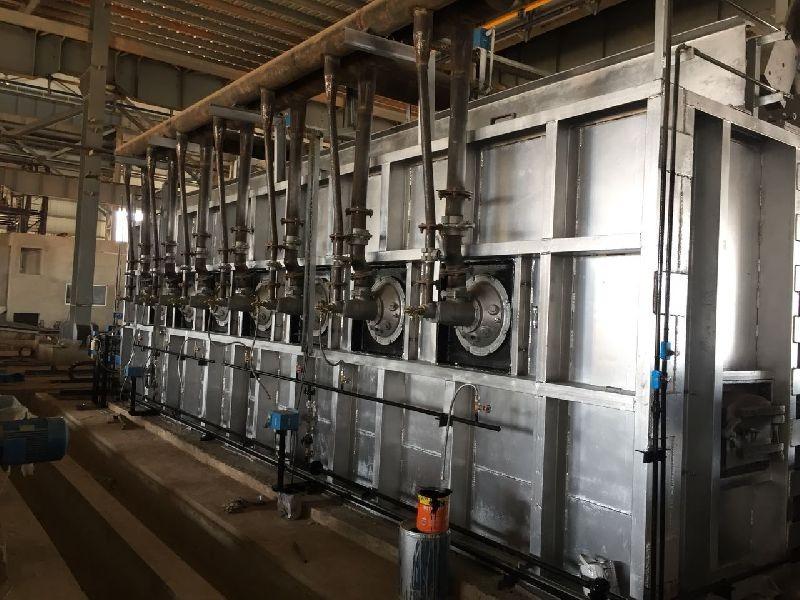
In the steel and metal processing industry, temperature control is everything. Before rolling, forging, or shaping, metal must be heated to the right temperature to ensure proper deformation and mechanical properties. This is where reheating furnaces play a crucial role.
At Trymaxfurnace, we design and manufacture high-performance reheating furnaces that deliver consistent heating, energy efficiency, and reliable operation for modern steel plants and rolling mills.
What is a Reheating Furnace?
A reheating furnace is an industrial furnace used to heat steel billets, blooms, or slabs to the required rolling temperature. The purpose is to make the material soft and ductile so it can be easily shaped in rolling mills.
These furnaces are widely used in:
- Steel rolling mills
- Forging industries
- Metal processing plants
Reheating furnaces ensure uniform temperature distribution across the material, which is essential for maintaining product quality.
Why Reheating Furnaces Are Important
Reheating furnaces are a critical part of the steel manufacturing process. Without proper heating:
- Metal may crack during rolling
- Mechanical properties may degrade
- Product quality may become inconsistent
A well-designed furnace ensures:
- Uniform heating of billets and slabs
- Reduced energy consumption
- Improved production efficiency
- Better surface quality of finished products
Working Principle of Reheating Furnaces
The working principle of a reheating furnace is based on controlled heat transfer.
- Charging – Cold billets or slabs are loaded into the furnace.
- Heating Zones – The furnace is divided into zones (preheating, heating, soaking).
- Combustion System – Fuel is burned using burners to generate heat.
- Heat Transfer – Heat is transferred to the material through radiation and convection.
- Soaking – Material is held at the desired temperature for uniform heating.
- Discharge – Heated material is sent to the rolling mill.
Modern furnaces use automation systems to control temperature precisely.
Types of Reheating Furnaces
1. Walking Beam Furnace
This is one of the most advanced types of reheating furnaces.
- Material moves step-by-step using walking beams
- Uniform heating across the entire surface
- Minimal material deformation
- Ideal for high-capacity steel plants
2. Pusher Type Furnace
In this furnace, billets are pushed through the chamber.
- Simple and cost-effective design
- Suitable for continuous production
- Common in small to medium rolling mills
3. Rotary Hearth Furnace
This furnace uses a rotating hearth for material movement.
- Efficient heat distribution
- Suitable for specific industrial applications
- Compact design
4. Batch Type Furnace
Used for smaller production volumes.
- Material is heated in batches
- Flexible operation
- Suitable for forging industries
Key Components of a Reheating Furnace
A typical reheating furnace includes:
- Burners – Provide heat energy
- Refractory Lining – Reduces heat loss
- Charging System – Loads material
- Discharging Mechanism – Transfers heated material
- Temperature Control System – Ensures accuracy
- Flue Gas System – Removes exhaust gases
Each component is designed to maximize efficiency and durability.
Fuel Options Used
Reheating furnaces can operate on:
- Natural Gas
- LPG
- Furnace Oil
- Mixed Fuel Systems
The choice depends on availability, cost, and environmental requirements.
Advantages of Modern Reheating Furnaces
1. Energy Efficiency
Advanced burner technology reduces fuel consumption.
2. Uniform Heating
Ensures consistent product quality.
3. Automation
PLC and SCADA systems improve control and monitoring.
4. Low Maintenance
High-quality materials increase lifespan.
5. Environmental Compliance
Reduced emissions with optimized combustion systems.
Applications in Industry
Reheating furnaces are used in:
- Steel rolling mills
- Alloy steel production
- Automotive component manufacturing
- Construction material industries
- Heavy engineering industries
They are essential wherever metal shaping and rolling processes are involved.
How Trymaxfurnace Delivers High-Performance Solutions
At Trymaxfurnace, we specialize in designing customized reheating furnaces for various industrial applications.
Our solutions focus on:
- High thermal efficiency
- Uniform temperature distribution
- Reduced fuel consumption
- Robust construction
- Easy maintenance
We provide complete services from design and manufacturing to installation and commissioning.
Factors to Consider When Choosing a Reheating Furnace
Before selecting a furnace, consider:
- Production capacity
- Type of material (billet, slab, bloom)
- Fuel availability
- Temperature requirements
- Automation level
- Space and layout
Choosing the right furnace improves productivity and reduces operational costs.
Maintenance Tips for Long Life
To ensure reliable performance:
- Regularly inspect burners and controls
- Maintain refractory lining
- Clean flue gas systems
- Monitor temperature sensors
- Schedule preventive maintenance
Proper maintenance increases efficiency and reduces downtime.
Future Trends in Reheating Furnaces
The industry is moving toward:
- Energy-efficient designs
- Waste heat recovery systems
- Digital monitoring and automation
- Reduced carbon emissions
Companies like Trymaxfurnace are focusing on innovation to meet modern industrial demands.
Conclusion
Reheating furnaces are a vital part of the steel manufacturing process. They ensure that metal is heated uniformly and efficiently before rolling or forging, directly impacting product quality and production efficiency.
With the right furnace design and technology, industries can reduce costs, improve output, and maintain high-quality standards. Trymaxfurnace continues to deliver reliable and energy-efficient reheating furnace solutions tailored to the needs of modern steel plants.
If you want, I can next:

 Arabic
 French
 Spanish
 Portuguese
 Deutsch
 Turkish
 Dutch
Dutch
 Italiano
 Russian
 Romaian
 Portuguese (Brazil)