
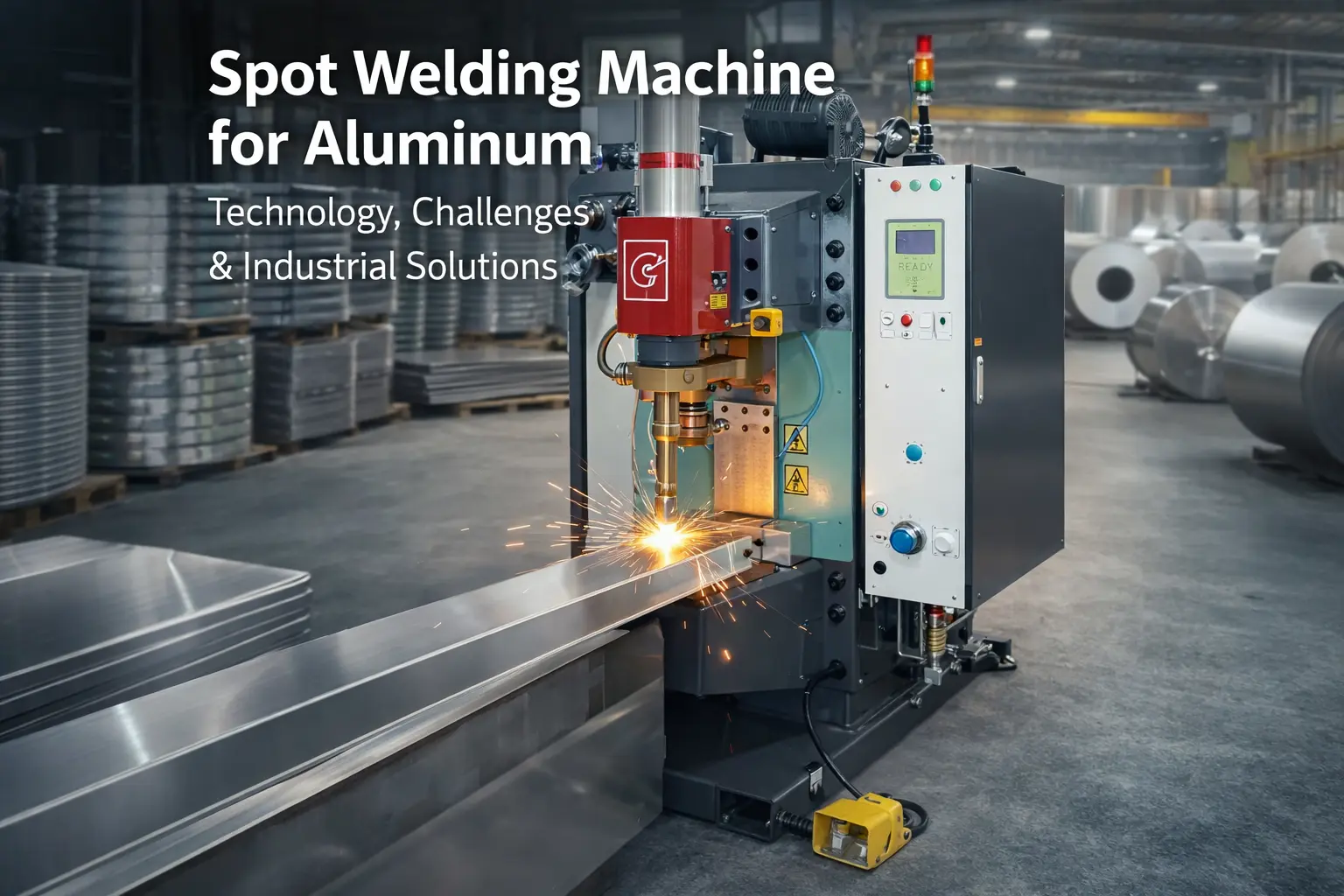
In today’s competitive manufacturing landscape, lightweight materials like aluminium are increasingly preferred across automotive, aerospace, and industrial sectors. However, joining aluminium presents unique challenges due to its high thermal conductivity, oxide layer, and low melting point. Spot welding aluminium a key resistance welding method offers efficient, precise, and repeatable solutions for joining aluminium components at scale.
Heron Welder, a global leader in industrial welding and metal-joining equipment, provides advanced spot welding machines and integrated automation solutions designed to meet these specific challenges. In this article, we explore the principles, applications, comparisons, and best practices for spot welding aluminium, helping engineers and factory decision-makers make informed choices.
Understanding the Principles of Spot Welding Aluminium
Spot welding is a resistance-based process where heat generated by electrical resistance melts the metal at the joint interface to form a weld nugget. When welding aluminium, certain factors require special attention:
- High Thermal Conductivity – Aluminium dissipates heat much faster than steel, requiring higher currents and precise control to ensure adequate weld penetration.
- Oxide Layer – Aluminium naturally forms an oxide layer that increases resistance. Proper electrode design and surface preparation are critical to overcome this barrier.
- Low Melting Point – Aluminium melts at ~660°C, much lower than steel, which necessitates careful heat management to prevent burn-through or weak welds.
Heron’s MFDC (Medium-Frequency Direct Current) spot welding systems provide stable current and fast response times, ensuring controlled heat input for consistent aluminium welds.
Applications of Spot Welding Aluminium
Spot welding aluminium is widely used in industries requiring lightweight, high-strength assemblies:
1. Automotive Industry
Aluminium body panels, chassis components, and battery enclosures benefit from spot welding due to its speed and repeatability. High-precision MFDC spot welders enable consistent quality, even in complex sheet geometries.
2. Aerospace Components
Aerospace applications demand high-quality welds with minimal distortion. Spot welding aluminium in aircraft fuselage panels or structural brackets ensures strength without compromising weight targets.
3. Electronics and Electrical Enclosures
Thin aluminium sheets used in heat sinks, casings, and electronic enclosures can be efficiently joined using controlled spot welding processes.
4. Industrial Equipment Fabrication
Aluminium frameworks, tanks, and machinery housings benefit from automated spot welding lines, reducing labor costs and improving throughput.
Heron offers fully automated welding solutions that integrate spot welding into production lines, ensuring high-volume efficiency with minimal human intervention.
Spot Welding Aluminium vs. Steel: Key Comparisons
Understanding the differences between welding aluminium and steel is essential for process optimization:
| Feature | Aluminium | Steel |
|---|---|---|
| Thermal Conductivity | 5–6× higher | Lower |
| Melting Point | ~660°C | 1,370–1,540°C |
| Current Requirement | Higher peak current | Moderate current |
| Electrode Wear | Faster due to oxide | Slower |
| Heat Management | Critical, precise | Standard MFDC acceptable |
Using Heron’s advanced MFDC and capacitor discharge spot welders, manufacturers can overcome these differences with adjustable parameters and adaptive control systems, ensuring uniform weld quality across aluminium components.
Best Practices for Spot Welding Aluminium
- Surface Preparation – Remove contaminants and oxide layers for reliable welds. Mechanical cleaning or chemical treatments can improve electrode contact.
- Electrode Selection and Maintenance – Copper alloy electrodes with proper shape and tip size improve heat distribution and reduce wear.
- Optimal Welding Parameters – Adjust current, squeeze time, and hold time according to aluminium thickness and alloy. Heron’s software-controlled welders simplify parameter optimization.
- Monitoring and Quality Control – Employ real-time monitoring, such as weld nugget measurement and adaptive current control, to ensure consistent results.
By following these best practices, manufacturers can minimize defects like expulsion, porosity, or weak welds, while maximizing efficiency.
Heron’s Expertise in Aluminium Spot Welding
Heron Welder offers a full range of industrial solutions tailored for aluminium spot welding:
- MFDC Spot Welding Machines – Provide rapid current rise, precise heat control, and energy efficiency.
- Automated Production Lines – Integrate spot welding with assembly robots, conveyors, and quality monitoring.
- Custom Controllers and Welding Guns – Designed for aluminium alloys, ensuring repeatable high-quality welds.
- Technical Support and Consultation – Expert engineers assist in selecting optimal equipment, configuring welding parameters, and improving production efficiency.
With decades of experience in resistance welding and metal joining, Heron enables manufacturers to achieve reliable, high-quality aluminium welds at scale.
FAQs About Spot Welding Aluminium
Q1: Can all aluminium alloys be spot welded?
A1: Most common alloys like 5xxx and 6xxx series are suitable for spot welding, though some high-strength alloys may require specialized equipment or pre-treatment.
Q2: How does MFDC improve aluminium spot welding?
A2: MFDC systems offer faster current rise and precise heat control, compensating for aluminium’s high thermal conductivity and oxide layer, resulting in stronger, repeatable welds.
Q3: What thickness of aluminium can be spot welded?
A3: Typically, sheets from 0.5 mm to 6 mm can be effectively spot welded, depending on alloy, electrode design, and machine capabilities.
Q4: How to prevent electrode sticking and wear?
A4: Proper electrode maintenance, correct tip geometry, and periodic cleaning reduce sticking and prolong electrode life.
Q5: Is automation recommended for aluminium spot welding?
A5: Yes. Automated systems provide consistent weld quality, higher throughput, and reduced labor dependency, especially for large-volume manufacturing.
Conclusion: Partner with Heron for Spot Welding Aluminium
Spot welding aluminium is a technically demanding yet highly rewarding process, offering strength, speed, and cost-efficiency when performed correctly. From automotive components to aerospace structures, successful aluminium spot welding requires specialized equipment, precise control, and experienced engineering support.
Heron Welder provides a complete portfolio of MFDC spot welders, welding guns, controllers, and fully automated production lines tailored to aluminium fabrication. Manufacturers, OEMs, and integrators can rely on Heron for high-quality, repeatable, and efficient spot welding solutions.
Ready to optimize your aluminium welding operations? Contact Heron Welder today for a customized consultation or request a quote for tailored spot welding solutions that meet your production goals.

 Arabic
 French
 Spanish
 Portuguese
 Deutsch
 Turkish
 Dutch
Dutch
 Italiano
 Russian
 Romaian
 Portuguese (Brazil)