
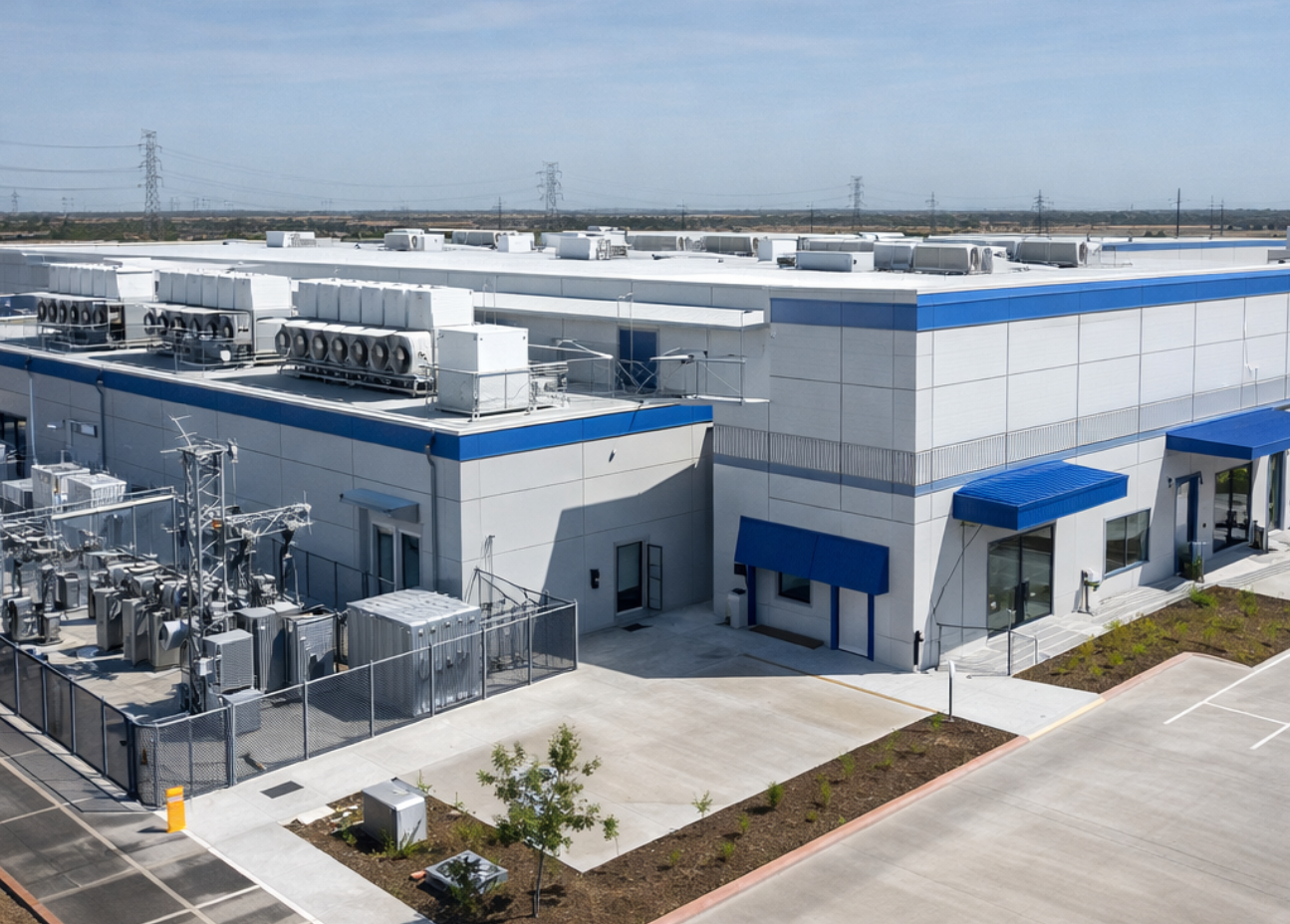
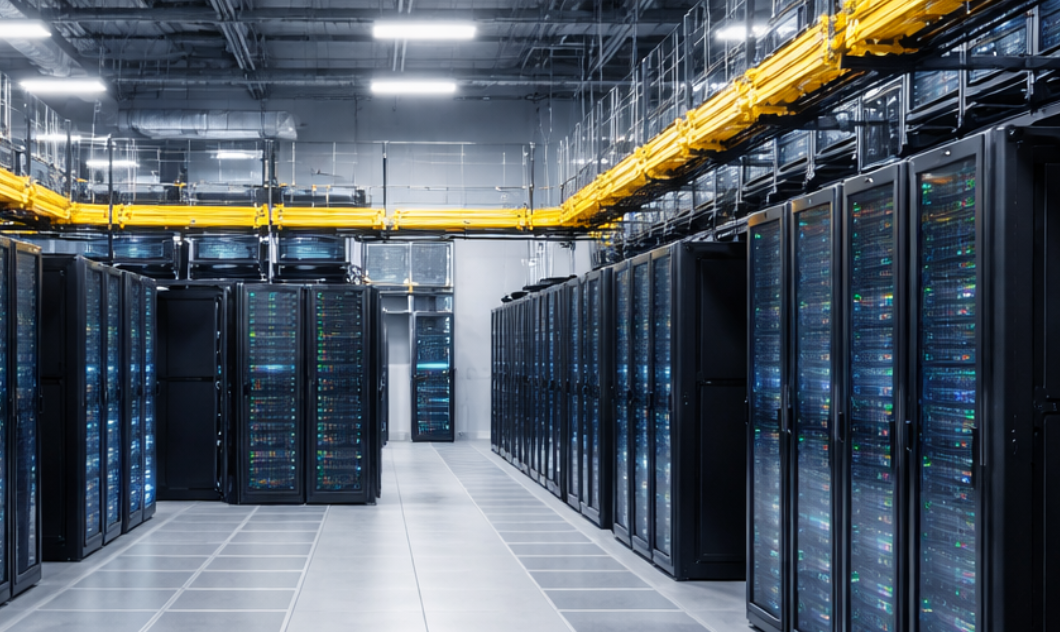
Not every business fits into a standard rack and cage setup. Some organizations reach a point where the infrastructure available on the market simply does not match the technical, regulatory, or operational requirements of their workloads. That is when colocation stops being enough.
A growing number of enterprises, hyperscalers, and government agencies are recognizing that cookie cutter facility space cannot support what they actually need. The answer for many of them is infrastructure designed and constructed around their specific requirements from day one.
What Standard Colocation Actually Offers
Standard colocation provides shared facility space where organizations rent racks, cages, or private suites inside an existing building. The provider manages power, cooling, physical security, and connectivity. The tenant brings in their own hardware.
This model works well for many use cases:
-
Mid sized IT operations that need professional grade facilities
-
Disaster recovery and backup environments
-
Businesses with predictable, moderate power requirements
-
Organizations looking to move away from on premise server rooms
But this model assumes a level of standardization. Power density per rack is fixed. Cooling systems are designed for average loads. Floor layouts follow a general purpose plan. Connectivity options depend on what carriers already exist in the building.
For many enterprises, this is perfectly fine. For others, it creates friction that grows over time.
Where Standard Setups Fall Short
Problems surface when the workload profile does not align with what the facility was designed to support.
High performance computing clusters, for example, generate far more heat per square foot than typical enterprise IT. AI training environments demand power densities of 30kW, 50kW, or even higher per rack. Standard colocation floors are typically built for 6kW to 10kW per rack.
Financial trading firms need ultra low latency connections to specific exchange endpoints, with precise cable routing and dedicated fiber paths. A shared facility may not offer that level of network customization.
Government and defense workloads often require physical isolation, SCIF rated rooms, or facility level security certifications that general colocation buildings simply do not carry.
When the gap between what you need and what is available becomes wide enough, retrofitting an existing facility starts costing more than starting fresh.
What Makes the Built to Suit Model Different
A built to suit data center is designed and constructed specifically for one tenant's requirements. Every decision about the facility, from structural engineering to power architecture to cooling methodology, is informed by the tenant's actual workload profile.
This is not about luxury. It is about precision.
The key differences include:
-
Power density designed for actual rack loads, not industry averages
-
Cooling systems matched to specific heat output profiles, whether air cooled, liquid cooled, or hybrid
-
Physical security and access controls built around the tenant's compliance framework
-
Network infrastructure planned for exact carrier and peering requirements
-
Expansion capacity aligned with the tenant's projected growth, not generic market assumptions
The result is a facility that fits the workload instead of forcing the workload to fit the facility.
Who Actually Needs This Approach
Not every organization needs a purpose built facility. The built to suit data center model makes practical sense for a specific set of scenarios.
Hyperscale Operators
Running massive compute and storage environments requires consistent power delivery across thousands of servers. Their scale makes standard colocation financially and operationally impractical.
Financial Institutions
Processing real time transactions across global markets requires infrastructure where latency, redundancy, and compliance are engineered into the physical layer rather than added later.
Government and Defense Organizations
Strict mandates about facility clearance levels, data sovereignty, and physical separation mean that multi tenant environments often cannot meet required standards.
AI and Machine Learning Companies
High density compute workloads demand cooling solutions and power systems that most existing facilities were never designed to support.
If an organization finds itself constantly requesting exceptions, modifications, or workarounds from their colocation provider, that is usually a sign the model has been outgrown.
Location Still Matters
Even with a custom facility, the physical location carries significant weight. Proximity to submarine cable landing stations, reliable power grids, favorable climate conditions for cooling efficiency, and supportive regulatory environments all influence long term operating costs and performance.
Markets across Asia Pacific, including Singapore, Japan, and parts of Indonesia, continue to attract enterprises that need a built to suit data center positioned for regional connectivity. The choice of geography shapes everything from power costs to latency to legal compliance.
Knowing When to Make the Shift
The decision to move from colocation to a purpose built facility usually follows a pattern. Power needs outgrow available capacity. Compliance requirements tighten. Performance targets demand physical infrastructure changes that the current provider cannot accommodate.
When an enterprise reaches that threshold, continuing to adapt within a general purpose environment becomes more expensive and more risky than building something that actually fits.
The organizations that recognize this inflection point early tend to plan better, negotiate better site agreements, and avoid the costly cycle of short term fixes that never fully solve the underlying mismatch.
This is not about chasing the newest infrastructure trend. It is about matching the physical environment to the actual demands of the business.
Frequently Asked Questions
Q.1 What is the difference between colocation and a built to suit facility?
Ans: Colocation provides shared space in an existing building where tenants rent racks or cages. A built to suit facility is designed and constructed specifically for one tenant's requirements, covering power, cooling, security, and connectivity from the ground up.
Q.2 How do I know if my organization has outgrown standard colocation?
Ans: Common indicators include frequently exceeding available power density, needing custom security or compliance configurations, requesting structural modifications, or experiencing performance limitations tied to shared infrastructure.
Q.3 Is a built to suit facility only for hyperscale companies?
Ans: No. While hyperscalers are common tenants, government agencies, financial institutions, healthcare organizations, and AI focused companies also benefit when their workload requirements exceed what standard colocation can provide.
Q.4 How long does it take to develop a purpose built facility?
Ans: Timelines vary based on location, size, and complexity, but most projects range from 12 to 24 months from initial planning to operational readiness. Site selection and permitting often account for a significant portion of that timeline.
Q.5 What role does geography play in choosing a facility location?
Ans: Geography affects power costs, cooling efficiency, network latency, access to submarine cable systems, and compliance with local data residency laws. Choosing the right market is as important as the facility design itself.

 English
 Arabic
 French
 Spanish
 Portuguese
 Deutsch
 Turkish
 Dutch
Dutch
 Russian
 Romaian
 Portuguese (Brazil)